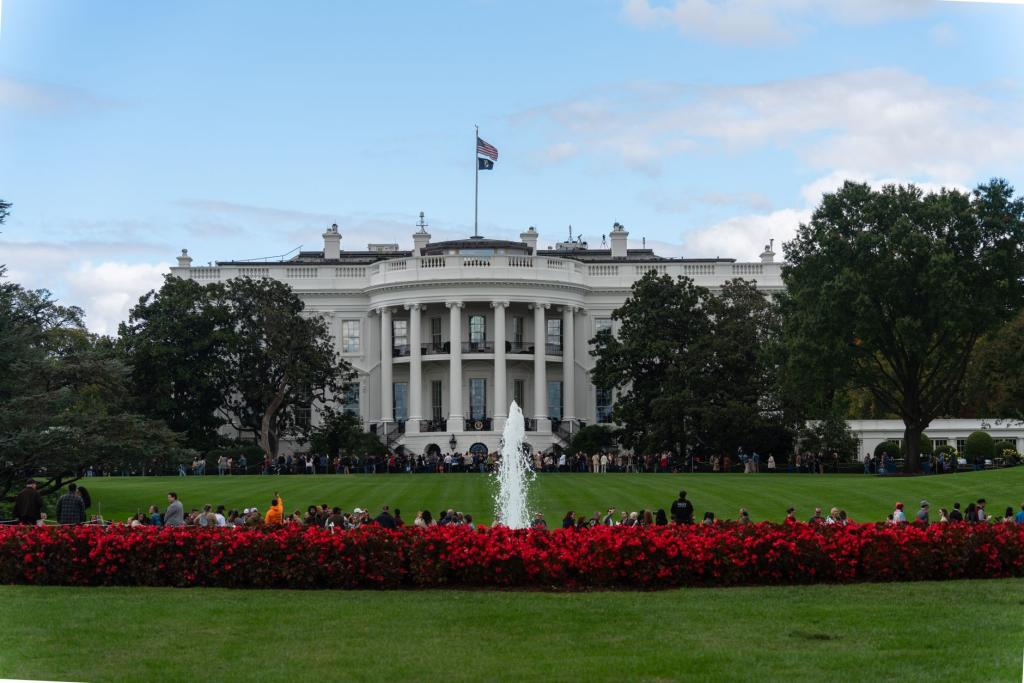
Donald Trump told reporters on Friday that he is banning CNN, MSNOW and Politico from the White House, and warned that more news organizations could face the same treatment. "I don't want them in my office," he said, according to Reuters. "I don't want them here. I would say the ban would go as far as you can." In a Truth Social post, the president said the outlets were being banned for allegedly "reporting FAKE NEWS." The White House media ban may look like an inside-baseball fight between politicians and the press corps. For Gen Z, the generation that gets most of its news from clips, quote posts and ten-second explainers, it hits closer to home: the ban targets the reporters who produce the raw material those feeds are built from. Understanding the White House media ban starts with what the president actually said and who is pushing back.
The strongest defense of the banned outlets came from a Fox News correspondent. Jacqui Heinrich, a senior White House correspondent for Fox News who serves as president of the White House Correspondents' Association, said constitutional protections for a free press do not depend on whether a president likes a news organization's coverage. "This is about more than the rights of journalists," she said. "It is about the right of the American people to receive a full and independent account of the activities, policies and decisions of whoever occupies the nation's highest office." The association said it "stands in defense of our colleagues at CNN, MS NOW, and Politico who are being singled out for doing their jobs," USA Today reports.
When a Fox News correspondent publicly defends CNN reporters, the White House media ban fight stops being left versus right and becomes access versus no access. CNN said it stands behind its White House team's "fair and accurate reporting," adding that going ahead with the ban "would be an illegal assault on that fundamental and constitutionally-protected right." Politico said it will "continue to fairly report on this White House and future ones" and will "vigorously defend our First Amendment rights against any attempt to restrict them."
Why the White House media ban hits young feeds hardest
Few Gen Z readers watch a White House briefing live. They catch the clips after those clips have been cut, captioned and remixed by creators. Those creators sit downstream of reporters who were actually in the room. Shrink the room and the supply of firsthand accounts shrinks with it. Rumor, selectively edited video and outright fabrication move into the gap and travel faster than corrections.
Conspiracy theories do not need facts to take off. They need a vacuum, as GenZNewZ's debunk of 9/11 conspiracy theories 25 years later showed. Lock reporters out of the building and the vacuum gets bigger, which is why press-freedom advocates treat the White House media ban as a threat to the whole information supply, not just to three newsrooms. The irony is hard to miss: the generation most often warned that social media will rot its brain is the one most affected when the professional press loses access, because young readers live inside the feeds where the unverified version lands first.
The ban is part of a pattern that has been building all year. The same White House temporarily barred the Associated Press from access, effectively dismantled the Pentagon press corps and launched regulatory investigations into media companies, USA Today reported in April. The instinct to control what young people see is not limited to the press room either, and critics read the White House media ban as part of that wider pattern. Lawmakers keep trying to fence off the platforms where Gen Z gets its information, from American teen social media bans to the EU's plan to bar under-13s from social media. The stated reason is usually protection. The effect is fewer independent eyes on the story and more of the narrative in the hands of whoever controls the gate.
What happens next is probably a courtroom fight
Nobody knows what the ban means in practical terms. Trump gave few details, USA Today reports: the White House media ban could mean revoked press badges, removal from the White House pool, or being barred from the campus entirely. Reuters notes the move is likely to be challenged as conflicting with the First Amendment's protections for free speech and a free press.
The outlets say they will keep reporting either way. The question is whether the public keeps paying attention. The White House media ban sounds like an insider problem until readers remember that every trusted clip, every explainer worth sharing and every "wait, is this real?" moment begins with a reporter who was allowed in the room. A president who picks which outlets ask the questions also picks which questions get asked, and the answers that reach social feeds at 2 a.m. get shaped by everything that stayed out of the room.
Comments 0
No comments yet. Be the first to share your thoughts!
Leave a comment
Share your thoughts. Your email will not be published.