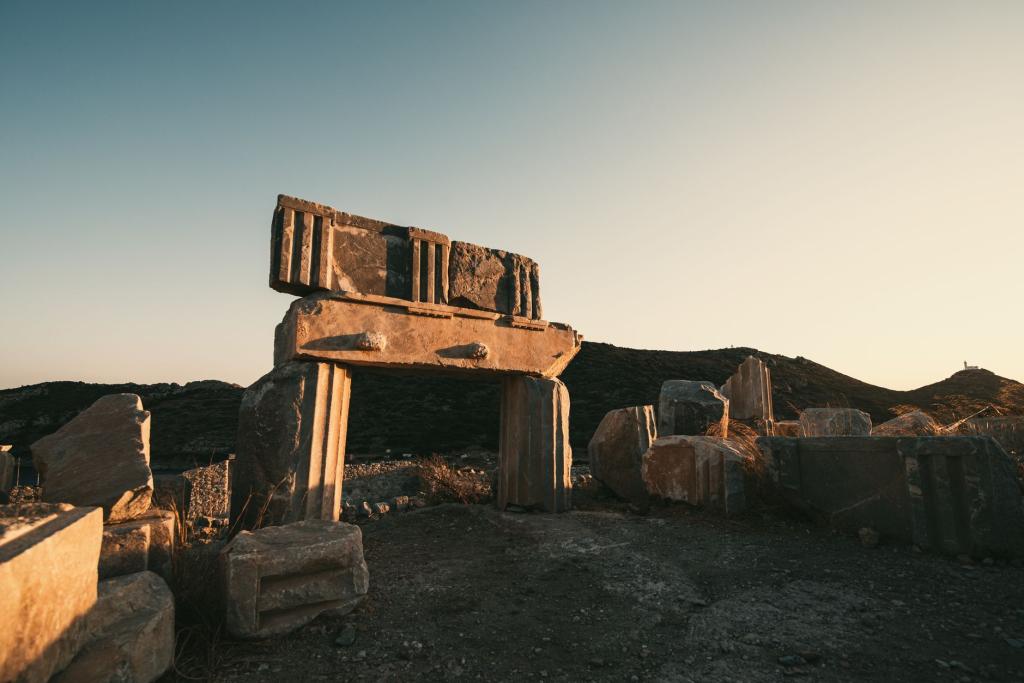
High in the Sierra Norte mountains of Puebla, a ceremonial complex built more than two millennia ago was doing something its builders planned with unusual care: watching the sun. Archaeologists have confirmed that a monumental complex at Teteles de Ávila Castillo was laid out to track the sun's movements and mark key dates in the ancient Mesoamerican calendar. The site holds an Ancient Solar Observatory, the first confirmed complex of its kind found outside the Maya region, and it suggests that sophisticated sky-watching was far more widespread in early Mesoamerica than the standard story admits, according to Heritage Daily, reporting on an announcement by Mexico's National Institute of Anthropology and History.
The complex sits east of the settlement's Great Plaza, arranged around a quadrangular courtyard with a platform on each side. The eastern platform measures roughly 90 metres from north to south and 40 metres from east to west. The smaller western structure, about 46 metres by 27 metres, is believed to have served as the observation point. According to the announcement, researchers date the complex to the Middle Preclassic period, roughly 1000 to 600 BC, placing it among the earliest known examples of astronomical architecture in Mesoamerica. The settlement is also known by the older name Tetelihtic.
A calendar built into stone
The elongated eastern platform was not aimed at the equinoxes alone. Researchers believe it was designed to mark the beginning of the pre-Hispanic calendar in February and the harvest season in October, two dates that mattered enormously to farming communities whose survival depended on reading the seasons correctly. Observations at the site also indicate that the eastern platform could function as a solar calendar, letting watchers follow the rising sun at important points in its yearly cycle, including the equinoxes and solstices. That is what makes this Ancient Solar Observatory more than a ruin: in a world without printed calendars, the building itself was the calendar.
Archaeologists call this layout a Group E complex, a pattern long tied to Maya settlements. The closest comparison stands at Uaxactún in Guatemala, a complex roughly twice the size of the one in Puebla. Alberto Diez Barroso Repizo, who leads the dig, said the parallels point to a shared tradition of sky-watching and ceremonial building across regions that historians often treated as separate. That comparison is the discovery's quiet provocation: if communities outside the Maya world were building on the same astronomical ideas at the same early date, the knowledge was circulating, not invented in one place and exported.
A ceremonial center with a long afterlife
Teteles was occupied from about 900 BC until around AD 100, a run of roughly a thousand years. By the time major centers such as Cantona, Cholula and Teotihuacan were rising, the settlement had been partly abandoned, yet people kept coming back. Offerings found around the ceremonial precinct date from about AD 100 to 600, and a later Totonac offering, dated between AD 600 and 900, turned up on one of the platforms. The abandoned town stayed sacred for generations after its residents left.
The discovery may also open new lines of inquiry into who lived at Teteles and whom they were connected to. The project director believes the site could carry evidence of early links between Maya-speaking populations and communities in what is now Puebla, and researchers are weighing whether it sheds light on the ancient roots of the Huastec peoples or on populations ancestral to the Totonac, who later flourished in Puebla's mountains and along the Gulf Coast. One reading ties the settlement's principal structure to Canopus, the second-brightest star in the night sky, and to a possible link with the Nahua goddess Nantehuitz. These readings remain hypotheses, and the team is clear that they need more digging before any of them harden into conclusions. That caution is part of what makes the announcement credible: the confirmed sky-watching complex is solid, while the cultural connections are flagged as open questions.
For readers, the stakes are bigger than one hillside in Puebla. Mexico's Secretary of Culture, Claudia Curiel de Icaza, said the architecture "tells us about societies that developed astronomical knowledge and incorporated it into the organisation of their ceremonial spaces." In other words, ancient astronomy was not an abstract hobby. It organized farming, ceremony and city planning, and it belonged to more peoples than the textbooks credit. The Ancient Solar Observatory at Teteles shows that the history of astronomy belongs to more than one civilization. The findings were presented at a conference and photographic exhibition organized with the municipal authorities and the Tzoncoyotl civil association, and further excavation should test which of the cultural hypotheses hold up. Either way, the map of early Mesoamerican science just got wider. For more stories from the ancient world, see the site's Old World coverage and the latest headlines.
Comments 0
No comments yet. Be the first to share your thoughts!
Leave a comment
Share your thoughts. Your email will not be published.