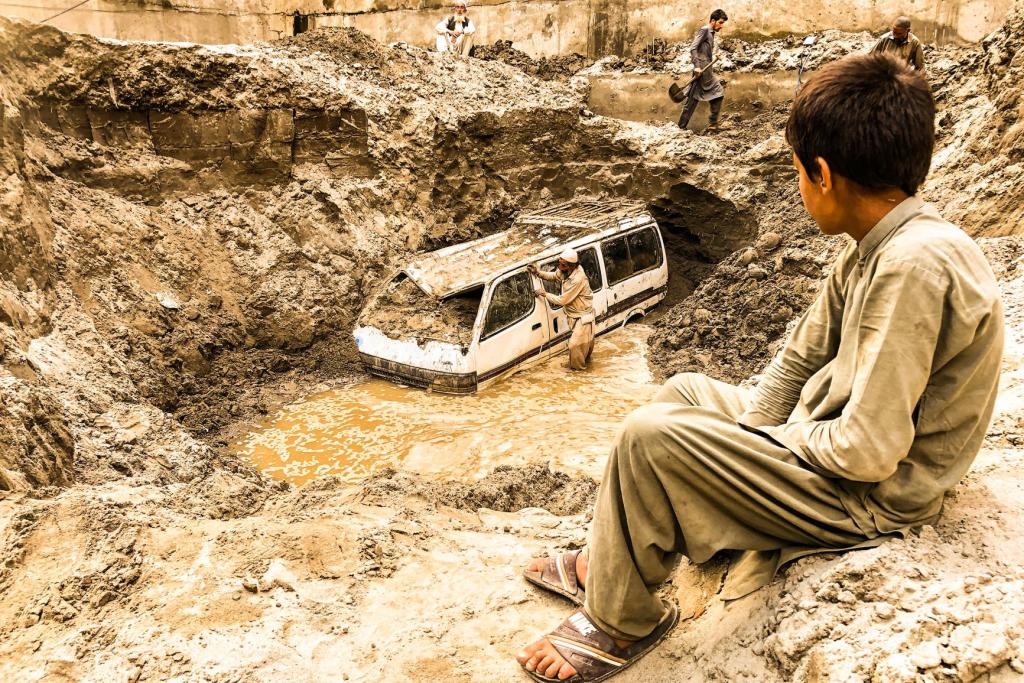
Nepal's disaster management authority now places the Langtang flood death toll at 1,451, with about 5,786 people still missing, according to its September 20 update, nearly four weeks after rock and ice broke off a Himalayan peak and sent a wall of debris through valleys along the Nepal-China border.
The collapse began on the morning of August 26, when part of a glacier and rock mass on the north flank of 7,227-meter Langtang Lirung gave way at an elevation of around 5,200 meters. The material fell more than 2,200 vertical meters and raced 20 to 22 kilometers down the Lhende Khola valley in about seven minutes, according to ExplorersWeb. The impact destroyed the road to Gyirong Port and the Rasuwagadhi border crossing, wrecked bridges and villages, and filled hydropower tunnels with mud. The seismic shock was first logged by the United States Geological Survey as an earthquake and later reclassified as a landslide that registered a magnitude 5.2 signal. Some bodies were carried roughly 240 kilometers downstream into India.
Recovery work continues as families demand answers
Search teams are still pulling bodies from the mud. On September 16, Nepal's army recovered four bodies from the tunnel of the Chilime Hydropower plant on the Trishuli River, and the country's disaster management agency said five more bodies had been located at a different site, according to reporting by the Associated Press. At that time, the authority said 1,403 bodies had been recovered and 6,150 people were still missing. Thirteen hydropower plants were damaged by the flooding, and finding workers trapped in the tunnels became a priority for rescue crews. Two Nepali workers were found alive on September 4, and a Chinese worker was pulled out alive a day later.
Families of the missing have been pressing the government to move faster. They have held rallies and many are calling on officials to declare the missing as dead, so that relatives can obtain death certificates, settle legal matters, and carry out religious rites. The lobby of Tribhuvan University Teaching Hospital in Kathmandu is now lined with photographs of missing people, and relatives travel there looking for word of their loved ones. Among them is Usha Khatri, whose husband Indra Bahadur was working as a cook with a group of pilgrims when the flood struck; she has since been searching towns along the river where bodies have been recovered, according to the Associated Press.
The scale of the operation is enormous. About 13,700 people have been rescued, more than 21,000 security and rescue personnel have been deployed, and forensic teams are processing close to 1,300 DNA samples from recovered remains alongside about 2,000 samples from relatives, with specialists from India, South Korea, China, and Singapore assisting with identification in Kathmandu laboratories, according to a September 20 update reported by Particle News. Officials caution that the missing-person lists may include unidentified bodies and people who were already rescued.
Study ties the collapse to a warming climate
A study released on September 17 by the World Weather Attribution group found that climate change played a "very strong" role in setting up the disaster, according to a report carried by Yahoo News. The researchers described a compound event driven by rising temperatures, thinning glaciers, thawing permafrost, and pre-existing geological weaknesses. Imperial College London climatologist Dr. Friederike Otto, a co-author, said there was no doubt that human-induced climate change helped precondition the disaster. July and August temperatures in the area ran about 1.5 degrees Celsius warmer than they would have without human influence, while regional glaciers have been thinning by roughly half a meter a year.
Other factors were at work as well. Heavy snowfall last October and November added large amounts of meltwater early this year, and a magnitude 7.8 earthquake that struck the area in 2015 may have weakened the underlying rock. Utrecht University mountain hydrologist Dr. Walter Immerzeel described the slope as geologically vulnerable, destabilized by glacier and permafrost retreat. The study called climate change a destabilizing factor acting on a pre-existing geological predisposition, while stopping short of blaming it as the sole cause.
The findings land hard in a country that has argued for years that it suffers climate damage far out of proportion to its emissions. Nepali authorities have called for global action on climate change, and Prime Minister Balendra Shah is scheduled to address the United Nations General Assembly in the coming week to make the case for climate justice, according to the report. Nepal had also bet heavily on hydropower as its energy future; the destruction of power projects has raised new questions about that strategy. Reconstruction is expected to cost roughly 4.7 billion dollars, a figure that underlines how long the recovery will take.
The UN released $2 million from its Central Emergency Response Fund in the days after the disaster to support medical care, shelter, and clean water, and China's premier traveled to the Gyirong border crossing to direct relief work on the Tibetan side, where officials reported 43 dead and 519 missing in Kyirong County. Hundreds of the missing on both sides were foreign nationals: pilgrims bound for Mount Kailash, trekkers, traders, and hydropower workers. GenZ NewZ previously covered the early toll in this disaster (earlier coverage); the numbers have risen sharply since, as remote valleys were reached and remains were identified.
Comments 0
No comments yet. Be the first to share your thoughts!
Leave a comment
Share your thoughts. Your email will not be published.