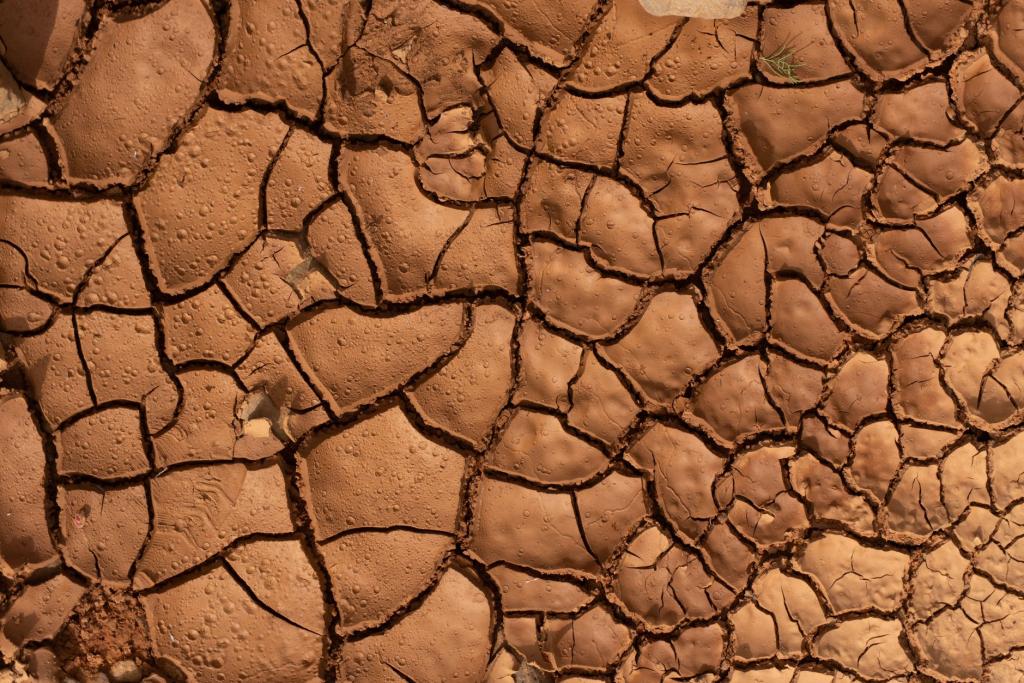
The world's rivers are running dry, and the planet's backup supply of water is shrinking. That was the warning from the World Meteorological Organization on September 17, when it published its latest annual assessment of global water resources. According to the WMO State of Global Water Resources Report, 2025 was one of the driest years for river discharge in more than three decades, and the water cycle has grown more erratic, swinging between too little water and too much. WMO Secretary-General Celeste Saulo put it bluntly: the world is drawing down its freshwater savings account.
The details are striking. Rivers across the globe recorded below-normal flows across 36 percent of the world's basin area, based on simulations from 13 global hydrological models driven by observed weather data. The past seven years have seen the fewest rivers with "normal" flows since 1991, with only 34 to 38 percent of river basins showing normal conditions against a 46 percent average between 1991 and 2020. This is the fifth time the WMO has published the report, and it covers the full water cycle loop: river discharge, groundwater, evapotranspiration, land water storage, and snow and ice, alongside high-impact events over the past five years.
The planet's freshwater savings account
Saulo compared the planet's slow water reserves, things like groundwater, glaciers and seasonal snowpack, to a freshwater savings account that acts as a buffer during droughts and dry seasons. In a statement, she said that account is being drawn down. "We are depleting that savings account," Saulo said. "Global terrestrial water storage has shown a declining trend since the mid-2010s, a persistent, decade-long signal."
The evidence that the freshwater savings account is shrinking runs through every layer of the water cycle. For the fourth consecutive year, every major glaciated region on Earth lost ice mass. Between 2023 and 2025, glaciers shed a cumulative 1,400 gigatons of water, roughly enough to fill some 560 million Olympic-sized swimming pools, or about one-third of annual freshwater withdrawals. Groundwater tells the same story: nearly two-thirds of monitored wells worldwide showed conditions outside the historical norm in 2025, and the balance shifted further toward deficit compared with 2024, not toward recovery.
The report also tracks the human cost of drawing down the freshwater savings account. Water-related disasters are striking more often, Saulo said, and the gaps in monitoring data are widest where the damage is worst. Overall availability of water data has improved, but the report notes that serious gaps remain in the hardest-hit regions, which makes it more difficult for those areas to plan for droughts and floods before they arrive.
Asia and Africa bear the heaviest burden
Asia and Africa together accounted for at least half of all recorded water-related extreme events and more than 80 percent of reported associated deaths over the past five years, the report says. These are the regions with the least capacity to absorb the swings, and the ones whose freshwater savings account is emptying fastest.
Scientists who study the effects on the ground say the findings match what they are seeing. Milton Speer, a visiting fellow at the University of Technology Sydney, said the report fits conditions in Australia closely. The Murrumbidgee River's flow, before water is extracted for irrigation, has fallen by 30 percent since the 1990s because of accelerated global warming, he said, a local freshwater savings account running low. Southern coastal areas of Australia are in long-term drought, and before rain arrived in October and November last year, Melbourne's annual rainfall was tracking to be the lowest on record. Northern Australia, by contrast, had a wet year, with major floods hitting Queensland, a pattern consistent with a warmer atmosphere holding more moisture.
Looking ahead, Saulo warned that a strengthening El Nino will raise the risk of drought in some areas and flooding in others. The report does not attempt to pin individual events on climate change, but it concludes that the decade-long decline in terrestrial water storage, combined with the erratic swings of the water cycle, carries serious implications for a planet whose freshwater savings account keeps shrinking.
The full report is available on the WMO website, with additional expert reaction covered at phys.org.
Comments 0
No comments yet. Be the first to share your thoughts!
Leave a comment
Share your thoughts. Your email will not be published.