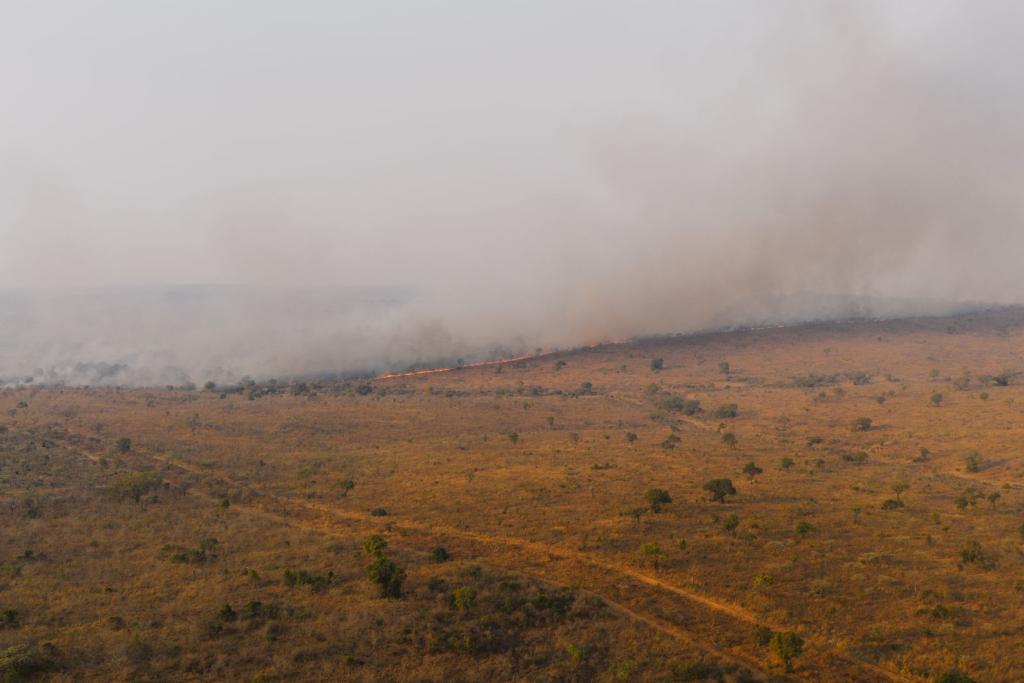
The European Union will build a new climate insurance alliance to expand coverage for extreme weather, European Commission President Ursula von der Leyen announced on Wednesday. She made the announcement in a speech to the European Parliament, as the bloc reckons with a summer of drought, wildfires and heatwaves.
Climate change has made Europe the world's fastest-warming continent, heating at twice the global average. This year's wildfire season ranked among the worst on record for the region, while repeated heatwaves killed dozens of people, disrupted power supplies, cut productivity and forced schools to close.
Most losses are not insured
Only a quarter of climate-related economic losses in the EU are covered by insurance, according to figures from the European Commission. The rest falls on households, businesses and public budgets.
National governments too often become the insurer of last resort when disasters strike, von der Leyen told parliament. She said the bloc needed to act to close the protection gap.
The climate insurance alliance would bring together insurers, investors, risk modellers, public authorities and the people who buy insurance policies. Its job would be to raise uptake of coverage for extreme weather across the member states.
Reuters reported the plan on September 16 from Brussels. The full text of the reporting is available at the original Reuters wire story.
What the climate insurance alliance would do
The alliance would identify and promote insurance instruments that reduce risk. One option is group insurance, which lets people buy coverage together at lower cost. Another is parametric insurance, where payouts are triggered automatically once predefined thresholds for rainfall or temperature are crossed.
Parametric policies pay out faster than traditional insurance because they do not require an adjuster to assess each claim. For a farmer hit by drought, for example, a payout could arrive once rainfall drops below an agreed level, without waiting for a damage inspection.
That speed matters. When wildfires or floods hit, households and small businesses often need money within days to repair damage or relocate. Traditional claims processes can take weeks, and many families cannot afford the wait.
Whether the climate insurance alliance can actually get policies into the hands of the people most at risk will be the real test. Insurance uptake is lowest among low-income households and small firms, the same groups that recover slowest from disasters.
The disaster backdrop
Europe is not alone in facing the cost of an uninsured disaster season. Hurricane Lowell struck Hawaii in early September as a Category 5 storm, knocking out power for roughly nine in ten residents, while Hungary faced an extreme drought that drained lakes and threatened its only nuclear power plant, according to the Center for Disaster Philanthropy's September 14 disaster update.
The same update described a glacial flood disaster on the Nepal-Tibet border in August that killed more than 1,300 people, with thousands still missing. Details are tracked in the Center for Disaster Philanthropy's weekly report.
A slow record on preparedness
The EU has a detailed framework for cutting the greenhouse gas emissions that cause climate change, but it has moved slowly on adapting to the warming that is already happening. The EU's independent climate advisers said in February that Europe was underinvesting in adaptation.
The advisers urged better planning, including avoiding new housing in flood-exposed areas and designing cities so people can stay cool during heatwaves. Von der Leyen said the bloc needed to step up dramatically on preparedness.
More plans due this autumn
The insurance alliance is only one part of a wider package. A climate resilience strategy is due in October and will set out how to manage climate risks in 100 vulnerable European territories.
A heatwave plan would improve early warning systems so authorities can warn the public sooner when dangerous heat is on the way. An EU water plan would strengthen drought risk management, a growing concern after years of dry summers lowered reservoirs and rivers.
Brussels has also asked senior firefighters to propose better ways of managing wildfires, including the idea of the EU forming its own firefighting fleet. Fire seasons are getting longer and more intense across southern Europe, and national fleets are often stretched by simultaneous blazes.
For young Europeans, the stakes are direct. Heatwaves shut schools this summer, wildfires burned through holiday regions, and drought raised food and energy costs. Uninsured losses are not only a European problem: flash floods killed three people on the Navajo Nation during August monsoon storms in the US Southwest. Insurance will not stop the warming, but a functioning market for climate coverage could decide how fast communities recover when the next disaster hits. For more, see our climate emergency coverage.
Comments 0
No comments yet. Be the first to share your thoughts!
Leave a comment
Share your thoughts. Your email will not be published.