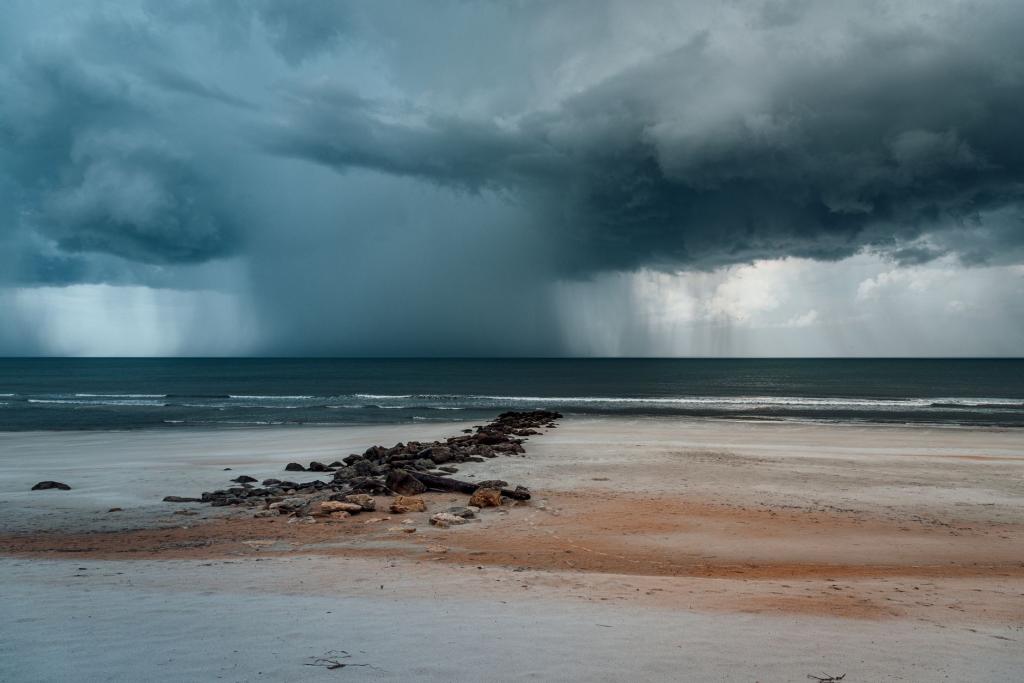
The Hurricane Isaias warm Gulf story just got a lot more interesting. A new analysis says the storm that slammed the Florida Panhandle last week had help from ocean water that was hotter than it should have been for October, and human-caused climate change is the likely culprit.
What Isaias did to the Gulf Coast
Isaias came ashore near Destin, Florida, on the night of October ninth as a Category Two hurricane with sustained winds of one hundred five miles per hour. It knocked out power for hundreds of thousands of people across Florida, Alabama, Georgia and Mississippi, according to Reuters.
Florida Governor Ron DeSantis later confirmed six storm-related deaths in his state. Only one was a direct hit from the weather, when a tree fell on a home. The rest came from the messy aftermath: a generator running inside a garage, a car crash at a dark intersection and two people whose medical treatment was disrupted, as the Guardian reported.
Counting Alabama, public radio station WBHM says eight people lost their lives. The storm also spun up isolated tornadoes and dumped heavy rain across the Southeast, so the damage reached well beyond the beach towns.
Why this hurricane was weird in the first place
This season has been unusually quiet. A strong El Niño is in place, and El Niño tends to create wind shear over the Atlantic, which is a difference in wind speed or direction at different heights that can rip a young storm apart. The Guardian notes that the first hurricane of a season has not formed this late since October eighth, nineteen oh five.
Isaias is also the first hurricane to make landfall in the continental United States in two years. The last was Milton, which hit western Florida in October of twenty twenty-four. So the storm broke a quiet streak and arrived at a time of year when many people assumed the worst was behind them.
The Hurricane Isaias warm Gulf connection
Here is where the science gets spicy. A new analysis from the nonprofit Climate Central found that Gulf water temperatures reached as high as eighty-eight degrees Fahrenheit while Isaias passed through. That is nearly two and a half degrees warmer than the water would have been in a world without human-caused warming.
According to WBHM, the warmth was more like August than October. Researchers also found that more than ninety percent of the Gulf warming this summer can be traced to human-influenced climate change. The storm went through rapid intensification twice on its way across the water, and at its peak it was a Category Three hurricane with winds of one hundred twenty miles per hour.
Climate Central meteorologist Daniel Gilford offered an easy way to picture it. A hurricane is like a car engine and the warm water is like gasoline. In his words, the storm "takes that fuel, it gobbles it up, and it converts that fuel into kinetic energy in the form of winds."
Beating El Niño anyway
The wild part is that the hot water let Isaias push through the wind shear that El Niño usually brings. Gilford compared shear to bumping the top of a spinning toy: the wobble builds until the whole thing falls over. Isaias did begin to weaken from shear shortly before landfall, but the extra ocean heat gave it enough strength to get that far.
The analysis suggests human-caused climate change added about seven miles per hour to the storm's wind speed. That may sound small, yet Gilford says even a modest bump can make a storm more destructive, especially for vulnerable communities along the Gulf Coast. Higher storm surge and heavier rainfall rates are also part of the climate picture for tropical systems.
One note of caution: attribution studies like this are fast, preliminary estimates. The National Hurricane Center will publish a full report on Isaias during the off-season, and the official wind and intensity numbers could still be revised.
What it means for you
If you live on the Gulf or Atlantic coasts, the takeaway is blunt. A quiet season does not guarantee a safe one, and a late-season storm can still fuel up fast over warm water. Cleanup is also dangerous: federal officials are urging people to avoid downed power lines and to keep generators outdoors, which is exactly how one of the Florida deaths happened.
For everyone else, Isaias is a clear example of how climate change shows up in real life. It is not always a brand-new kind of disaster. Sometimes it is a familiar October storm that arrives stronger than it would have otherwise. Catch more on this beat in our climate emergency coverage.
Comments 0
No comments yet. Be the first to share your thoughts!
Leave a comment
Share your thoughts. Your email will not be published.