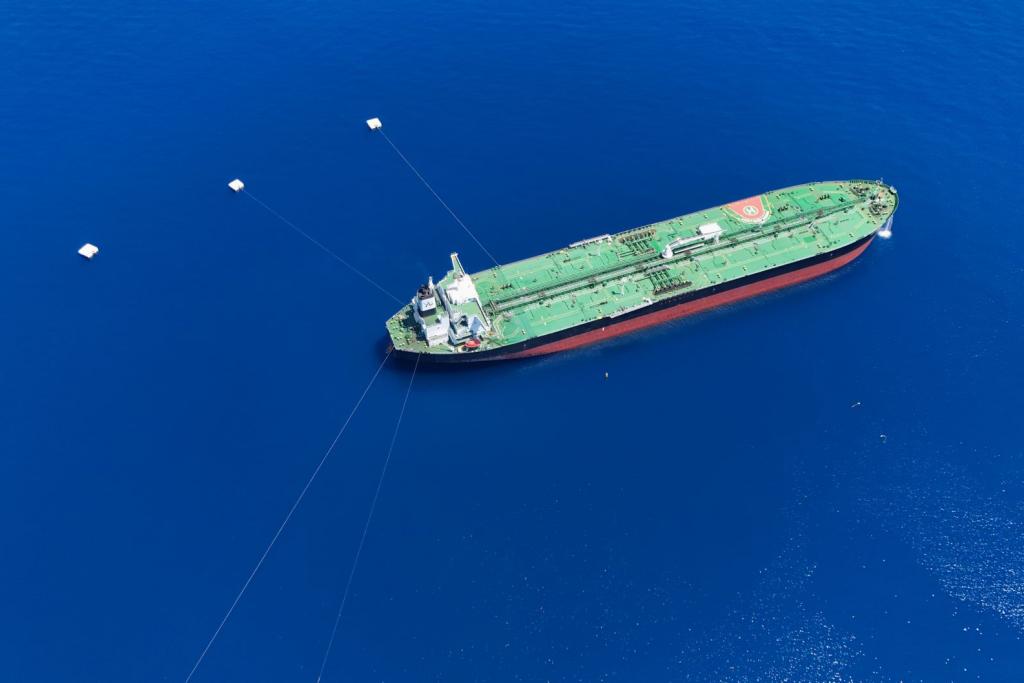
Strait of Hormuz ship attacks have hit a record high, and the numbers are wild: twelve vessels were struck in a single week, the most since the US-Israeli war with Iran began, according to BBC Verify. That analysis uses data from the UK Maritime Trade Operations agency, known as UKMTO, and it lands just as two cargo ships have gone to the bottom of the sea.
A record week on the water
BBC Verify counted twelve attacked vessels between the fifth and eleventh of October. The week before that, ten ships reported being hit, so the trend is climbing fast. Six ships were struck on Sunday alone, which is the highest one-day total UKMTO has logged since the conflict started in February.
The pace of Strait of Hormuz ship attacks has not slowed. Four more attacks were reported earlier this week, and CNN says nine incidents in or near the strait were logged between Monday and Wednesday, including a drone strike on a tanker. Lloyd's List, the shipping industry paper, says at least twenty-six attacks or security incidents were recorded in the first half of October, already the worst month of the war.
Two ships sunk, crews rescued
The headline moment came on Tuesday, when the Singapore-flagged container ship GFS Pride was hit by an unknown projectile while passing through the strait. It caught fire and later sank. All twenty-one crew members were evacuated safely, according to the Maritime and Port Authority of Singapore. Videos verified by CNN show black smoke pouring off the ship, followed by cargo and a small oil slick floating in the water.
A second vessel, the Antigua and Barbuda-flagged bulk carrier Cape Dao, also sank this week, weeks after it was first hit on the twenty-third of September. One Indian crew member died in that original strike. CNN reports that, going by International Maritime Organization data, these are only the second and third ships to sink in the Middle East since the war began.
Iran has given a different account. Press TV claimed GFS Pride hit a sea mine on an unauthorized route, while the Revolutionary Guard said the ship carried contraband. Experts quoted by CNN doubt the mine story and say a drone attack is more likely.
Why Iran is hitting harder
Experts told BBC Verify that Tehran is trying to assert more control over the waterway. Over recent weeks, the US military has escorted more tankers through the southern part of the strait, and assisted transits in the first ten days of October were up eighty-five percent compared with the same stretch of August. Most Gulf oil now moves through a "shuttle" system, where smaller tankers hug the Omani coast before handing cargo to bigger ships in the Gulf of Oman. Iran calls that route unauthorized.
Martin Kelly, chief executive of Orbital Risk Intelligence, said Iran has "evolved its strategy" and is carrying out near daily attacks. "The aim here is to stop the ships going through and to deter others," he told BBC Verify. The attacks are also spreading. A tanker was hit north of Qatar, more than five hundred kilometres from the strait, and the tanker Petro Dolphin was struck by a drone near Sohar, Oman, leaving two Indian seafarers missing.
What it means for oil and your wallet
All this is hitting oil flows. Data from the trade intelligence firm Kpler shows about twelve point six million barrels a day moved through the strait on the thirteenth of October, down from fifteen million at the end of September. Before the war, the baseline was about seventeen million. CNN adds that on Monday only about four million barrels got through, less than a quarter of pre-war levels, which is pushing oil prices up around the world.
That matters politically too. With US midterm elections coming, gas prices are a headache for President Donald Trump, and CNN notes that analysts warn diesel could climb close to record highs by November. If you have noticed everything from fuel to groceries getting pricier, this chokepoint is part of the story. For a wider look at the fallout, check our war coverage.
Will ships keep sailing?
Surprisingly, probably yes. CNBC reports that maritime experts expect operators to keep chasing the money, because demand for Middle Eastern energy, especially from Asia, makes the risky trips worth it. Collin Koh of Singapore's S. Rajaratnam School of International Studies said he does not expect Singapore shipping companies to avoid the strait in the short term if an opportunity comes up.
Still, crossings did slip, from one hundred seventy-six to one hundred thirty-one in the week ended the fourteenth of October, per Kpler. And the big container lines have mostly stayed away since February. Drewry Maritime Advisors warned that if the Gulf of Oman became a combat zone, ports like Khorfakkan and Sohar, which act as a lifeline for Gulf countries, could be cut off.
US Central Command insists commercial traffic keeps flowing with protection from American forces and regional partners. But with Strait of Hormuz ship attacks at a record and the Revolutionary Guard announcing a new deployment formation across the region, the next few days will show whether this is a peak or just the start of a bigger squeeze.
Comments 0
No comments yet. Be the first to share your thoughts!
Leave a comment
Share your thoughts. Your email will not be published.