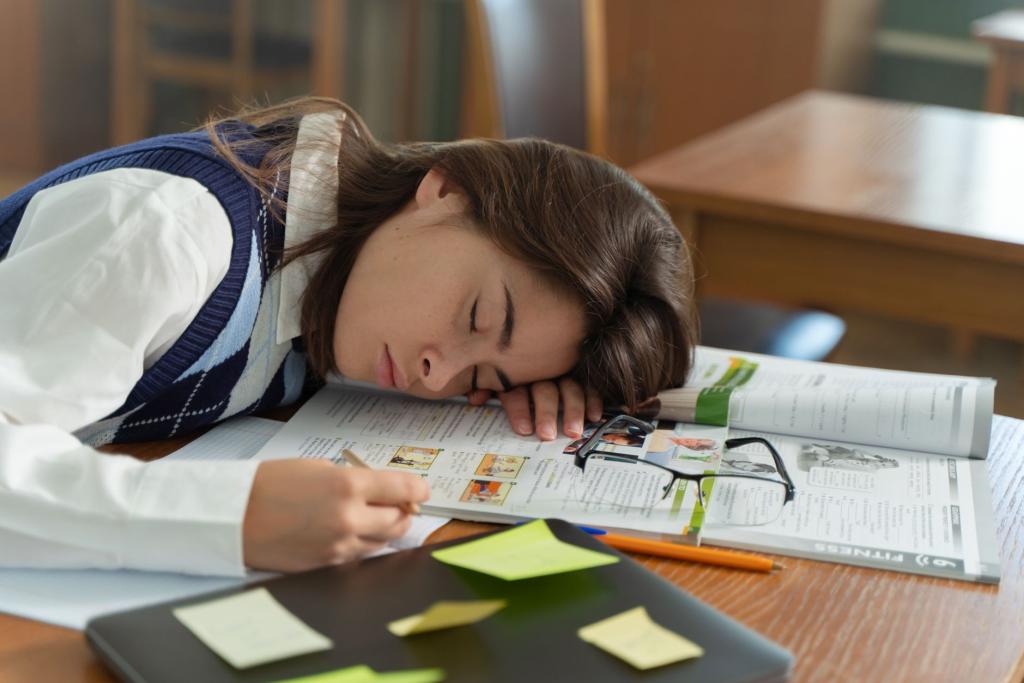
What if the fastest route to a better GPA is not another hour in the library but an earlier bedtime — one someone paid you to keep? A team of behavioral economists tested exactly that. They gave more than eleven hundred undergraduates at the University of Pittsburgh wrist trackers and a phone app that sent bedtime reminders and morning sleep feedback, then offered one group payment for every night they logged at least seven hours of sleep. In short, the experiment asked whether being paid to sleep would buy healthier habits and higher grades. It did.
The design was deliberately practical, built to measure cause and effect rather than correlation. Of the students enrolled, 468 received nightly payments of about five dollars each time they cleared the seven-hour mark during a four-week stretch, while a 380-student comparison group got the same reminders and feedback with no cash attached. Payment landed each morning, so the reward arrived hours after the behavior, not weeks later. By the end of the term, the paid group had hit the seven-hour target on 26% more nights than the comparison group, added roughly nineteen extra minutes of sleep per school night, and posted grade-point averages about 0.08 points higher — a lift the researchers describe as roughly a quarter of the gap between students who arrived with above-average and below-average high-school grades, according to the researchers, as described by the Penn center that covered the study and in the team's own write-up.
Context makes the numbers striking. Before anything changed, the average student in the trial was sleeping just 6.6 hours a night, and nearly all of them said their ideal night of rest was longer than the one they were actually getting. The problem was not ambition. It was follow-through, night after night, which is precisely the kind of gap that small, well-timed incentives are designed to close.
Why the cash worked when reminders alone did not
The study's sharpest lesson may be what failed. Students who received only the reminders and the morning feedback — no payments — slept barely any more than they had before. That finding lands hard because the barrier was never ignorance: the trackers showed students were far less aware of their own sleep deficits than they thought, yet even with accurate nightly feedback in front of them, the habit barely budged. Behavioral economists have a name for this pattern, and the trial was built around it: present bias, the tendency to trade a known long-term payoff for one more episode, one more scroll, one more late night. A few dollars the next morning was enough, for the students paid to sleep, to tilt the trade back toward the pillow.
Timing of the payout mattered almost as much as the payout itself. A version of the program that delivered the earnings as a single lump sum at the end of the semester lost roughly a third of the sleep gains compared with the nightly payments. The immediacy was the mechanism — the reward had to sit close to the choice it was meant to reshape. For students, that detail is portable: any self-imposed sleep incentive works better when the payoff arrives the next morning rather than at some hazy future date. It also suggests universities may be mispricing their investments in student success, as the researchers themselves noted — campuses pour resources into tutoring and advising while treating sleep, a cognitive input researchers have tied to learning, as a personal lifestyle choice rather than an academic one.
The effects were not evenly distributed, and that asymmetry points to who stands to gain the most. The sleep and grade gains were largest among first-term freshmen, whose routines were the least entrenched. Early college is the moment when late-night habits harden into identity — "I'm just a night person" — so catching students in that window produced outsized returns. There is a counterpoint worth weighing: paying students to sleep is not the same as teaching them to value sleep, and the trial makes no claim that a month of nudges rewrites a student's relationship with rest. But as a proof that behavior change is possible at a price point lower than a coffee run, the evidence is unusually direct.
The gains faded — but not right away
Perhaps the most encouraging finding came after the money ran out. When the four-week payment window closed, the formerly paid students did not snap straight back to their old schedules. They kept sleeping about eight minutes longer per night for roughly a month afterward, suggesting the enforced routine had built at least a partial habit rather than a purely transactional response. Their grade gains held through the following semester as well, before fading to undetectable levels two semesters out — a trajectory that, as Nice News noted in its summary of the results, points to real but temporary academic payoff from one short intervention.
So what should a sleep-deprived student actually do with this? The honest answer is that nobody is about to pay you for your bedtime. But the study's mechanics translate into free strategies. Pair a nightly sleep target with a same-day reward you control — a favorite breakfast, a streaming episode unlocked only after a logged early night — because the research shows the payoff must arrive close to the behavior. Make the goal concrete and verifiable, the way the wrist trackers did: pick a lights-out time, not a vague intention to "sleep more." And if you are a freshman reading this in October, know the data says your habits are still malleable — this is the semester when the returns on an earlier bedtime are highest.
The bigger picture reaches beyond any one campus. Roughly two-thirds of adolescents and young adults sleep less than the recommended seven hours, and about one-third of American adults fall short too. GenZ NewZ has previously covered research linking a few more minutes of nightly sleep to a longer life expectancy and a saliva-based test designed to measure sleep deprivation — both reminders of how seriously science now takes the hours we spend unconscious. Chronic short sleep is tied to a long roster of problems, from weaker memory and decision-making to elevated risks of obesity, high blood pressure and heart disease. If a modest, nightly reward can move the needle on sleep — and through it, on grades — the next frontier is finding versions of that reward that do not require a research budget: campus programs, employer wellness incentives, or simply a better deal we make with ourselves each night.
Comments 0
No comments yet. Be the first to share your thoughts!
Leave a comment
Share your thoughts. Your email will not be published.