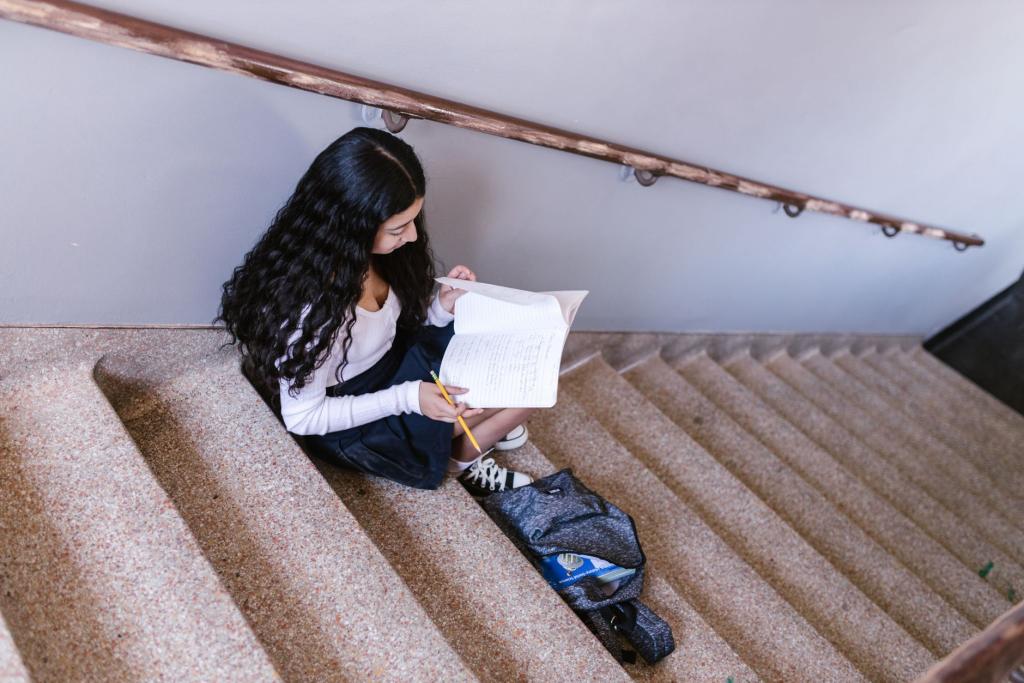
Anxiety now has a number for America's teenagers: one in six.
About one in six US teens is living with moderate-to-severe anxiety symptoms, according to a study published in JAMA Pediatrics on October 12, 2026. Put a face on the statistic and it means that in a typical classroom of 30 students, roughly five kids are carrying Serious Anxiety through every school day — not just nerves before a test, but the kind of persistent worry that interferes with sleep, school, and friendships.
Researchers at the University of Connecticut reached that figure by analyzing responses from 15,730 adolescents ages 12 to 20 who took part in the 2024 National Survey on Drug Use and Health, a large federally run annual survey. Each teen's answers were scored with the GAD-7, a standard seven-question screening questionnaire that sorts symptoms into mild, moderate, and severe bands. The analysis itself was completed in June 2026, which makes it the freshest national estimate of teen anxiety available. What worries public-health experts most is not only the headline number, but what travels with it: among the hardest-hit teens, anxiety rarely shows up alone.
Girls carry the heaviest load
The gender gap is wide. Severe anxiety symptoms showed up in 10.8 percent of teenage girls, compared with 3.7 percent of boys. Moderate symptoms followed the same pattern, affecting 13.4 percent of girls versus 6.0 percent of boys. In practical terms, a teenage girl is close to twice as likely as a teenage boy to land in the moderate range and nearly three times as likely to land in the severe one.
The emotional toll runs deep for teens whose Serious Anxiety lands in the severe band. Nearly two-thirds of them also met the criteria for a major depressive episode in the past year, roughly half said they had thought about suicide, and nearly one in three reported using substances in the past month. A screening score is not a clinical diagnosis, and the answers were self-reported, but what the questionnaire captures is real distress that a clinician would still need to confirm. It also helps explain the neuroscience side of the story: as we recently covered, researchers have begun mapping the brain circuits behind teen anxiety.
The pattern cuts both ways. Girls report the heaviest symptoms, yet boys are among the groups least likely to receive treatment when symptoms are severe. That mismatch raises a question the study cannot fully answer on its own: whether some boys' anxiety goes unseen rather than unfelt, because boys are less willing to tell or less often asked. A questionnaire can only capture what a teenager is willing to put into words.Nearly half of the teens who need help never get it
Despite the weight of the symptoms, professional care reaches only a fraction of these kids. About 41 percent of teens with severe anxiety received no mental health treatment in the past year, and nearly half of those with moderate symptoms went without care as well, as WellTica reported.
The research team pointed to a mix of barriers behind the gap. Stigma still keeps families quiet. Child mental-health specialists remain scarce. Insurance coverage and cost get in the way. And care that fits a family's language and culture can be hard to find. Boys, Black teenagers, and uninsured teenagers were the least likely to get help even when their symptoms were severe — the same groups the health system already serves least well.
The new numbers extend a trend that was visible before the pandemic. A separate analysis of parent-reported survey data by researchers at Lurie Children's Hospital in Chicago found that diagnosed anxiety among children under 18 climbed from 7.1 percent in 2016 to 10.6 percent by 2022, with depression rising alongside it. And the youngest cohort may be having it even harder: a recent study found Gen Alpha reports more social anxiety than Gen Z.
Families do not have to wait for a crisis to act. The US Preventive Services Task Force recommends that all children ages 8 to 18 be screened for anxiety at routine checkups, even when nothing looks wrong. Signs worth raising with a pediatrician include a teen who avoids school, friends, or activities they used to enjoy, frequent stomachaches or headaches with no clear cause, persistent trouble sleeping, and sudden drops in grades or appetite. And anyone in crisis can call or text 988, the Suicide and Crisis Lifeline, at any hour. Full details of the study are in the published paper.
Comments 0
No comments yet. Be the first to share your thoughts!
Leave a comment
Share your thoughts. Your email will not be published.