Inside the saliva sleep deprivation test
For the first time, scientists have found a chemical fingerprint of sleeplessness in saliva and turned it into a working sleep deprivation test. Twenty healthy young men who normally sleep seven to nine hours a night went through three sleep scenarios in a Zurich laboratory, and the samples taken after a full night without sleep carried molecular changes absent from the rested ones. A machine-learning model trained on those changes correctly flagged sleep-deprived samples ninety-four percent of the time, from a single sample with no baseline reading needed. The peer-reviewed findings appear in the Journal of Proteome Research.
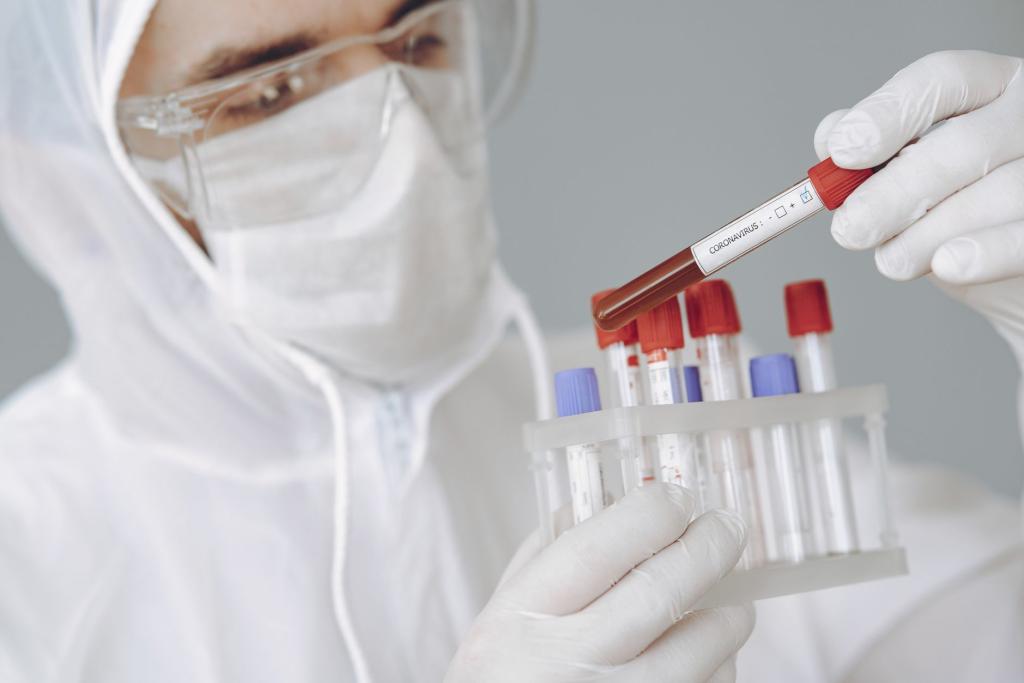
The study design reads like a controlled descent into exhaustion. Each volunteer cycled through three conditions in random order, roughly a week apart: one night with no sleep at all, four consecutive nights limited to six hours, and a rested control of about eight hours. Researchers collected saliva before and after each stretch and ran it through high-resolution mass spectrometry, sifting through an enormous field of molecules for a reliable pattern. Ten molecular differences separated the sleepless samples from the rested ones, as reported by Futurity in its coverage of the research from the University of Zurich.
What makes the result striking is that the sleep deprivation test needed no personal baseline. In the real world, a roadside officer would not have a well-rested sample from the same driver on file, so any test that only works by comparison would be useless. This one reads a single sample cold. The marker panel was also deliberately tuned to be strict: the researchers configured it so that wrongly calling a rested person sleep-deprived counts as worse than missing a tired one, a design choice aimed squarely at fairness, as reported by ScienceBlog.
The long-term ambition is a rapid, on-site version of the sleep deprivation test that an officer or a safety manager could use the way they use a breathalyzer today. First author Michael Scholz says such a test could improve road safety and make workplaces where attention is critical safer, because fatigue would finally be measurable instead of merely suspected. Before that happens, the marker panel must be validated under realistic conditions involving shift work, alcohol, and medications, all factors the follow-up study plans to probe.
Why a sleep deprivation test matters for drivers
Drowsy driving is implicated in tens of thousands of crashes in the United States every year, yet there has never been an objective way to measure tiredness the way a breathalyzer measures alcohol. A drunk driver leaves a number; a drowsy driver leaves an excuse, and enforcement leans entirely on what exhausted people are willing to admit about themselves, which is not much. New Jersey's Maggie's Law already lets prosecutors treat twenty-four hours of continuous wakefulness behind the wheel as reckless driving, but proving wakefulness in court is another matter entirely. A reliable saliva test would give that law real teeth, according to Sleep Review's coverage of the study.
"Until now, sleep deprivation has been impossible to measure biochemically -- and yet it is one of the greatest burdens of our time," says corresponding author Thomas Kraemer. For young drivers, the group most likely to crash from drowsiness, and for night-shift workers running on fractured sleep, an objective test could one day matter enormously. Good sleep underpins physical and mental health, yet according to the latest Swiss Health Survey, around one-third of the population reports suffering from sleep disorders, with women and young people aged fifteen to thirty-nine particularly affected. The Swiss team is now scaling up to a large international assessment of more than one thousand samples, this time including women, shift workers, and frequent drivers.
Shift workers may gain the most from a practical sleep deprivation test. Nurses, warehouse crews, and delivery drivers routinely work through the hours when the body most wants sleep, and fatigue-related mistakes in those jobs can be catastrophic. An objective reading would give employers a fairer tool than gut instinct, and give workers a clearer line between a rough night and a dangerous one.
What the sleep deprivation test cannot do yet
The caveats are real, and the researchers are candid about them. The entire study ran on a small group of healthy young men on regular day-night schedules, a deliberately narrow slice of the driving public, and the models remain investigational. Strangely, the restricted-sleep condition produced nothing usable: four nights at six hours, an accumulated deficit equal to one fully missed night, left no exploitable fingerprint at all. Chronic grogginess, the most common kind of tiredness, hides better than the acute kind. And even after a full eight hours of recovery sleep, a handful of volunteers had not returned to a properly rested chemical profile, a hint that one night in bed does not wipe the slate clean for everyone.
So no, nobody is getting pulled over for a spit test tomorrow. Until the larger trial reports, the sleep deprivation test remains a laboratory proof of concept rather than a roadside device, but it is the first sleep deprivation test of its kind: a direct biochemical signal of a sleepless night, readable from a single sample of spit. Your body's chemistry is already being read for other clues, from gut bacteria that predict vaccine fevers to stress hormones in hair. If the sleepiness fingerprint survives testing in a broader, messier population, the question stops being whether exhaustion can be measured and becomes what society does once it can. Read more on the Health beat.
Comments 0
No comments yet. Be the first to share your thoughts!
Leave a comment
Share your thoughts. Your email will not be published.