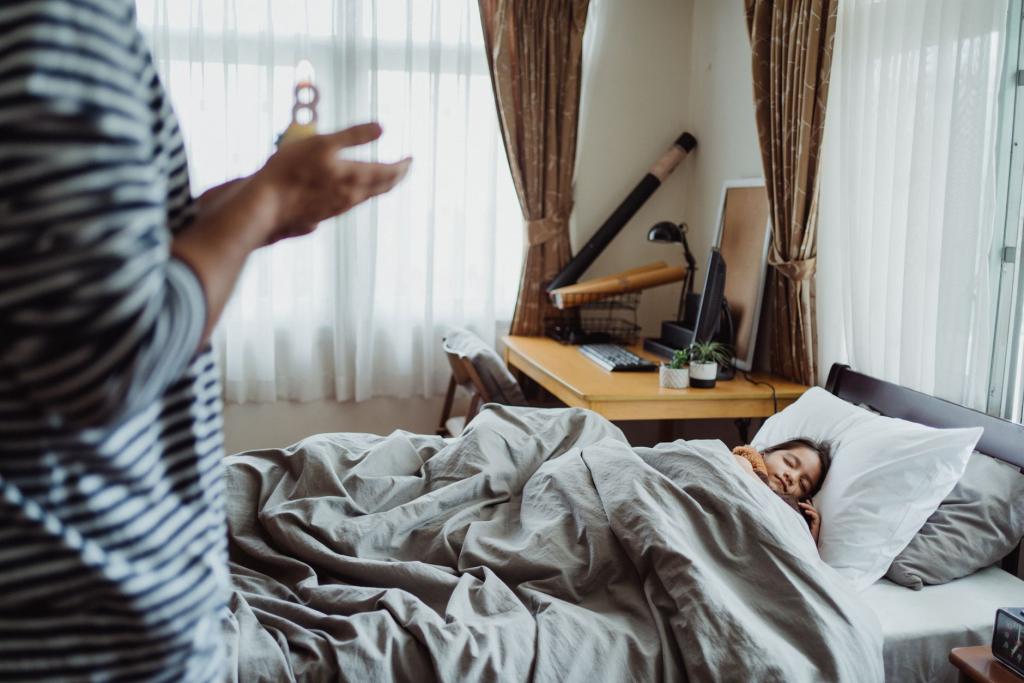
Living a longer life might come down to five extra minutes of sleep. A University of Sydney study published in the journal eClinicalMedicine earlier this year followed nearly sixty thousand adults over eight years and found that improvements in sleep, movement and nutrition were associated with up to about nine years of additional life and a similar gain in healthspan, the years lived in good health, as reported by Outside magazine. The full paper in eClinicalMedicine notes that the overall interpretation held up across a battery of sensitivity checks.
The most striking detail was the price of a single extra year of life. The researchers calculated that roughly five more minutes of sleep, about two additional minutes of moderate-to-vigorous physical activity and a modest diet upgrade, like eating half a cup more vegetables, each day were associated with one additional year of life. Those gains applied most clearly to people starting from the poorest habits, the group with the most room to improve.
The study's picture of a full longevity routine was still demanding on paper: between seven and eight hours of sleep each night, at least forty minutes of moderate-to-vigorous physical activity daily and an overall healthy diet. But the message that has traveled furthest is the gentler one. No life overhaul is required to move the needle. Three small levers, pulled together every day, do the job.
Why three small habits beat one big one
The research team gave the idea a name: the SPAN health framework, built on sleep, physical activity and nutrition working as a package. Their analysis showed that combined gains across all three outperformed larger changes in any single habit alone, according to a summary of the research on Earth.com. Pulling just one lever was not enough. Diet improvements on their own could not achieve a significant reduction in mortality risk, while the trio together produced a protective effect greater than the sum of its parts.
That synergy makes intuitive sense when the habits are watched interacting. Short sleep raises appetite and drains energy, which makes steady eating and regular movement harder to sustain. Poor food choices can erode sleep quality, while activity helps regulate blood sugar and mood. Emmanuel Stamatakis, a professor at the university, described a unique synergy between the three behaviors, noting that they rarely stay in their own lanes once daily routines start pressing on the body.
Lead study author Nick Koemel, a dietitian and research fellow, told reporters that targeting small improvements across multiple behaviors at once substantially reduces the change required in any single one, which may help people overcome the barriers that usually sink long-term resolutions. It is a direct challenge to decades of health advice built around single-behavior overhauls.
What the researchers actually measured
The analysis drew on records from the UK Biobank, a long-running health database, with participants wearing wrist devices for a week to track sleep and physical activity objectively. Diets were scored from zero to one hundred based on self-reported eating habits. The reference point was the fifth percentile of health behaviors: people sleeping under six hours a night, getting around seven minutes of daily exercise and scoring under forty on the nutrition scale.
The fine print matters. The study was observational, so it identifies associations rather than proving that the habit changes directly cause longer life. The participants also skewed older, so the findings may not map perfectly onto a younger and more active population. And the headline micro-gains were modeled for people starting from poor habits. For those whose routines already look decent, the marginal benefit of a few extra minutes is smaller, though the direction of the evidence still favors doing a little more.
Habit stacking turns targets into routines
Knowing the target is one thing. Hitting it every day for years is another, which is where habit stacking enters the picture. The term describes attaching a new behavior to one already performed consistently, using an existing routine as an anchor. It was popularized by James Clear in his bestselling book Atomic Habits and grew out of the work of behavioral scientist BJ Fogg. The More Minutes of Sleep math only works if those minutes actually happen every day, and stacking is the delivery system.
Psychologist Craig Kain, who has used the method in clinical work for years, told the magazine that the approach removes willpower from the equation. "Building habits has nothing to do with strength or willpower," he said. "It has everything to do with developing a method." When people frame behavior change as a test of character, failure becomes personal, he added: "If I succeed, I'm good, and if I fail, I'm bad. Sometimes we're not even aware we are doing this to ourselves." Habit stacking replaces that cycle with structure.
On a neurological level, Kain described existing habits as well-traveled highways in the brain. A new behavior starts as a lane built alongside the old one, and over time the two merge into a single superhighway that runs on autopilot. Getting there takes patience: health-related habits typically need two to five months to feel firmly in place, and he advises waiting until one behavior feels genuinely effortless before adding the next.
In practice, the stacks from the study's three pillars look almost comically small. While the coffee brews, slice fruit or throw together a serving of vegetables. Take the usual evening walk and pick up the pace for the opening stretch. Plug the phone in across the room instead of on the nightstand so the wind-down starts a little earlier. None of these asks for a new hour in the day. They ask for minutes attached to routines already in place.
That is the real argument the research makes. Longevity is usually sold as a project: a program, a membership, a total reinvention. The Sydney data suggest it behaves more like interest, compounding quietly on deposits most people would barely notice. Start with one stack, let it turn automatic, then add the next. For more practical routines built on the same idea, browse the Life Hacks topic page.
Comments 0
No comments yet. Be the first to share your thoughts!
Leave a comment
Share your thoughts. Your email will not be published.