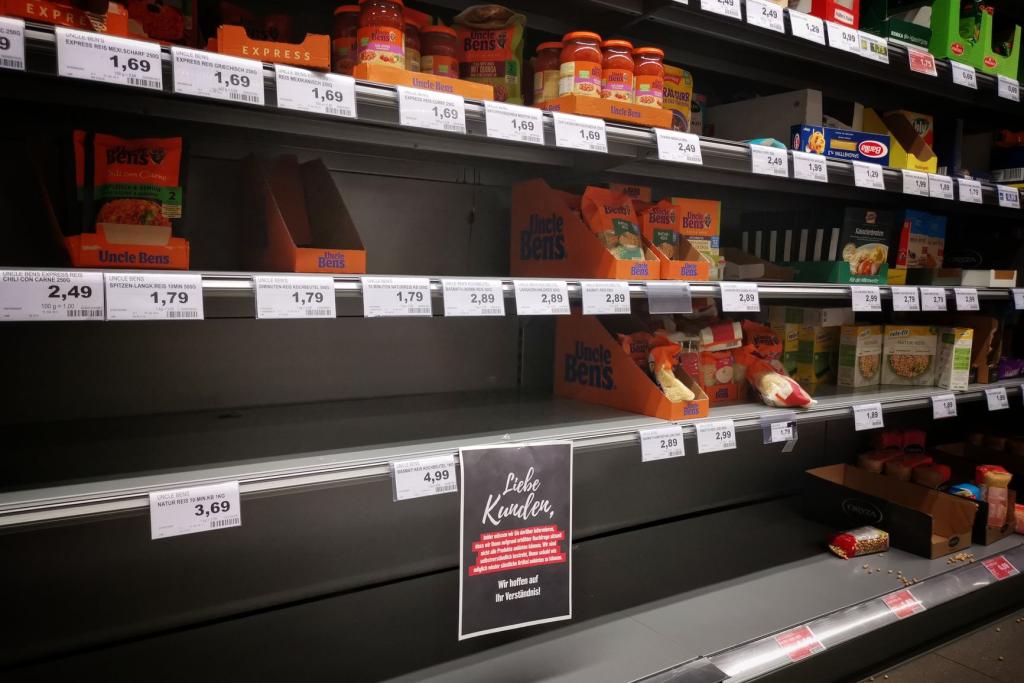
The French supermarket cyberattack that hit overnight on Sunday turned a boring piece of store hardware into a weapon: hackers reached into connected fridges and freezers and cooked the food inside. It sounds like a prank, but it is one of the stranger and more worrying hacks of the year.
What actually happened
According to Reuters, hackers raised the temperature of refrigerators and freezers at hundreds of French supermarkets to as high as fifty degrees Celsius overnight. That is about one hundred twenty-two degrees Fahrenheit, hot enough to wreck a freezer aisle in hours. The Paris prosecutor's office said a "large-scale" attack was affecting connected refrigerators at several major food retailers across France, leading to food losses and fires.
Prime Minister Sebastien Lecornu told the national cybersecurity agency, ANSSI, to investigate. His office said France was working with European counterparts, because other countries could be hit too.
Which stores got hit
Carrefour said eighty of its supermarkets were affected. Monoprix, which runs about four hundred ninety stores in France, said five percent of its shops were hit. Les Mousquetaires, the owner of Intermarche, said fridges at about one hundred fifty stores were heated to fifty degrees for six hours, and staff threw out all the affected food to remove any health risk.
Cooperative U was also targeted, and its chief executive, Dominique Schelcher, called it "extreme gravity" and "unprecedented" on X. Intermarche's boss, Thierry Cotillard, told BFM TV the attack would cause losses of "tens of millions of euros nationwide in a single day," as the ABC reported when it carried the Reuters story.
A Paris resident watched staff at one Intermarche toss cartfuls of defrosted frozen food into a giant bin, with melted ice cream spilling onto the street.
How a fridge gets hacked
Most people assume a supermarket fridge is a dumb metal box. In reality, store cold aisles typically run on control panels that manage every fridge and freezer in the building, and those panels can be reached over the internet so maintenance companies can adjust them from anywhere. That convenience is the opening attackers use.
According to Reuters, ANSSI found a vulnerability in software supplied by the Danish company Danfoss. BFM TV reported that the attackers seem to have triggered a forced defrost remotely, a feature normally used to clear frost from the equipment. Run it nonstop and the cabinets warm up fast.
Danfoss said it was aware of incidents affecting a limited number of refrigeration management systems. It told AFP that most of the affected equipment was legacy hardware that no longer receives security updates, naming its AK-SM800 and AK-SC355 controllers. It added that it had long urged customers to update firmware or move to newer systems.
The warning signs were public
Here is the uncomfortable part. In August, security firm Claroty's Team82 published research on flaws in the Danfoss AK-SM 800A controller. According to that research, as summarized by Reuters, updates addressed issues that could let attackers bypass authentication and run code on compromised devices. Insurance Business noted that it is still not confirmed whether those exact flaws were used in France.
The same Reuters report said the attacks resemble disruptions at about a dozen US military commissaries in late August, which also led to food losses after fridges were affected. Security analyst Felix Aime of Sekoia said Spain, Portugal, Poland, Germany and Belgium were affected as well, which suggests this is a Europe-wide problem and not just a French one.
Why Gen Z should care
This is the kind of attack nobody writes movies about, yet it hits daily life directly. If the smart fridge idea sounds cool, remember that every connected device is also a door someone can try to open. Old gear that never gets patched is the weak link, and a grocery store is just one example. Hospitals, warehouses and restaurants run the same kind of remote controls.
There is also a food story here. Cold chains are fragile. Frozen goods that thaw cannot be safely refrozen, so retailers had no choice but to bin them. Shoppers may see empty shelves and higher prices in the short term, especially at smaller stores that do not have the margin to absorb a loss like this.
The French retail federation, the FCD, called on Danfoss for "full transparency" about the incident and said some stores were already back to normal. Meanwhile, the Dutch retailer Ahold Delhaize said it was dealing with a separate "security issue" on its network and that there was no reason to link it to the French incidents.
What happens next
Investigators still have to answer the big questions: who did it, how they found the exposed systems, and whether more countries will report damage. No group has been named in the sources reviewed so far. Expect pressure on manufacturers to retire unsupported products, and on stores to keep those controllers off the open internet.
For now, the French supermarket cyberattack is a loud reminder that cybersecurity is not only about stolen passwords. Sometimes it is about whether your ice cream survives the night. For more on how digital threats spill into the real world, see our coverage of tech and games, and check the original reporting from ABC News and CBS News.
Comments 0
No comments yet. Be the first to share your thoughts!
Leave a comment
Share your thoughts. Your email will not be published.