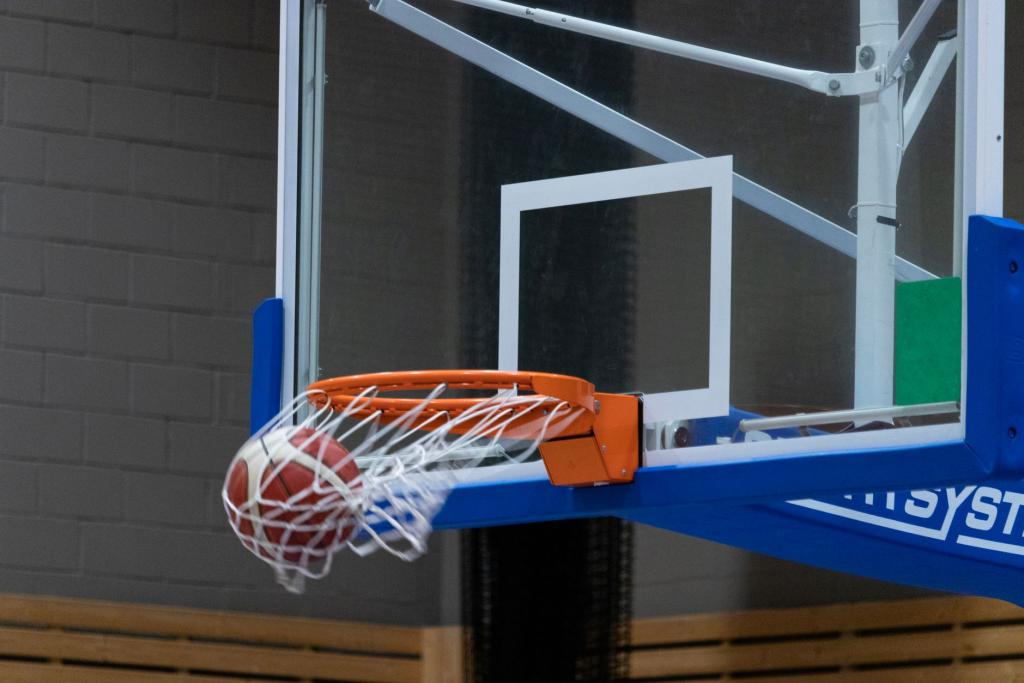
The NBA smart ball could be in real games as early as next year, and commissioner Adam Silver says players already cannot feel the difference. Speaking to CNBC, Silver described a Wilson basketball with a tiny Bluetooth sensor inside that tracks how the ball moves, spins and changes flight.
What is inside the NBA smart ball
According to Briefs, which summarized the CNBC interview, the chip weighs roughly a gram. A regulation ball weighs about six hundred twenty grams, so the sensor is a rounding error. "We're experimenting with putting a small chip in the ball that weighs roughly a gram," Silver said. The league has tested chipped and standard balls side by side in the G League, the Summer League and a handful of preseason games.
The big question for any gadget in a sport this precise is feel. Silver says the early answer is good. "Nobody could tell the difference. So that's a good sign," he said, according to Briefs. For a league where shooters obsess over rotation and grip, that matters more than any spec sheet.
Refs get the first upgrade
The first job for the NBA smart ball is officiating. Silver said the data could flag a tiny change in spin, which might show whether a player grazed the ball before it went out of bounds. It could also show whether a shot's path was altered. "I think you could see as soon as next year us using it for officiating in our games," he said.
Think about every replay review that ends with fans screaming at the screen. A sensor that records the exact moment a ball's spin changes would give referees something sharper than a blurry angle. It will not end arguments, because this is basketball, but it could shrink them.
Your pickup game is next
Silver also pointed to a consumer version. Picture a regular player shooting hundreds of attempts and then seeing a graph of which release angles and spins actually went in. "You'll then see the graph, and you'll see for which the angle of the shots that went in, they're more likely to go in," he said. Still, he cautioned that the version you could buy is "a few years away."
That puts the NBA smart ball in the same lane as the smart gear that already tracks runners, cyclists and golfers. The difference is that a basketball gets slapped, spun and bounced off hardwood thousands of times, so the engineering bar is high. A chip that survives all that and stays invisible to a pro hand is a real flex.
Players are not ready to wear the data
Not everything is smooth. Silver told CNBC in Macao, ahead of the China Games, that the league and the players union have no deal on wearable sensors in games, according to SportsMonkie, which cited Sportskeeda and Fadeaway World. Players worry that data showing a drop in speed or output could be used against them when contracts are negotiated.
Silver said he understands that fear. His own framing was blunt: players already wear trackers for roughly twenty two hours a day, and the only time the devices come off is during games. "So that can't make sense," he said. He added that the league will "work something out" with the union. Officials did pilot wrist devices in some Summer League and preseason games, which the league called a successful pilot, though that will not carry into the regular season.
Why it matters for fans
If the NBA smart ball arrives on schedule, broadcasts could get richer on-screen data, and calls could get more consistent. The hard part is trust. A ball sensor measures the ball, not the player, which may make it an easier sell to the union than a wrist strap. Still, any data stream becomes valuable fast, and players want a firewall between that data and the bargaining table.
For now, nothing changes on opening night. The chipped ball is still an experiment, officiating is the likely debut, and the consumer product is years out. Keep an eye on how the union talks go, because that is the real gatekeeper. For more on the games and the gear around them, browse our sports coverage.
Comments 0
No comments yet. Be the first to share your thoughts!
Leave a comment
Share your thoughts. Your email will not be published.