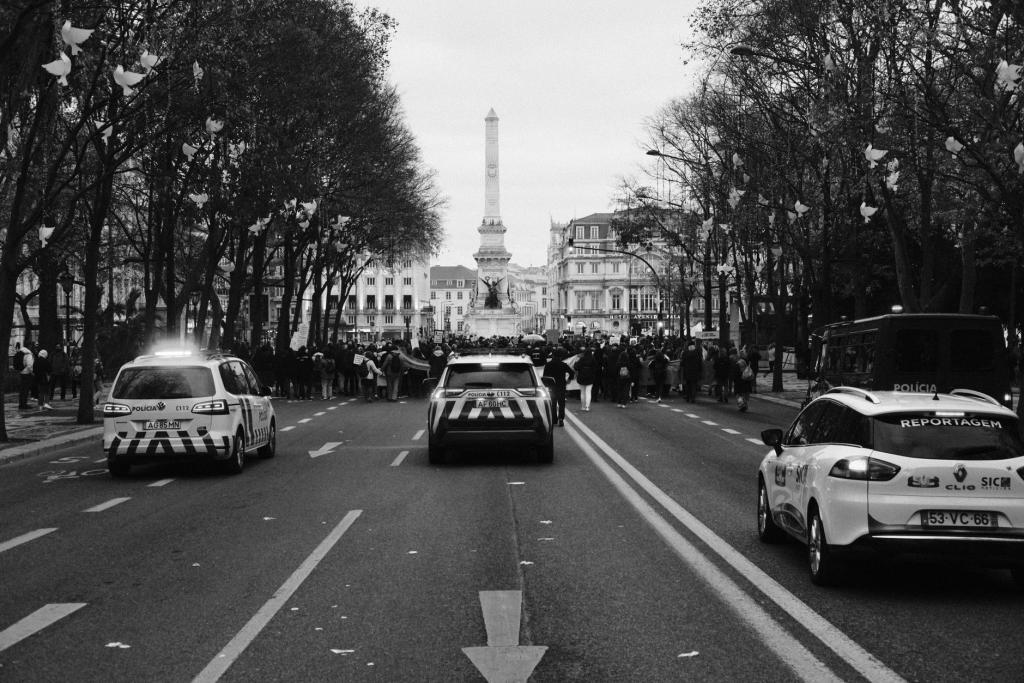
On October 17, the France student uprising stopped being a school story and became a national one. What began in mid-September as a teachers' strike over staffing and crumbling classrooms in the Paris suburb of Créteil had grown into a youth revolt that shut down high schools across the country. By Saturday, that revolt had pulled unions, retirees, farmers and revived yellow vests into one hundred ten marches nationwide, and by nightfall parts of France were burning.
The scale is contested, as protest counts often are. Interior Minister Laurent Nuñez put the national turnout at five hundred fifty thousand, including one hundred ten thousand in Paris, while the CGT union, which joined the marches, told Reuters the real figure was eight hundred thousand. What is not contested is what followed: masked groups on the margins of the marches torched cars, looted shops and set public buildings alight in Paris, Marseille, Lyon, Lille, Bordeaux, Limoges and beyond. By late Saturday, Prime Minister Sébastien Lecornu reported around one thousand two hundred arrests and one hundred fifty injured police officers and gendarmes, as French television reported that ten thousand police and gendarmes had been deployed across the country. The France student uprising had stopped being containable as a school issue.
From school blockades to a burning town hall
The spark was always the schools. The International Action Center reported that by early October students had shut down around two thousand of France's three thousand seven hundred high schools, demanding staff, smaller classes and an end to decaying buildings. Blockades spread to universities, where students occupied campuses and drew in teachers' unions, widening the France student uprising beyond the lycées. On October 13, climate activist Greta Thunberg publicly joined a high-school blockade outside Paris, a visit that Particle reported as a visible show of cross-border backing for the students. The grievances were local; the momentum was not. MuseReporter's earlier account of the French student protest wave traced how those school demands won concessions earlier in October.
Saturday showed how far that momentum could travel. In Limoges, masked protesters torched a municipal police car, smashed the windows of the town hall and forced their way inside, setting the one hundred forty three year old building ablaze. The roof collapsed onto the lower floors and, according to AFP, prefect Maurice Barate said roughly two thirds of the exterior was already gone, calling the damage a "catastrophe for heritage" and a deliberate act by vandals. Mayor Guillaume Guérin said a monument had burned "but not the Republic," insisting public services would continue and those responsible would face prosecution.
In Marseille, protesters broke into the town hall and vandalized the lobby; in Lyon, the tourist office on Place Bellecour was set on fire; in Lille, an Apple store was broken into and emptied. The Metapress desk, drawing on AFP reporting, described the day as some of the worst violence the country has witnessed in decades.
The youth at the center of the France student uprising
Young people started the France student uprising, and they paid for it. In Saint-Étienne, a seventeen year old protester lost his hand to a police grenade, and the local prosecutor opened an investigation handed to the police inspectorate, the IGPN. Earlier this month, a fifteen year old student in Lens lost a hand in a similar incident. According to the BBC, students at the marches described themselves as "pacifists" who were "just trying to make things change, but nothing is moving." The Associated Press reported that gasoline, energy and food prices have kept climbing in recent months. The France student uprising keeps drawing teenagers into confrontations that leave marks, literal and otherwise.
The government's answer to the France student uprising was a hard line. President Emmanuel Macron wrote on X that violence had no place in the Republic and vowed that vandals and looters would be prosecuted and punished. Lecornu blamed "ultra-left groups" joined by criminals, wrote on X that the government would not be "intimidated" by the violence, and warned, as reported by the Metapress desk's account of his post, that some groups were using the unrest as a "warm-up" before the presidential election. Justice Minister Gérald Darmanin instructed prosecutors to seek pre-trial detention for anyone who attacked police, firefighters, public buildings or shops, while Nuñez ruled out declaring a state of emergency.
An explainer aggregating AFP, BBC, CBC and Le Monde reporting noted the same hard line. Government spokeswoman Maud Bregeon told reporters the president "stressed that young people have legitimate concerns," adding, in CBC's account, that those concerns were "being exploited for political purposes and turned into urban violence."
The France student uprising now faces its defining question: whether the school movement that lit the fuse can hold its demands together as the coalition widens. The Bridge Chronicle reported that students, trade unions and remnants of the yellow vest movement joined forces on Saturday, after calls circulated on social media to revive the movement that mobilized against living costs from twenty eighteen. The France student uprising had already shown it could outlast a news cycle; October 17 showed it could fill the streets of every major city at once. Jean-Luc Mélenchon of La France Insoumise marched, accused police of using excessive force and condemned the looting; Lecornu called those comments "dangerous and cynical." The CGT's demands — higher wages and pensions, stronger taxation of wealth — reach far beyond the lycées.
And with Macron leaving office next year and polls pointing to a Le Pen versus Mélenchon contest in the spring, many in Paris are reading October 17 as a preview.
Young people have been organizing against entrenched power on other fronts too, from the Rosebank oil field protest to the push for a Virginia data center moratorium. The students started with staffing and school roofs. They ended the month as the engine of the France student uprising.
Comments 0
No comments yet. Be the first to share your thoughts!
Leave a comment
Share your thoughts. Your email will not be published.