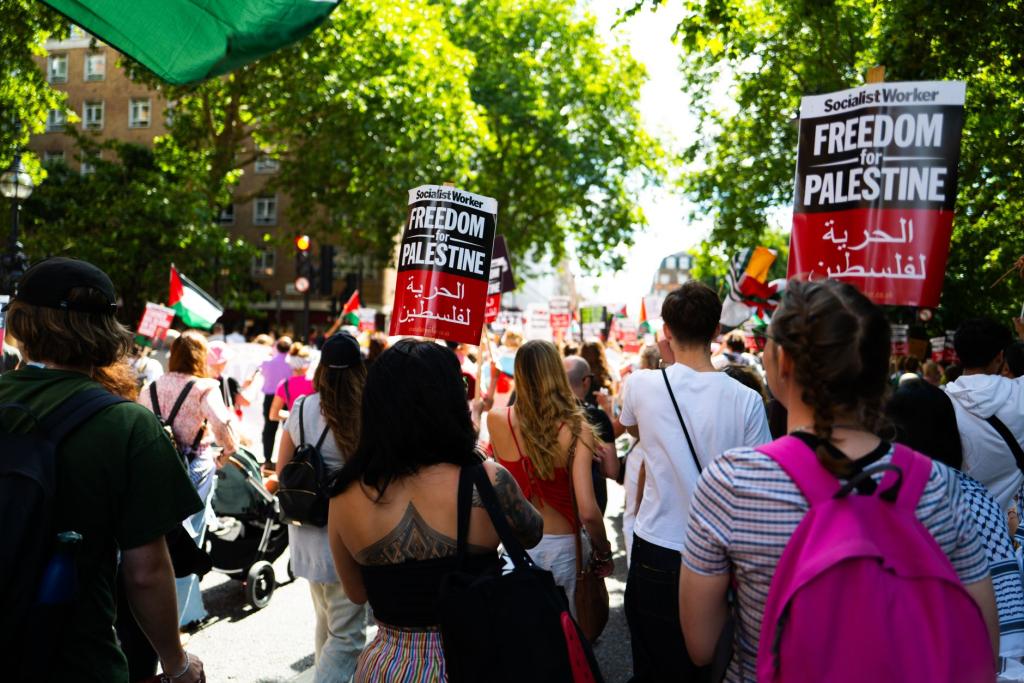
Campaigners from Fossil Free London gathered outside the Department for Energy Security and Net Zero in London on Tuesday, turning the building's steps into the most visible stage of the Rosebank oil field protest. Banners reading "#StopRosebank," "Rosebank = Climate Disaster," and "Keep the Line - No New Oil and Gas" framed a crowd chanting through loudspeakers, calling on the Labour government to keep its promise that no new oil and gas exploration would go ahead. Photographs from the scene showed campaigners who want the proposed North Sea projects stopped before they start.
The projects at the center of the row are Rosebank and Jackdaw, two fields north of Scotland. Rosebank is an oil field that also produces gas, sitting eighty miles north of the Shetland Islands, and it is described as the largest undeveloped oil and gas field in the United Kingdom, with reported capacity of up to five hundred million barrels over roughly a quarter century. Jackdaw is a gas field about one hundred fifty miles east of Aberdeen, where Shell Group, one of the co-developers, expects peak output equal to about six and a half percent of Britain's gas production, according to the Associated Press.
The fight has already gone to court once. A Conservative government approved both developments, but a court in Edinburgh ruled last year that those approvals were unlawful, after a legal challenge from Greenpeace and another nonprofit. "The public interest in authorities acting lawfully and the private interest of members of the public in climate change outweigh the private interest of the developers," judge Andrew Stewart ruled at the time, according to the Associated Press. The ruling sent both projects back for fresh decisions, which is why the Rosebank oil field protest has stayed alive this long.
The decision Britain keeps postponing
Public consultations on the two projects closed in August, and officials have been expected to make a decision ever since. The Associated Press reported that Prime Minister Andy Burnham is now facing a key test of his environmental record, caught between campaigners demanding rejection and industry voices, opposition politicians, and United States President Donald Trump pressing for approval. The issue grew more political after Trump claimed in August that people in Aberdeen were "dancing in the streets" over reports that Burnham would sign off on new drilling, and after Burnham reportedly told the president in their first phone call that the United Kingdom "can't ignore" North Sea resources.
Labour itself is split. Some lawmakers warned that approving the fields would break the party's promise in its election manifesto not to issue new oil and gas exploration licenses, while others argue that walking away would push investment and skilled work overseas. "If we do not proceed with Jackdaw and Rosebank, investment will leave the UK, jobs will disappear and expertise will be lost," lawmaker Graeme Downie said, according to the Associated Press.
Why the Rosebank oil field protest keeps growing
For the campaigners, the timing is the argument. Fossil Free London activist Victoria Smith told the crowd at the protest that Britain had just endured record-breaking summer heat waves, wildfires, and drought, and that opening new fields now would be "a wild decision, completely reckless by this government," according to the Associated Press. Her point: a country talking about extreme weather while signing off on new extraction is contradicting itself.
She is not alone in that reading. A joint letter signed by hundreds of climate and health experts last month argued that approving the projects would breach the United Kingdom's national and international climate commitments. Analysts at the Energy and Climate Intelligence Unit estimated that more than ninety percent of the oil and gas likely to be produced from the North Sea has already been extracted, which makes the remaining fields, in critics' telling, a costly distraction from renewables. That argument is the fuel behind the Rosebank oil field protest, and it travels well with younger voters who grew up hearing about net zero targets.
Critics also raised separate concerns about Rosebank's links to the Israeli company Delek Group, which activists say profited from Israeli settlements in the West Bank. Green Party leader Zach Polanski is among the critics asking how the United Kingdom could ensure that revenue from any oil and gas production would not finance the settlements, according to the Associated Press.
What happens next
The money math is loud on both sides. An industry report warned that rejecting Rosebank and Jackdaw could cost the British economy just under eleven billion pounds, while approving them could add roughly four billion pounds in tax revenue over the next decade. Supporters of drilling add that domestic production emits less carbon than importing oil and gas, while opponents counter that North Sea reserves are too small to move household bills because prices are set on international markets.
Britain's energy department has declined to say which way the decision will go, calling the North Sea "a vital national asset" and saying any choice will weigh environmental assessments and public representations from the consultation. The Rosebank oil field protest movement, which sits alongside other youth-led climate campaigns covered here like the fight for a Virginia data center moratorium and the Canadian teens behind the La Rose climate trial, plans to keep the pressure on until Burnham rules. For another angle on the energy transition, see our piece on bamboo biofuel's potential for aviation.
The facts in this article come from an Associated Press report published October 14, 2026 and Press Association reporting on the industry study and Tuesday's demonstration.
Comments 0
No comments yet. Be the first to share your thoughts!
Leave a comment
Share your thoughts. Your email will not be published.