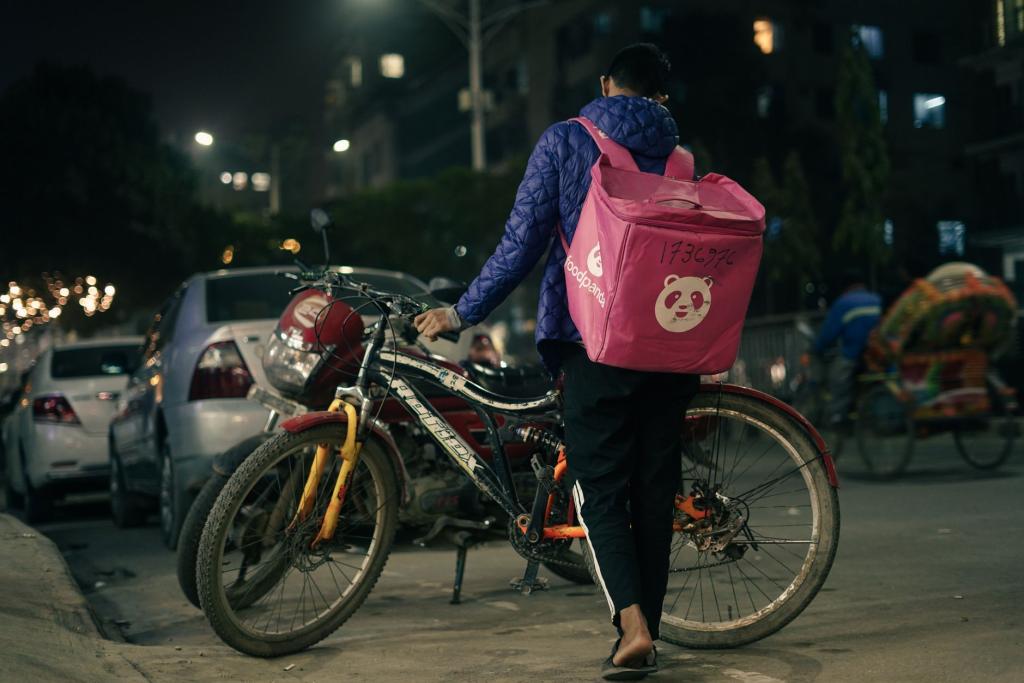
Delivery Guilt has a face, and she lives in Raleigh, North Carolina. Caroline Bauldree, a 24-year-old nanny, fell into near-daily DoorDashing back in college. she has described the habit as a dream: any food, from any restaurant, arriving at her door. Then the receipt lands, and nine times out of ten the convenience curdles into self-reproach. That post-order regret even has a name now: delivery guilt, the specific shame of loving a habit you cannot quite defend.
The numbers behind that shame are stark. A 2026 survey of two thousand American adults by FinanceBuzz and Bank of America found that nearly three-quarters of Gen Z respondents have food delivered at least monthly, compared with fewer than half of Baby Boomers. Gen Z orders takeout an average of five times a month, more than double the boomer rate. Across all ages, well over half of Americans get takeout or delivery weekly or more. The top reason people gave was disarmingly simple: nearly two-thirds said they just do not feel like cooking.
Ordering this often is expensive, and the embarrassment runs deep. According to the survey, half of its Gen Z respondents said they felt embarrassed by how much they spend on food delivery — sometimes enough that they lie about the total to friends and family. Bauldree estimates her own tab at roughly seventy-five dollars a week. The guilt is not just about the money. People told researchers they suspect the apps skim more than they should, and they worry friends will read the habit as laziness.
The Tab You Cannot See Until Checkout
Part of the shame is how invisible the spending stays. Joy Lu, an assistant professor of marketing at Carnegie Mellon University who studies delivery pricing, calls food delivery an "affordable luxury": a treat that feels small until the fees stack up at checkout. Nearly four in five Gen Z respondents said they had abandoned an order after seeing the final total, and the average person said fees of less than ten dollars were enough to make them pick up the food themselves. Lu says people may not even realize how much they spend, or they consciously avoid looking. Lu said people may not want to look into their apps and see the total cost spent, adding that it is very easy to spend a bit at a time.
That sticker shock is the engine of Delivery Guilt: the gap between the menu price that lured you in and the checkout total you actually paid. The fee stack is where the habit stops feeling like self-care and starts feeling like a scam.
Regulators have started asking where all that fee money goes. The Federal Trade Commission is reportedly considering new rules that would target undisclosed fees from dynamic and surge pricing, according to industry publication Restaurant Business. Both major platforms push back: a Grubhub representative told the Guardian that customers can adjust an order at any time to stay within budget, while a DoorDash spokesperson said there were no hidden costs on the platform.
When the Apps Owe the Drivers
The most dramatic shot across the industry's bow came from New York City. Mayor Zohran Mamdani recently announced a fine against DoorDash worth about one hundred thirty-one and a half million dollars for what the city called systemic violations of its delivery worker laws, including late or insufficient pay. It was the largest worker settlement in the city's history, with roughly one hundred fifteen million dollars of the total going directly to DoorDashers. DoorDash said its mistakes had meant some drivers were underpaid or paid late, while insisting the errors were unintentional.
That settlement reframes the guilt conversation. The shame people feel is usually directed inward — worries about laziness or wasted money — but the biggest check in this story was written by a delivery app to its own workers. The apps' own fee structures, not just personal willpower, sit at the center of the backlash.
The Counterpoint: Delivery Is Not the Real Villain
Not everyone agrees the guilt is deserved. A New York influencer named Audrey Peters became a brief TikTok villain this year after posting a day of near-total DoorDashing, including a nineteen-dollar Starbucks pumpkin spice latte. She later said the post was deliberate "rage bait" for an audience primed to judge her laziness, and that she had felt guilty about what she spent that day. Her stunt points at something real: the finger-wagging. A February Fox News segment had an anchor telling viewers they could not complain about the cost of living while DoorDashing too much, echoing the old avocado-toast scolding of millennials.
Economists say that scolding misses the math. Citing 2024 data from the Bureau of Labor Statistics, economist Mike Konczal has argued that a bigger share of Americans' food budgets is actually going to groceries, not eating out and delivery. "Society as a whole is reallocating food spending toward cooking at home, not away from it," he wrote. Grocery prices are not helping either: the USDA projects food-at-home costs will rise about two and a half percent this year. For single people, or anyone far from a decent grocery store, cooking can cost nearly as much as ordering out once time, transport and waste are counted.
What To Do With the Guilt
Bauldree is trying to cut back, mostly because of other rising costs like rent and car insurance. "This economy is not for the weak," she said. Lu takes a harder line: she does not keep food-ordering apps on her own phone at all, calling them dangerous. The survey suggests a middle path is possible. Since the average person bails at around ten dollars in fees, deciding your own fee threshold before you open the app turns a shame spiral into a budget rule. Pick up the orders that would breach it, batch the rest, and tip when you can.
The broader lesson is that the guilt is a signal, not a verdict. Gen Z is not lazy for ordering dinner; the generation is ordering at historic rates because the math of a post-work evening rarely favors a grocery run. What deserves scrutiny is the fog between the menu price and the checkout total — and that part is finally getting attention. For more on how the habit became a budget line, see the convenience spending breakdown, and for the grocery side of the squeeze, the foodflation story explains why cooking at home stopped feeling like a deal.
Comments 0
No comments yet. Be the first to share your thoughts!
Leave a comment
Share your thoughts. Your email will not be published.