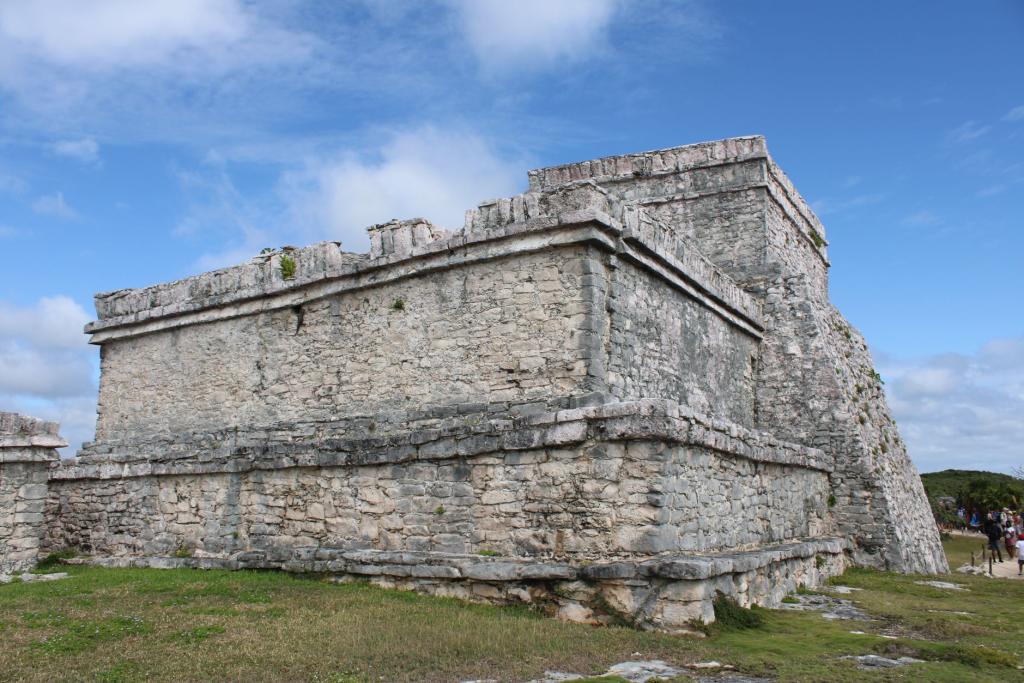
Archaeologists working along the route of Mexico's Maya Train have uncovered one of the ancient world's most complete Maya beekeeping sites: a pre-Hispanic meliponary in Quintana Roo that once housed rows of hollow-log hives for stingless bees. Mexico's National Institute of Anthropology and History announced further details of the discovery on September 23, highlighting its significance for understanding Maya domestic life and farming practices, according to HeritageDaily's report on the INAH announcement.
The structure, catalogued as monument T5_23001, was found near Aktun Chen Natural Park in Tulum during rescue excavations on Section 5 of the railway in 2022. Excavated by archaeologist Marisela Salazar Carrillo, the elongated building measures 19.5 metres long, 3.9 metres wide and 1.2 metres high, built from limestone masonry with stone wedges reinforcing walls of two to six courses resting directly on bedrock. Researchers believe it once sheltered rows of hollow wooden logs, known as jobones, that held stingless-bee colonies beneath a perishable roof.
Maya beekeeping, in stone and clay
Among the most telling finds were 40 circular discs of limestone and coral, each 10 to 20 centimetres across, discovered near the structure's walls. INAH researchers believe they served as lids for the hollow-log hives. Pottery fragments found alongside them may have come from vessels used to store honey, while other stone artefacts appear to be fishing-net weights and handstones for grinding food.
The discs matter because the technique they represent has barely changed. The finds could provide evidence of beekeeping techniques that have changed relatively little over thousands of years, INAH archaeologist Luis Ernesto Narvaez Mac said. Stone lids were historically standard for sealing Maya hives; over the past century most beekeepers have switched to wooden covers coated with mud, though some communities still use stones. Researchers now plan to test the discs' porous surfaces for traces of beeswax that could confirm their use in pre-Hispanic hives.
It is not the first such find on the rail corridor. In 2024, archaeologists working elsewhere in Quintana Roo recovered three carved limestone lids, known as panuchos, from what had initially looked like a simple wall, Smithsonian Magazine reported. The new site dwarfs that one: a full complex of dozens of lids with an intact building, suggesting honey production at a serious household scale. The Maya practised this form of apiculture as far back as 3,000 years ago, the Smithsonian noted, using honey in food, rituals and medicine.
A household, not just an apiary
The meliponary did not stand alone. Archaeologists identified a wider complex of stone walls, levelled ground and foundations that may have supported homes or storage buildings. A possible shrine sits less than 100 metres away, and a nearby cenote and cavern complete a landscape blending the domestic, the agricultural and the sacred.
That combination is the real discovery. Rather than a standalone farm, the site looks like a traditional Maya homestead where family life, food production and resource management ran together, with bees kept alongside maize and bean plots and honey stored steps from the living quarters. The result is a fuller picture of how Maya beekeeping worked as part of a working household rather than a specialist trade. Sixteenth-century chronicler Gonzalo Fernandez de Oviedo y Valdes described such multi-activity households, and the archaeology now backs him up.
The remains most likely date to the Late Postclassic period, between AD 1200 and 1521, though a date in the early Spanish contact era, from 1521 to 1697, remains possible. Similar structures along the eastern Yucatan coast have generally been assigned to the same periods, and analysis of the recovered pottery, still underway, should pin the chronology down.
The sacred bee is still buzzing
The species at the heart of the site, Melipona beecheii, is no museum piece. Stingless and golden with black stripes, it was domesticated by the Maya and given cultural, economic and social meaning long before colonization. Its honey, runnier and more floral than the European honeybee's, remains prized today.
The tradition continues, and it needs help. CNN recently profiled a network of women beekeepers in Quintana Roo keeping the thousand-year-old practice alive. The stingless bees yield only about 1.5 litres of honey a year against 30 litres from a European hive, but the honey's medicinal reputation, used for wounds, burns and immune support, keeps demand strong. Mexico's culture secretary, Claudia Curiel de Icaza, said the Tulum discovery should help researchers understand how Maya families organized their homes while honoring traditional knowledge still practised by Maya communities.
Next steps are in the lab: soil samples sent to the Soil and Chemical Analysis Laboratory in Yucatan may reconstruct the environment that supported the colonies, while INAH plans an ethnoarchaeological study comparing ancient and modern Maya beekeeping, setting the old meliponaries beside ones still in use. If beeswax turns up in those stone discs, a centuries-old apiary will have told us exactly what it was for. More ancient discoveries live on our The Old World page, including the looted Etruscan tomb at Vulci that still gave up gold.
Comments 0
No comments yet. Be the first to share your thoughts!
Leave a comment
Share your thoughts. Your email will not be published.