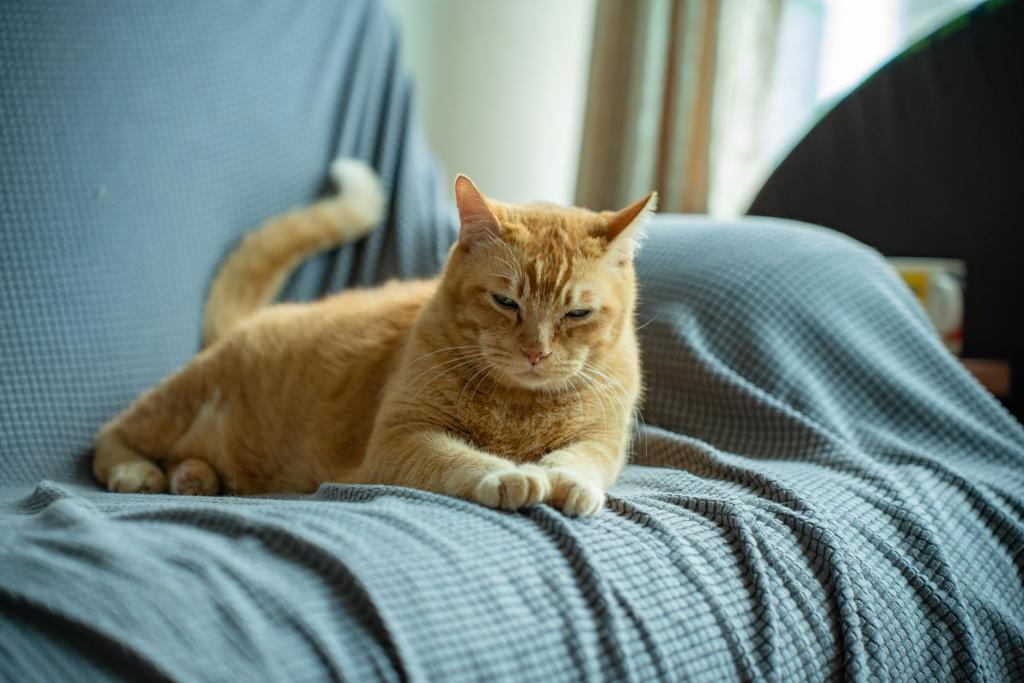
Your cat may share your hormones, according to a new study from Japan reported by Japan.co.jp. When researchers measured urine samples from owners and their cats over a month at home, the two species' oxytocin levels moved in the same direction, hinting at a quiet chemical link between the animals and the humans who feed them.
The study was led by Saho Takagi of Kyoto University, working with Takefumi Kikusui of Azabu University. The pair recruited nineteen owners, mostly women between the ages of eighteen and sixty, along with their twenty-nine cats, who ranged from four months to thirteen years old. Everything happened in the participants' own homes over roughly one month, which made the findings messier than laboratory data but far closer to real life.
How Scientists Measured the Invisible Bond
On three separate occasions, owners and cats each provided urine samples. From those, the team measured two hormones: oxytocin, which participates in social and reproductive processes, and cortisol, a hormone tied to stress responses. Urine could not be collected from five cats, so the main hormone analysis used twenty-four cat-owner pairings. That number should not be mistaken for two dozen independent households, since some owners had more than one cat in the study.
Rather than asking owners to remember how much time they spent near their pets, the researchers attached small wireless beacons to the cats' collars and used the owners' smartphones to log signal strength across the month. The result was a continuous record of physical proximity. Participants also filled out a standardized mood questionnaire, and the cats went through behavioral tests adapted from a well-known secure-base assessment.
The pattern that emerged was selective, which makes it more believable. Higher owner oxytocin was associated with higher cat oxytocin, while higher owner cortisol was associated with lower cat oxytocin. There was no clear correlation between the cortisol levels of the two species. The authors suggest oxytocin may be especially relevant to the physiological correspondence seen in cat-human households, but that is an interpretation of associations, not proof of a hormonal feedback loop.
What the Hormone Link Does Not Prove
The mood results were the part most likely to be overread. Owners living with cats that had higher oxytocin tended to report less anger, confusion, depression-related mood and tension. Greater physical proximity between owner and cat was linked to greater reported vigor, while the length of time someone had owned a cat showed no such relationship. These are intriguing connections, but they do not establish their direction: a calmer household could shape both the human and the animal, rather than the cat improving the person.
The feline side of the data adds nuance. Cats with higher oxytocin were more likely to approach people, but that applied to strangers as well as to their own owners. The finding argues against reading a hormone number as a personal love letter from one specific cat. Temperament and general sociability appear to be doing part of the work, alongside whatever bond exists with a particular human.
This is not the first time scientists have gone looking for a shared chemical loop between a species and its people. In 2015, a landmark paper in the journal Science described how mutual gaze between dogs and their owners raised oxytocin in both, work that included some of the same researchers. Cats are not simply small dogs, though: dogs evolved through cooperation with humans, while cats settled into human settlements through a much more independent arrangement. A feline result has to be read with that different history in mind.
The caveats are real and the authors state them plainly. Owners were recruited through social media and flyers rather than drawn from a representative population, the sample was small and mostly female, and shared household conditions can make interpretation tricky. A positive association is not a randomized intervention: nobody assigned cats to homes or manipulated contact time, so the study cannot show that adopting a cat improves clinical mental health. A systematic review of human-animal physiology published earlier this year reached a similar verdict, calling the evidence suggestive but heterogeneous, a reminder that science rarely hands out clean answers, as the salmon DNA skincare debate also demonstrated.
Why does a study like this resonate so far beyond the laboratory? Part of the answer is scale. A 2025 survey by the country's Pet Food Association estimated about eight point eight five million pet cats in Japan against six point eight two million dogs, which explains why research on feline households matters to millions of readers. And for the growing number of young adults budgeting for a pet, the rising cost of pet insurance is becoming part of the same calculation. The viral headline writes itself: your cat may share your hormones. The science says something stranger and more interesting than a slogan: two very different nervous systems, living under one roof, can end up chemically in step.
Comments 0
No comments yet. Be the first to share your thoughts!
Leave a comment
Share your thoughts. Your email will not be published.