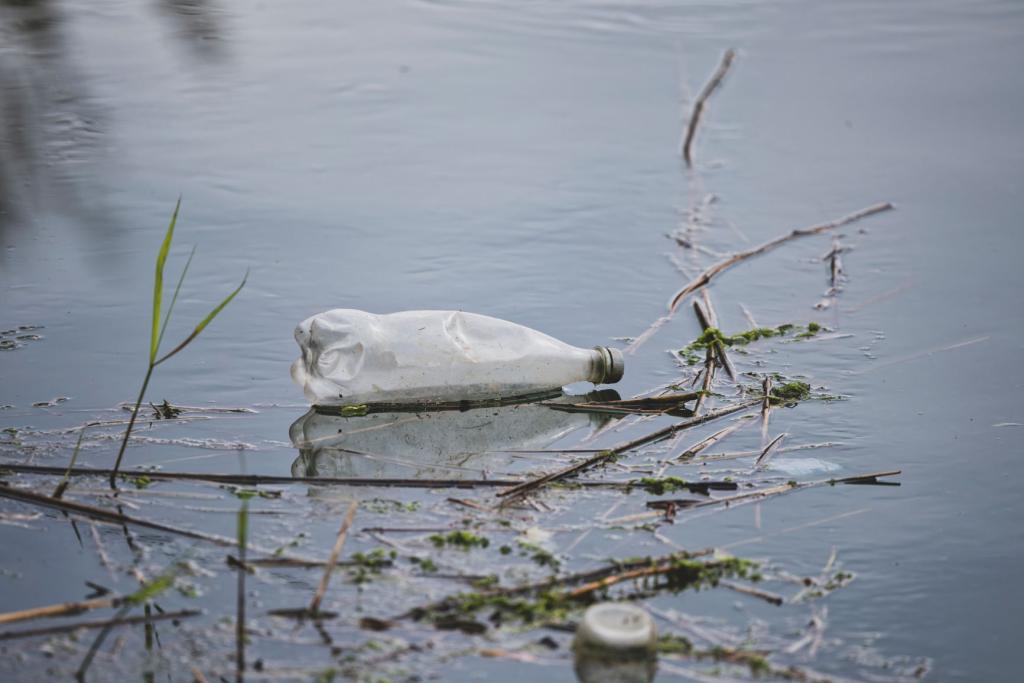
Microplastics free radicals are now a real thing scientists can point to, and it might explain why those tiny plastic flecks seem to wreck our bodies. A Columbia University team found that plastic does not sit quietly in water. It reacts, according to the Los Angeles Times.
The paper landed in Nature on Wednesday, and it flips a belief that plastics are chemically inert. Here is what the researchers actually found, what they did not prove, and what it means for your water bottle habit.
Plastic is not as chill as we thought
Plastics earned their place in packaging because they barely react with anything. That same trait is why they refuse to biodegrade. The Columbia team, working with colleagues at UC Berkeley, showed that once plastic breaks into microscopic bits, water changes the game.
When water touches a plastic surface, the pair spontaneously creates reactive oxygen species, a family of unstable, high-energy molecules. Wei Min, a Columbia professor of chemistry and biomedical engineering, said these molecules tend to damage nearby materials. If one bumps into DNA, he explained, it will most likely cause a mutation.
How the experiment worked
The researchers soaked bits of six common plastics: polyethylene, polypropylene, polystyrene, PVC, acrylic and PET, the type used in disposable water bottles. Polyethylene and polypropylene produced the most reactive molecules, while acrylic produced fewer.
Next, they exposed mouse red blood cells to each plastic. The cells changed shape and ruptured, and the more reactive molecules a plastic made, the more damage showed up. The team says water is an active player here, not a bystander, as noted by Columbia News.
Why smaller plastic is scarier
Here is the clever part. Break a plastic chunk into dust and its surface area explodes. Since the reaction happens at the surface where water meets plastic, tinier pieces mean far more chemistry. Water is also in every cell of your body, so the setup is basically everywhere.
The same Columbia group reported in twenty twenty-four that bottled water held ten to one hundred times more plastic particles than earlier estimates, and about ninety percent of them were nanoplastics small enough to cross the blood-brain barrier. Everyday stuff like laundry and microwaving food sheds billions of such particles, one co-author noted.
What this does not prove
Before you panic, the authors stress that the work does not show these reactions cause disease in people. It is a hypothesis for how microplastics might make us sick, and a strong clue. Matthew Campen of the University of New Mexico called it a foundational chemistry study that shows these particles can generate hydroxyl radicals.
There is also a twist. When the team added a surfactant chemical, the reactive molecules vanished. That hints other compounds inside the body could dampen the effect, so real bodies may behave differently than a lab dish, according to the Ars Technica write-up of the study.
Why Gen Z should care
Your generation grew up on single-use bottles, takeout tubs and fast fashion made from synthetic fibres. That means a lifetime of tiny plastic exposure is probably baked in already, and researchers keep finding these particles in the brain, the blood and even the testes. A clear chemical explanation gives scientists something concrete to test.
It also changes how labs may judge safety. If plastic itself is reactive in water, then testing only for added chemicals such as dyes or softeners misses part of the picture. Future studies will likely compare how different plastics, sizes and shapes behave inside living tissue, and whether the body can mop up the damage fast enough.
Researchers also point out that polyethylene and polypropylene are among the most common plastics on Earth, found in grocery bags, food containers and bottle caps. The ones that made the most reactive molecules are the ones most of us touch daily, which is exactly why follow-up work is going to be watched closely.
What you can do about it
Scientists say you do not need to wait for perfect proof. Tracey Woodruff, a Stanford epidemiologist, argued that people should already take steps to cut their plastic exposure, because waiting could mean more harm. Think fewer disposable bottles and less microwaving food in plastic containers.
The timing matters too. In April, the federal government announced a one hundred forty-four million dollar effort to study microplastics in bodies and drinking water, though the Los Angeles Times reported the EPA later shelved drinking water testing. Findings like this one give that research a clearer target.
The big takeaway is simple. Microplastics free radicals could be the missing link between plastic pollution and the health problems researchers keep spotting, and this chemistry will shape the next wave of studies. For more science coverage, browse our science section.
Comments 0
No comments yet. Be the first to share your thoughts!
Leave a comment
Share your thoughts. Your email will not be published.