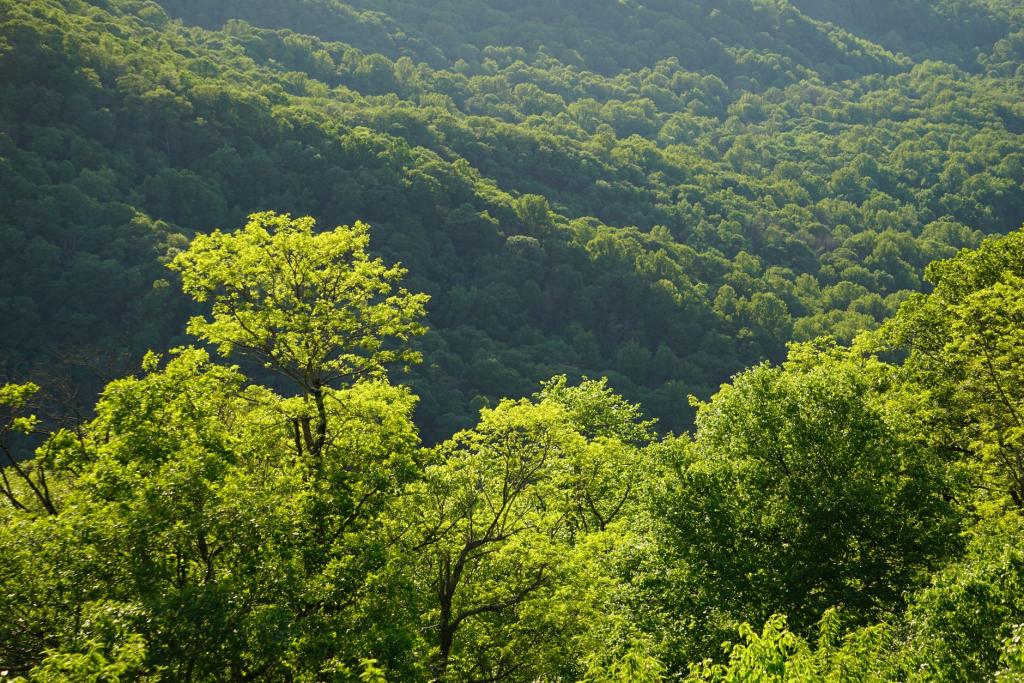
The world is running out of time to fix its forests. A new flagship report from the UN Food and Agriculture Organization warns that the window for forest restoration is "narrowing," with more than 489 million hectares of forest cleared between 1990 and 2025 and an even larger area suffering degradation. Published on Monday as part of the FAO's 28th Session of the Committee on Forestry and its 10th World Forest Week in Rome, the State of the World's Forests 2026 report urges governments to make forest restoration a national priority before delays lock landscapes into irreversible decline.
The numbers behind the warning are stark. According to the FAO, forests cover 4.14 billion hectares, about a third of Earth's land surface, and store 714 gigatonnes of carbon while hosting up to 80 percent of the world's terrestrial biodiversity. Nearly one-third of the global population depends on forests and trees for food security and livelihoods. Yet the world has lost an estimated 489 million hectares of forest since 1990, and more than 460 million hectares of the remaining forest is degraded, reducing its ability to support ecosystems, communities and economies.
A gap between promises and action
Governments have not been silent on the issue. Over the past two decades, national, regional and global initiatives have pledged to place more than 1 billion hectares of land under restoration. But the report finds that barely a fifth of that area is actually being restored, and the FAO calls progress "uneven" and "insufficient to meet growing global needs." In a notable bright spot, 91 countries have committed to restoring 190 million hectares of degraded forests, but even that commitment is far short of the 2030 targets.
Threats to forests are intensifying at the same time. Every year, around 127 million hectares of forest are affected by fires, according to the FAO, with further damage caused by insects, diseases and severe weather events. Agricultural expansion, climate change, pollution and the extraction of fossil fuels and other natural resources are compounding the pressure, the report says, making forests ever more vulnerable even in regions that had previously been stable.
Restoration as an economic investment
One of the report's most striking messages is that forest restoration is not just an environmental priority but a financial one. The FAO estimates that restoring 1 billion hectares of degraded land could generate $1.8 trillion in benefits every year, including gains for food security, water regulation, biodiversity and rural economies. Under favourable conditions, landscape restoration can deliver returns of up to $30 for every $1 invested, and investing $2.6 trillion over 15 years in land degradation and drought mitigation could yield an eight-to-one social return.
The costs of inaction are far larger. The report estimates that failing to restore degraded ecosystems costs the global economy between $878 billion and $6.3 trillion each year, equivalent to 2 to 8.3 percent of annual GDP depending on the scope of valuation. "The window for action is narrowing, and delayed or poorly designed restoration will increase long-term costs, exacerbate inequalities and risk locking landscapes into unsustainable trajectories," FAO Director-General Qu Dongyu wrote in the report's foreword.
What the report says must change
The State of the World's Forests 2026 identifies four pathways for accelerating progress: empowering people and strengthening rights, implementing restoration at the landscape scale, mobilizing finance and business models that support restoration, and creating coherent policies, institutions and laws. It stresses that restoration must be designed with the communities who depend on forests, rather than imposed from above, warning that poorly designed efforts can worsen inequalities even as they plant trees.
The report also presented new evidence on the link between forests and food security. At a high-level dialogue on "Forests, Food and Nutrition: Sustaining People and the Planet," the FAO and the Landscape Alliance presented what the agency described as the strongest evidence to date on the relationship between forests, agrifood systems and nutrition. Forests help regulate rainfall and reduce hunger, and the report makes the case that food policy and forest policy cannot be treated as separate agendas.
As co-lead of the United Nations Decade on Ecosystem Restoration, the FAO says it will continue supporting restoration initiatives around the world through technical assistance, policy support and partnerships. But the central message of the 2026 report is urgency: the pledges exist, the economics are compelling, and what is missing is the speed and scale of delivery. Whether governments treat forest restoration as the strategic investment the FAO says it is will determine whether the narrowing window stays open.
Read the UN's official release of the SOFO 2026 report on ReliefWeb.
More on forests and the climate crisis: our plants and trees and climate emergency coverage.
Comments 0
No comments yet. Be the first to share your thoughts!
Leave a comment
Share your thoughts. Your email will not be published.