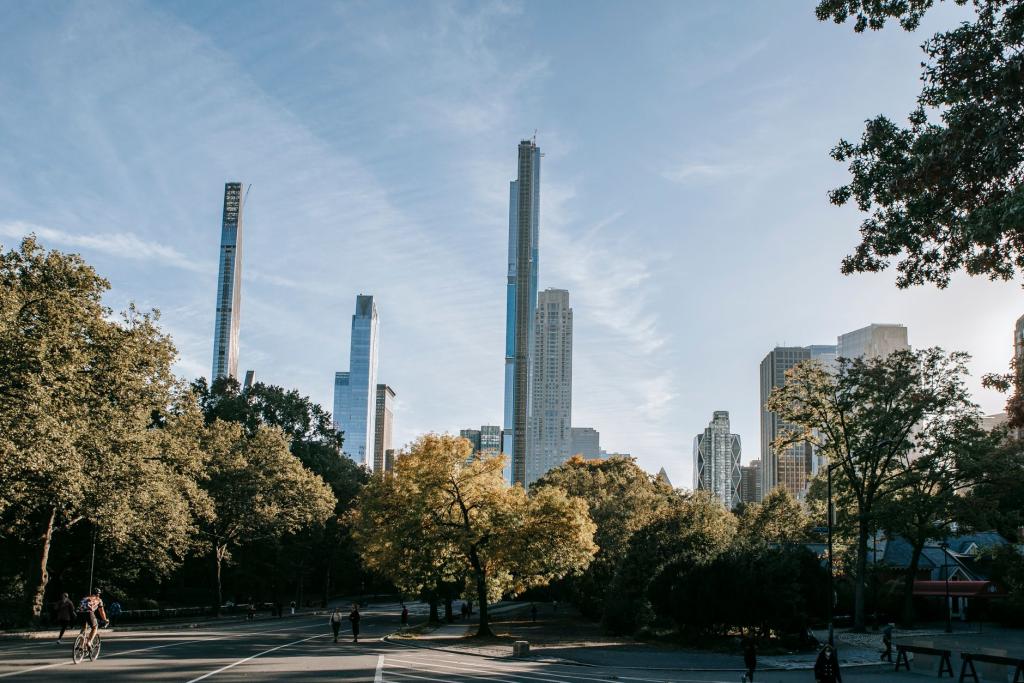
New York City just had its biggest tree-planting year in a decade, and the trees mostly went where the city runs hottest. City officials announced on September twenty-third that crews planted eighteen thousand two hundred sixty-one new trees in fiscal year twenty twenty-six, the largest total since fiscal year twenty sixteen, according to AM NY reporting carried by Planetizen.
The NYC tree planting boom was not evenly spread, and that was the point. Most of the new trees landed in neighborhoods vulnerable to extreme heat, where concrete and asphalt keep releasing warmth long after sunset. Heat maps of the five boroughs keep telling the same story: leafy blocks stay measurably cooler, and the blocks that needed cooling most got the fewest trees for years.
Shade as policy
At the heart of the NYC tree planting boom sits the city's Urban Forest Plan, which targets thirty percent tree canopy coverage by twenty forty. A canopy target sounds abstract until you picture one block in August. Shade over the sidewalk cuts surface temperatures, which cuts the heat radiating into apartments, which cuts how hard the air conditioners have to work. City officials said the new greenery should also improve air quality and reduce flooding, since street trees intercept rainwater before it reaches the drains.
That flood claim has New York evidence behind it. Columbia researchers have documented how the city's trees soak up stormwater that would otherwise join the combined flow of street runoff and household wastewater. During heavy storms, the aging sewer network cannot keep up, and the overflow goes straight into nearby rivers, sewage included, as described in reporting by Columbia's climate school on its urban tree research at Columbia's State of the Planet. Eighteen thousand new saplings will not fix the sewers, but the NYC tree planting boom is quietly part of the city's flood defense.
The logistics behind the surge
The thirty percent target shows how far the city still has to go. Reporting by Columbia's climate school noted that the city's roughly six hundred sixty thousand trees then covered about six percent of New York, which also explains why officials talk about canopy rather than raw tree counts: coverage is what cools the street, not the number on the press release.
The NYC tree planting boom is also about supply chains. According to the same AM NY reporting, the city began preparing earlier than usual, harvesting trees before they began budding and working with nurseries to increase the stock of trees available ahead of planting season. Anyone who has tried to buy a popular plant in May understands the bottleneck: nurseries sell out. When a city needs thousands of trees on the same schedule, ordering early is how you beat it.
Survival is the part of the NYC tree planting boom that rarely makes the announcements. Saplings need watering for their first few years, and trees die when nobody does the watering. City officials framed this year's surge as the start of a sustained program rather than a one-time stunt, which reframes the twenty forty canopy target: not as an aspiration, but as a schedule with planting seasons attached.
Trees are having a moment
The NYC tree planting boom is not the only one under way. Researchers recently mapped a six-million-tree expansion in Scotland's Cairngorms, and thousands of donors paid a Washington logger not to cut down the Elwha rainforest, according to reporting on the UK climate security pledge at GenZ NewZ. And the United Nations has now officially acknowledged that pulling carbon dioxide from the air is unavoidable, as covered in GenZ NewZ's report on the UN carbon removal agenda. Trees are the oldest carbon removal method around, and they happen to come with shade.
For New Yorkers, the math is simpler than any of that. Some of the hottest blocks in the five boroughs now have saplings with a fighting chance to grow into real shade. A decade from now, walking those streets on a hot afternoon should feel different. Whether it actually happens comes down to survival rates and watering in the first few years, the unglamorous work the announcements skip.
Comments 0
No comments yet. Be the first to share your thoughts!
Leave a comment
Share your thoughts. Your email will not be published.