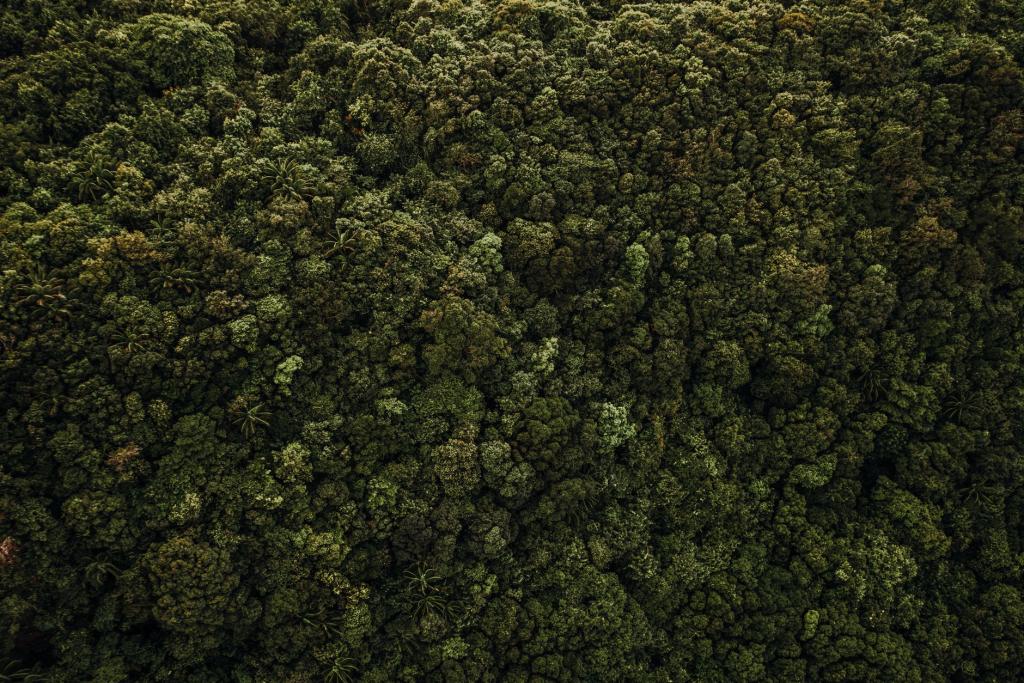
Forest restoration just moved from the sidelines to the main stage of global food policy. This week, senior officials and forestry experts from more than a hundred nations gathered in Rome for the UN food agency's biennial forestry talks, where the launch of a major new report argued that fixing damaged land is one of the smartest investments the world can make — for dinner tables as much as for the climate.
Why forest restoration suddenly matters for dinner
Forests feed people, not just ecosystems. As reported by ReliefWeb, more than five billion people rely on forests for their livelihoods to some degree, and in some forest-dependent communities, wild foods supply up to 80 percent of daily protein and account for half of all food eaten by weight. A separate FAO and Landscape Alliance report counts more than 50,000 wild species used by people for food, energy, medicine, and materials, including at least 10,000 species eaten as food. Beyond direct harvests, trees prop up farming itself — protecting soils, sustaining pollinators, cycling nutrients, and shielding crops and livestock from extreme weather. "Forests sustain people, agrifood systems and the planet," FAO Director-General QU Dongyu told the Rome gathering, calling it our responsibility to manage and restore them so they keep nourishing future generations.
The new flagship analysis, The State of the World's Forests 2026, makes the economic case for acting fast. According to the FAO's coverage of the Rome talks, more than 1.56 billion hectares of land worldwide are now degraded, including 460 million hectares of forest ecosystems — and between 1990 and 2025, deforestation cleared 489 million hectares, an area roughly the size of the European Union. Momentum is building in the other direction: 91 countries have committed to restore 190 million hectares of degraded forests. If you want to see what modern restoration looks like on the ground, the Plants and Trees topic page has more coverage, including a story on how researchers map at-risk forests from the air.
A week of talks, a decade of action
Timing is everything. The report launched on Monday, September 28, 2026, at the opening of the Committee on Forestry's biennial session in Rome — the UN food agency's highest body on forests, active since 1971 — which runs through October 2, 2026 alongside a companion week of events dedicated to forest restoration. This year's theme is "Forests for food, resilience and prosperity," and the turnout is serious: 17 ministers and vice-ministers, more than 550 delegates, and representatives from 38 international and research organizations are taking part.
The calendar beyond this week is just as loaded. Delegates also discussed the upcoming UN Decade on Afforestation and Reforestation, which runs from 2027 through 2036, plus the Global Fire Management Hub, forest-based bioeconomy approaches, and the FAO Green Cities Initiative, which aims to bring more trees and green infrastructure into cities. In other words, the Rome meeting is the starting gun for ten years of coordinated planting, protection, and restoration work.
The catch: restoration is not a simple tree-planting photo op
The report itself acknowledges that hitting global restoration targets by 2030 remains a significant challenge — and the counter-evidence is sobering. Wildfires now affect at least 127 million hectares of forest each year, a toll that is becoming more frequent and severe in many regions. Deforestation is still being driven by agricultural expansion, population growth, and rising demand for natural resources, and the damaged area keeps growing. Doing nothing is also expensive: reported by Rural Voice, the annual global cost of inaction on land degradation ranges from 878 billion dollars to 6.3 trillion dollars.
Here is the flip side the economists want you to hear: under the right conditions, landscape restoration can return up to thirty dollars for every dollar invested, and the report estimates an eight-to-one societal payoff from a 2.6 trillion-dollar, 15-year push on drought and land degradation. For Gen Z readers, the impact is not abstract. Healthier forests mean more stable food prices, fewer wildfire-smoke days, and greener cities — the Green Cities work alone touches urban trees, parks, and cooling shade in the places where most young people live. Forest restoration, in short, is not just about saving trees somewhere far away. It is about what is on your plate, what you breathe, and what your neighborhood looks like in a hotter decade.
Comments 0
No comments yet. Be the first to share your thoughts!
Leave a comment
Share your thoughts. Your email will not be published.