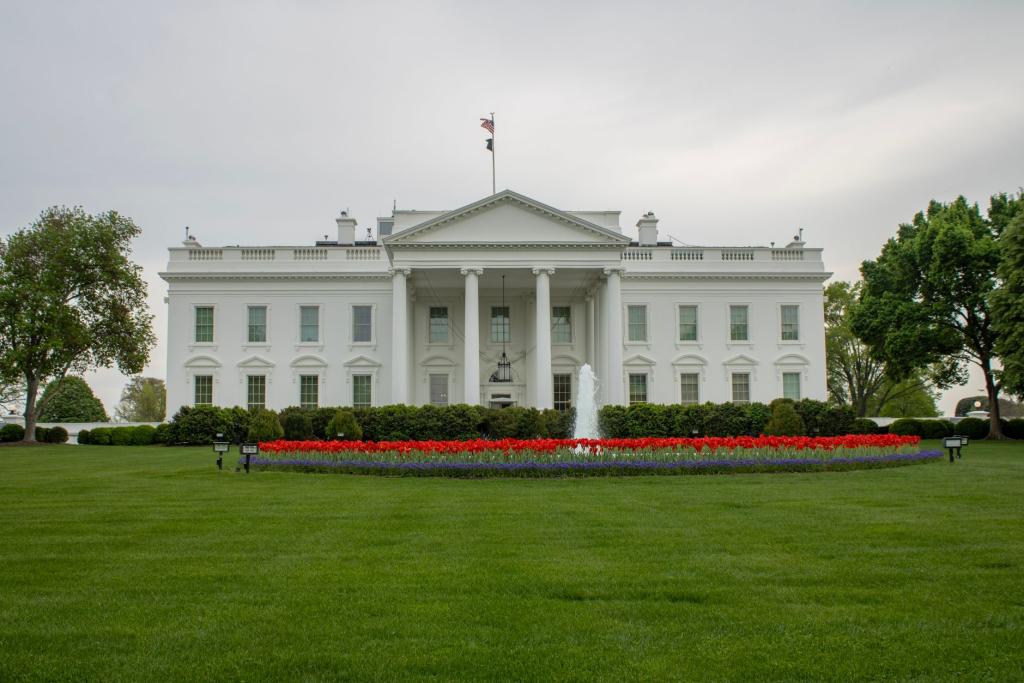
On Friday, Sept. 18, President Donald Trump wrote on Truth Social that CNN, MS NOW and Politico were banned from the White House, effective immediately. The post accused the three outlets of constantly reporting "FICTION and LIES" and warned that "other Fake News Media Outlets" would follow. There was no single story that triggered the decision. Speaking to reporters in the Oval Office later that day, Trump said it was "really just cumulative stories over the last few years. You get sick of it." Then he put the rationale in his own words, according to USA Today: "There's something wrong with a country that can allow people to write purposely negative stories. Now, if they want to write them, that's fine, but I don't have to let them into my, into the people's house."
The Trump White House press ban did not stay theoretical for long. On Saturday morning, Sept. 19, reporters from all three outlets were turned away at the White House gates and had their press passes confiscated, as reported by Reuters. MS NOW correspondent Akayla Gardner said her badge failed at the magnetometers and a security officer ordered her to hand it over. CNN's Betsy Klein said a Secret Service agent told her the pass had been deactivated and referred her to the White House press office. A Politico spokesperson confirmed that one of its reporters, Cheyenne Haslett, was denied entry as well.
The White House press room is not a fan club
Nobody has to like these outlets. You can think CNN is sloppy, that cable news is theatrical, that Politico's newsletter tone makes your skin crawl. None of that matters here. The question is whether the president of the United States gets to decide which journalists are allowed to stand in the briefing room and ask questions, based on whether he likes the coverage. The answer, under the First Amendment, is no.
National Press Club president Mark Schoeff Jr. said it as plainly as it can be said: "The First Amendment does not permit the government to pick and choose which journalists are allowed to do their jobs." Courts have been consistent on the principle behind it. Once the White House opens its doors to some reporters, it cannot shut them on others because of the viewpoints in their reporting. That is what legal scholars call viewpoint discrimination, and it is exactly what this looks like. Trump has been explicit about his reasons. He did not cite a security problem or a conduct violation. He cited "cumulative stories" he grew sick of. In his own words, it was "a ban on the free press," which is one of those moments where the label fits because the person applied it himself.
The administration's defense does not hold up to much scrutiny. On Sunday, Trump's ambassador to the United Nations, Mike Waltz, appeared on CNN's "State of the Union" to argue the move is lawful, citing a 1965 Supreme Court ruling, Zemel v. Rusk, about the right to gather information abroad. That case is about travel restrictions to Cuba in the 1960s, not about barring domestic reporters from a press room because of their coverage. The three outlets see it the same way. CNN called the ban "an illegal assault" on its constitutional right to report, and all three organizations said Sunday they are preparing legal challenges.
Why it matters to you
You might be tempted to file this one under politics-as-usual, something that happens in Washington and stays in Washington. But the White House press corps exists for a reason that touches your life directly. Those reporters are the people standing at the podium asking the questions that end up in your feed. They ask the president about the economy, about jobs, about the things his administration would rather not discuss. Every story you read about what the government did this week started, somewhere, with a person in a room being allowed to ask.
Take the questions out of the room and the coverage changes. The Trump White House press ban does not stop the outlets from reporting on Trump. All three said they will keep covering the administration. What it does is remove their reporters from the rooms where officials can be pressed in real time, on the record, in front of other journalists. That is the part the ban is really aimed at, and it is the part that should worry anyone who gets their news from a screen.
There is also the matter of where this goes next. Trump said more outlets would follow and named the New York Times and the Washington Post as examples of "fake news" in his remarks Friday, though he did not formally ban them. The Times called the ban "yet another retaliatory and unconstitutional threat." The direction is clear. Once a president can remove the outlets he dislikes from the building, the remaining press corps is the one he chose, and a chosen press corps is not a press corps at all. It is an audience.
A free press is free only when the government cannot punish the coverage it dislikes, no matter how negative that coverage feels to the person being covered. That principle held when it was inconvenient for other presidents, and it has to hold now. The outlets being targeted are not saints, and their reporting deserves the same scrutiny any news gets. But scrutiny of the press is the public's job and the press's own job, not a permission the president revokes from the Oval Office.
Comments 0
No comments yet. Be the first to share your thoughts!
Leave a comment
Share your thoughts. Your email will not be published.