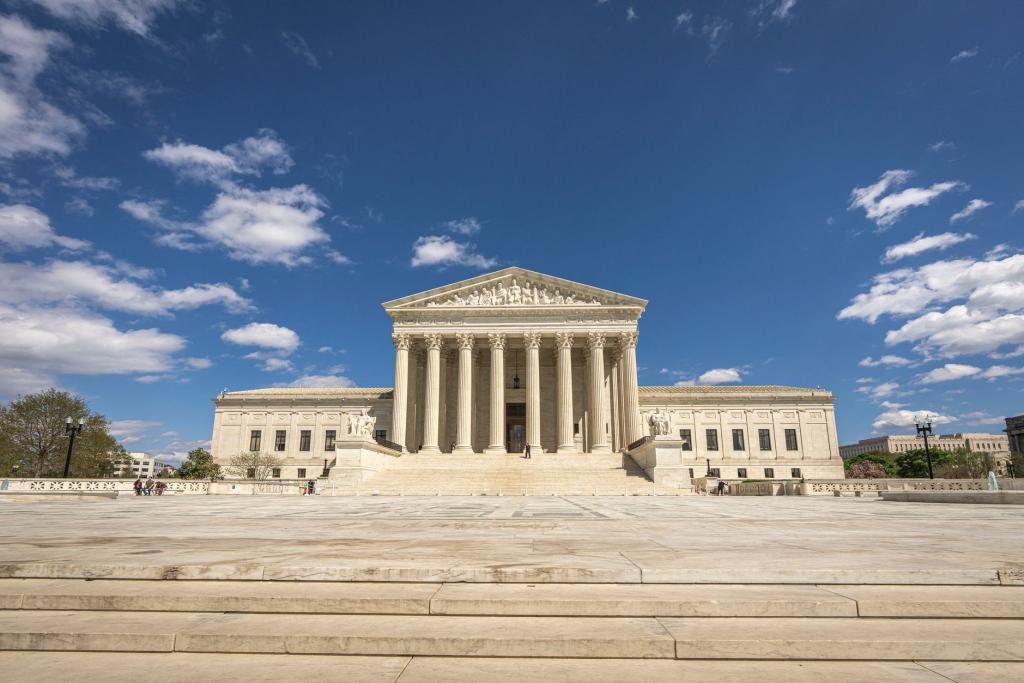
India's Supreme Court used a cricket analogy this week to say something obvious out loud: a referee picked by one of the teams will never look fair, even when he gets every call right. That is the problem at the heart of a split verdict the court handed down on September 23 over India's Election Appointment Law, the statute that decides who gets to appoint the people who run the country's elections.
The two judges could not agree on procedure. Justice Dipankar Datta said there was no need for a bigger bench. Justice Satish Chandra Sharma said the constitutional question was too big for two judges to settle. So the matter goes to Chief Justice Surya Kant, who will decide on a Constitution Bench. But the part that will actually stick with people is what Datta said about the law itself, because it was unusually blunt for a sitting judge.
What the court actually decided
The fight is over the Chief Election Commissioner and Other Election Commissioners (Appointment, Conditions of Service and Term of Office) Act, 2023, better known as India's Election Appointment Law. Under that law, the selection committee for India's top election officials is the Prime Minister, the Leader of the Opposition, and a Union cabinet minister nominated by the Prime Minister. The petitioners, led by Dr. Jaya Thakur's plea, argued that this hands the executive a two-to-one majority on the panel and guts the independence of the Election Commission of India.
The government's response was that Parliament has the constitutional right to set the appointment process under Article 324, and that the Supreme Court's own 2023 judgment in Anoop Baranwal was only an interim fix. In that earlier case, a five-judge bench had directed that election commissioners be picked by a committee of the Prime Minister, the Leader of the Opposition, and the Chief Justice of India until Parliament passed a law. Parliament did pass one, and it swapped out the Chief Justice for a minister picked by the Prime Minister.
Datta, in his opinion, questioned whether the resulting law could produce an independent process at all. "It is not enough for the ECI to be independent; it must appear to be independent," he observed, according to LiveLaw's reporting from the courtroom. He added that a minister nominated by the Prime Minister "cannot be expected to defy" the Prime Minister, and that the inclusion of such a minister would merely echo the voice of his leader. With the minister folded into the executive's corner, he said, the Leader of the Opposition's presence on the committee becomes "largely ornamental."
The umpire picked by the winning captain
Then came the cricket. Datta invoked an analogy about an umpire selected by one side's captain: even if the umpire's decisions are correct, they carry what he called "a patina of suspicion" because the umpire was effectively chosen by the winning captain. It is a homely comparison for a constitutional case, and it landed precisely because it strips away the legalese. Elections in India are the biggest democratic exercise on the planet, with close to a billion eligible voters. The person deciding disputes, setting schedules, and enforcing the model code of conduct cannot afford even the appearance of being the government's pick.
This matters beyond India's borders too. Across the world, the mechanics of who counts the votes and who guards them have become one of the most contested parts of democracy. The United States fights over state-level election boards; Brazil has seen its electoral court dragged into political warfare; Russia just handed its wartime parliament a Kremlin supermajority; and South Sudan is preparing for the first election a generation of its voters has ever known. India's version of this fight is refreshingly structural: instead of litigating individual outcomes, the petitioners are attacking the design of the institution itself, arguing through advocates like Gopal Sankaranarayanan and Prashant Bhushan that free and fair elections require an independent commission under Articles 14 and 19 and the basic structure doctrine.
What makes the judgment striking is not the procedural split but how close Datta came to deciding the merits while ruling on a reference question. He called the 2023 Election Appointment Law's process one that "fails the perception trust," a phrase that will be quoted every time this case resurfaces. Justice Sharma disagreed that the current bench could settle things, holding that a substantial question of constitutional interpretation had arisen that only a Constitution Bench could answer under Article 145(3). Both judges, however, agreed the matter should go straight to the Chief Justice to avoid the delays that have plagued constitutional cases, and the bench even floated the idea of a permanent Constitution Bench.
For young voters anywhere, this is a principle worth exporting: the legitimacy of an election umpire is decided before the match starts, not after. A selection process that gives the sitting government two votes out of three guarantees suspicion, whatever the eventual decisions. India's Supreme Court has now said, on the record, that suspicion alone may be enough to fail the constitutional test. Whether a Constitution Bench agrees will shape how the world's largest democracy runs its next elections, and it is worth watching wherever you vote, from Germany's recent state votes to your own. You can read the full courtroom account at LiveLaw, and the wire version of the split verdict was reported by LatestLY.
Comments 0
No comments yet. Be the first to share your thoughts!
Leave a comment
Share your thoughts. Your email will not be published.