What happened this week
On Friday, President Donald Trump announced on Truth Social that CNN, MS NOW and Politico were barred from the White House "effective immediately." Over the weekend, reporters from the three outlets were turned away at the gates. Credentials were deactivated or confiscated. On Monday, the three organizations filed a joint federal lawsuit seeking to restore their access, arguing the ban violates the First Amendment and their right to due process.
Then the television networks did something unusual. The White House Press Pool, the five-network rotation of ABC, CBS, CNN, NBC and Fox News that takes turns providing a shared camera feed of presidential events, suspended operations. In a joint statement, the pool members said, "No administration should restrict a news organization because it objects to its reporting," Fox News reported. Fox News DC bureau chief Bryan Boughton, who chairs the pool, told members in a September 21 email that there would be no replacement pool after CNN was prevented from carrying out its assigned duties. Monday was CNN's turn in the rotation; the other networks declined to step in.
That means the White House will keep streaming its own video feed, but the independent pool feed is gone. The difference showed up fast. According to USA Today, when Trump spoke at a ribbon-cutting for a new White House helipad on Monday, he could not be heard on the White House livestream because the boom microphones the pool crews normally bring were not there. No television crews were scheduled to travel with Trump to New York for the United Nations General Assembly on Monday, a trip GenZ NewZ covered separately.
Why the press pool matters more than it looks
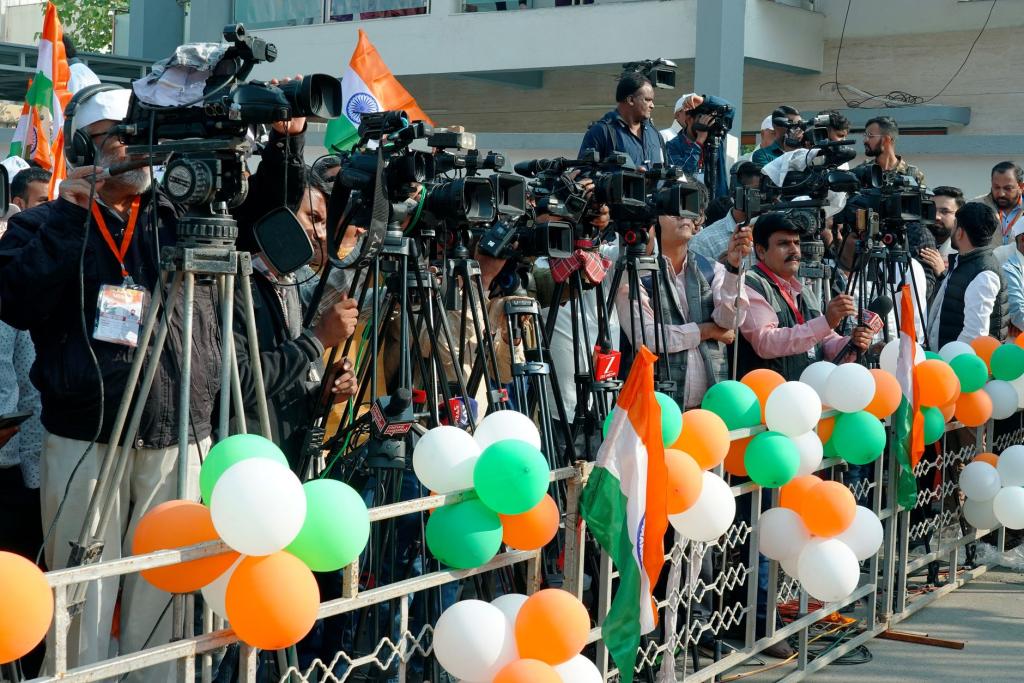
Press pools are the least glamorous institution in American journalism. A small group of reporters gets close access to the president and shares notes, photos and video with everyone else. The point of the rotation is that every outlet gets a turn, including ones the administration likes and ones it does not. The shared feed exists so the public sees the president through cameras the White House does not operate.
That distinction matters more than it used to. When the only video of a presidential event comes from the White House's own feed, the government is effectively producing its own coverage. The cameras belong to the people being covered. Independent pool crews choose their own angles, ask their own questions and record what happens when the script runs out. A federal judge recognized something like this in 2018, when the first Trump administration revoked the credential of CNN correspondent Jim Acosta and a court ordered it restored while the case proceeded. The Associated Press went to court again in 2025 after the White House restricted its access in a dispute over the outlet's continued use of "Gulf of Mexico" instead of the administration's preferred "Gulf of America."
Trump defended the latest ban by saying he is not targeting the free press, only what he calls "fake news." In the Oval Office on Friday he said, "You need a free press. You need a fair press and an honest press. I dislike dishonest press." On Monday he wrote on Truth Social that the move was an "assault on the FAKE NEWS" that he described as a "Cancer in our beloved United States of America." Vice President JD Vance argued the administration was not stopping the outlets from operating, only withholding what he called special access to the White House.
Why all five networks walked out
The walkout is worth paying attention to because of who joined it. Fox News and CNN rarely line up on the same side of anything, yet all five networks signed the same statement this week. Inside the industry, the press pool is treated as shared infrastructure rather than a favor the White House grants to friends. When the administration removed one network from the rotation over its coverage, the others decided the rotation itself was under attack.
The networks are not one team with one view. They share an interest in keeping the rotation intact. If one outlet can lose access over unfavorable coverage this week, any outlet can lose it next week. The lawsuit filed by CNN, MS NOW and Politico makes the same argument on legal grounds, calling the ban viewpoint discrimination and warning that it threatens every news organization if it goes unchallenged, their lawyers wrote in the motion seeking emergency relief, according to People.
What this means for the news you actually see
Most people under 30 do not watch network news. They see clips, screenshots and quotes pulled from that footage on their feeds. The pool feed is upstream of all of it. When the pool works, the clip you see of a president answering a hostile question exists because an independent crew was in the room and the White House could not cut the tape. When the pool is gone, the clip that exists is the one the White House chose to publish.
That is the practical reason to care about this fight even if you distrust big media. You do not have to like CNN, MS NOW or Politico to want their reporters in the room. The pool is deliberately dull. It is a set of rules that says the cameras belong to no one, so they can show everyone. A president who gets to pick the camera operators gets to pick what the public sees, and no amount of coverage on the White House's own feed fixes that.
The courts will decide whether the ban stands. The emergency request could come before a federal judge in the D.C. District Court within days. Whatever the ruling, this week made visible something that usually stays invisible: the little rotation of camera crews outside the room where it happens is part of how Americans know what their government is doing, and this week the White House Press Pool walked out together.
Comments 0
No comments yet. Be the first to share your thoughts!
Leave a comment
Share your thoughts. Your email will not be published.