United States President Donald Trump has issued a stark ultimatum demanding Iran unconditional surrender as the 2026 Iran war continues to escalate across the Middle East. According to BBC News, Trump stated there will be no deal or further talks with Tehran, marking a significant escalation in the conflict that has drawn in multiple regional powers and threatens global stability.
The demand for Iran unconditional surrender comes after Iranian President Masoud Pezeshkian indicated that several countries had initiated mediation efforts to end the war. Trump's response effectively shuts the door on diplomatic negotiations, signaling a hardline approach to the ongoing military confrontation that shows no signs of de-escalation.
The Iran unconditional surrender demand represents a dramatic shift in US policy, moving away from negotiated settlements toward a winner-take-all military solution. This approach has raised concerns among allies about the potential for prolonged conflict and regional destabilization that could affect global energy markets and international trade routes.
Regional Escalation and Military Operations
The conflict has expanded significantly, with Iranian strikes targeting multiple countries across the Persian Gulf region. According to Al Jazeera, the Qatari military reported intercepting nine Iranian drones, while one drone struck an uninhabited area. Qatar's Civil Aviation Authority partially reopened airspace through designated contingency routes with limited capacity for evacuation flights and cargo services.
The Bahraini military announced that air defenses have intercepted successive waves of Iranian attacks, destroying 84 missiles and 147 drones since hostilities began. An Iranian ballistic missile struck Prince Sultan Air Base in Riyadh Province, Saudi Arabia, though Saudi defenses successfully intercepted three additional missiles and four drones aimed at the facility.
In Erbil, Iraqi Kurdistan, drones struck a hotel causing casualties and significant damage to civilian infrastructure. According to the Iranian Red Crescent Society, the death toll from Israeli and American air campaigns in Iran has risen to 1,332 people, with thousands more injured and many more displaced from their homes.
International Military Response
The international community is mobilizing military assets to respond to the growing crisis. Spain announced its frigate Cristóbal Colón will join French aircraft carrier Charles de Gaulle and Greek Navy ships to protect British military bases in Cyprus. Italy and the Netherlands are also dispatching naval assets to the region as part of a coordinated European response.
China is reportedly in talks with Iran to allow crude oil and Qatari liquefied natural gas vessels safe passage through the Strait of Hormuz, a critical chokepoint for global energy supplies that handles approximately one-fifth of world oil shipments. The partial reopening of Qatari airspace has allowed limited evacuation flights for stranded passengers.
The Lebanese cabinet has banned activities by Iran's Islamic Revolutionary Guard Corps within Lebanon and introduced visa requirements for Iranian nationals entering the country, signaling growing regional isolation of Iran and its proxy forces.
Humanitarian Impact and Civilian Casualties
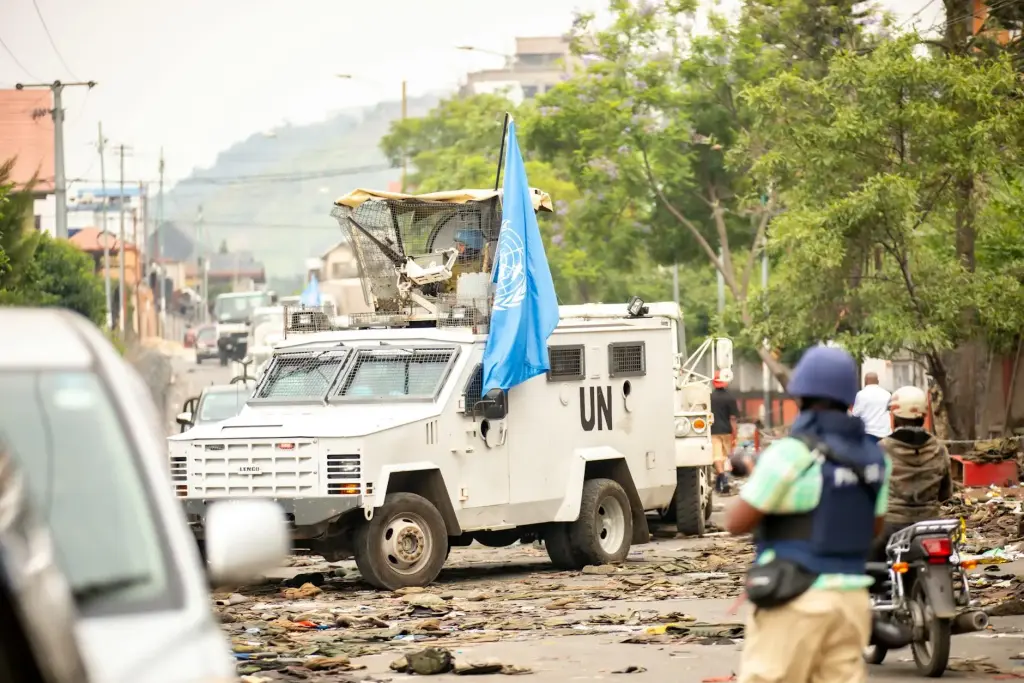
The human cost of the conflict continues to mount at an alarming rate. In Lebanon, Israeli airstrikes in and around Al-Nabi Shayth in the Beqaa Valley killed at least 41 people including three soldiers, with 40 more injured. Three Ghanaian peacekeepers were injured in an Israeli missile strike in southern Lebanon, raising serious concerns about attacks on international peacekeeping forces.
Exiled Iranian crown prince Reza Pahlavi, son of the late former Shah Mohammad Reza Pahlavi, has stated he is ready to lead a potential transition if the Iranian government falls. Demonstrators in Sanaa, Yemen rallied in solidarity with Iran and Lebanon amid the escalating conflict.
An Israeli IAI Heron UAV was shot down over Khuzestan province, Iran, while US Army AH-64 Apache helicopters launched air-to-surface missiles at Popular Mobilization Forces positions near Mosul, Iraq, demonstrating the multi-front nature of the conflict.
The situation remains volatile with no clear path to resolution as both sides continue military operations.
For more coverage on Middle East conflicts, read our article on Iran conflict escalation. You can also explore our coverage of humanitarian crises affecting the region.
Sources: BBC News, Al Jazeera
Comments 0
No comments yet. Be the first to share your thoughts!
Leave a comment
Share your thoughts. Your email will not be published.