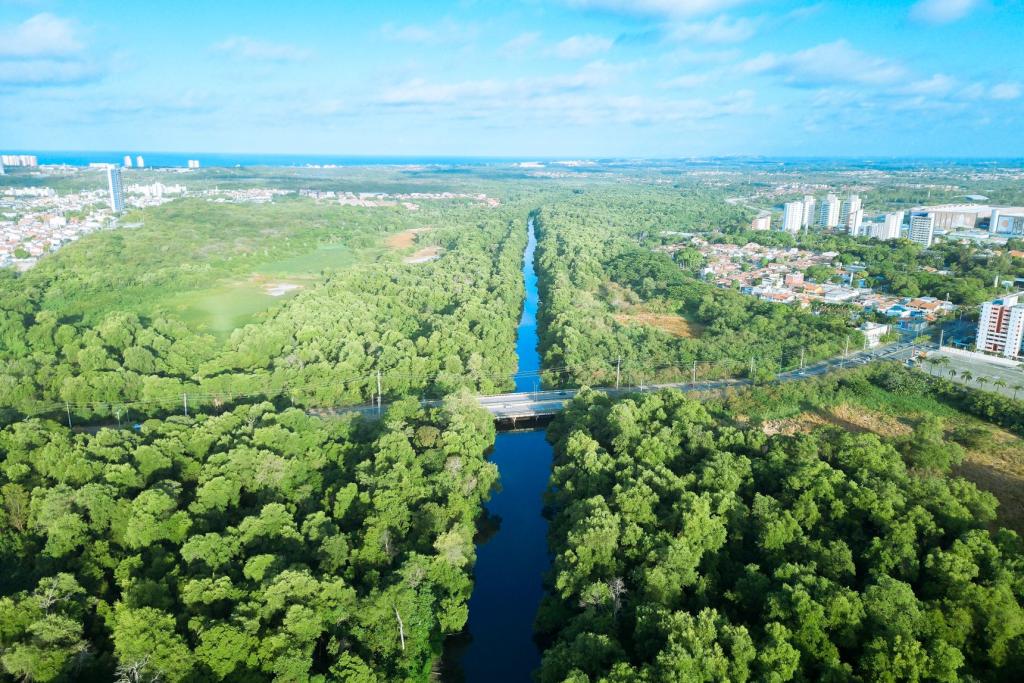
Amazon deforestation has dropped to the lowest level since records began in 1988, according to new satellite data from Brazil's space research agency, Inpe. Between August 2025 and July 2026, three thousand three hundred thirty-five square kilometres of rainforest were cleared, roughly forty-two percent less than the year before, according to Al Jazeera.
That is a rare piece of good climate news, and it lands at a loaded moment. Brazil heads into a presidential run-off in days, and the future of the world's largest rainforest is a central issue in the vote.
The numbers behind the record
The area lost is smaller than the Spanish island of Mallorca, according to Mongabay. The previous low came in the 2011 to 2012 period, when four thousand five hundred seventy-one square kilometres were destroyed, based on figures reported by RTE and Reuters. In the mid-nineties, annual losses neared thirty thousand square kilometres.
The savanna next door also had a good year. Mongabay reports that clearing in the Cerrado fell twenty-four percent to five thousand five hundred sixteen square kilometres, also a record low for that region. The Cerrado has been Brazil's fastest-cleared biome in recent decades, as land is turned into ranches and industrial farms.
Over the longer run, the picture is even starker. The government says Amazon deforestation has fallen seventy-one percent since 2023, after clearing surged by about sixty percent between 2019 and 2022, according to the Emirates News Agency.
Why Amazon deforestation fell
Officials and analysts point to tougher enforcement. According to the BBC, President Luiz Inacio Lula da Silva tightened environmental monitoring and raised penalties for illegal logging after taking office, reversing the policies of his predecessor, Jair Bolsonaro.
Lula has promised to end illegal deforestation by twenty thirty. In a post on X he said the goal is zero illegal deforestation by then, as quoted by DW. The drop has been described as an historic achievement.
Even the worst-hit states improved. The Emirates News Agency reports that Para accounted for about thirty-four percent of all clearing, followed by Mato Grosso and Amazonas, yet each fell by more than forty-five percent. Only Roraima moved the wrong way, with a tiny rise of four tenths of a percent.
The election twist
The timing is political dynamite. Straits Times coverage frames the figures as welcome news for the leftist incumbent just days before the run-off, while the BBC notes the rainforest's future is a key issue in the contest.
Environmental groups are cheering but cautious. Greenpeace Brazil's Cristiane Mazzetti told the Associated Press that the record reflects effective policies that could be at risk depending on who wins. She also warned that Congress has worked to weaken, delay and dismantle environmental rules.
What the forest is up against
Falling numbers do not mean the threat is gone. Clearing still removes thousands of hectares every year, and much of it is driven by cattle ranching, illegal land grabs and mining. Enforcement teams must cover an area larger than most countries, which makes satellite alerts and fines central to the strategy.
Climate pressure adds another layer. Hotter, drier seasons make the forest more flammable, and scientists have long warned that too much loss could push parts of the Amazon toward a tipping point where trees give way to savanna. Lower clearing buys time, but it does not remove that risk by itself.
Local communities matter too. Indigenous territories have some of the best-preserved forest in the region, and groups that defend them often argue that land rights are the cheapest form of climate protection. That argument is likely to feature heavily as the new government, whoever leads it, sets priorities for the years ahead.
What to watch next
The first signal will be the run-off result and the policies that follow it. Watchers will look at whether enforcement budgets hold, whether environmental agencies keep their staff, and whether lawmakers keep trying to loosen protections that campaigners say are working.
The second signal is the monthly alert data that Inpe publishes between its annual reports. A sudden spike in those alerts would be an early sign that the record low is slipping, while steady readings would suggest the gains are sticking. Either way, this year proves that Amazon deforestation is not an unstoppable force.
What it means for you
The Amazon stores huge amounts of carbon and shapes rainfall across South America, so every square kilometre saved matters for the climate. A single good year does not erase decades of damage, and forest clearing can rebound quickly if enforcement slips.
Still, the data shows that policy can bend the curve. Governments, satellites and local rules can work together to protect forest at scale. For more on how the planet is coping, check our climate coverage as the Brazilian vote approaches.
Comments 0
No comments yet. Be the first to share your thoughts!
Leave a comment
Share your thoughts. Your email will not be published.