Gravity shaped your body, but does it shape the instructions inside your cells? Researchers at New York University decided to find out by taking gravity away, not by flying to space, but by spinning living human cells until the pull of Earth averaged out to nearly nothing.
The result is a small surprise for anyone dreaming of long stays off-world. After a single day in simulated weightlessness, the cells' nuclei swelled noticeably, yet the genetic material inside barely registered the change. The container changed more than its contents, and no DNA damage showed up from the simulated microgravity itself, according to a report by Everything Space.
Behind the experiment is a machine built for the job. The team constructed a Random Positioning Machine, a device that rotates dishes of living cells along two independent axes so the direction of gravity keeps changing and effectively cancels out. The principle resembles the larger machines astronauts use in training. Crucially, the researchers also built new rotation patterns that minimize the swirling of the liquid around the cells, since fluid currents can masquerade as weightlessness in older experiments. They even prepared the dishes without air bubbles, which can kill cells and scramble delicate measurements.
The Day Without Gravity experiment included a crucial control: a separate group of cells exposed to strong fluid currents. Those cells stretched out and showed measurable DNA damage, while the low-flow weightless group did not. A 2023 study of similar rotation experiments had found that an apparent microgravity effect on muscle cells was actually caused by the fluid, a trap the university team's design was built to avoid, according to ZME Science's coverage.
The Day Without Gravity Test Results
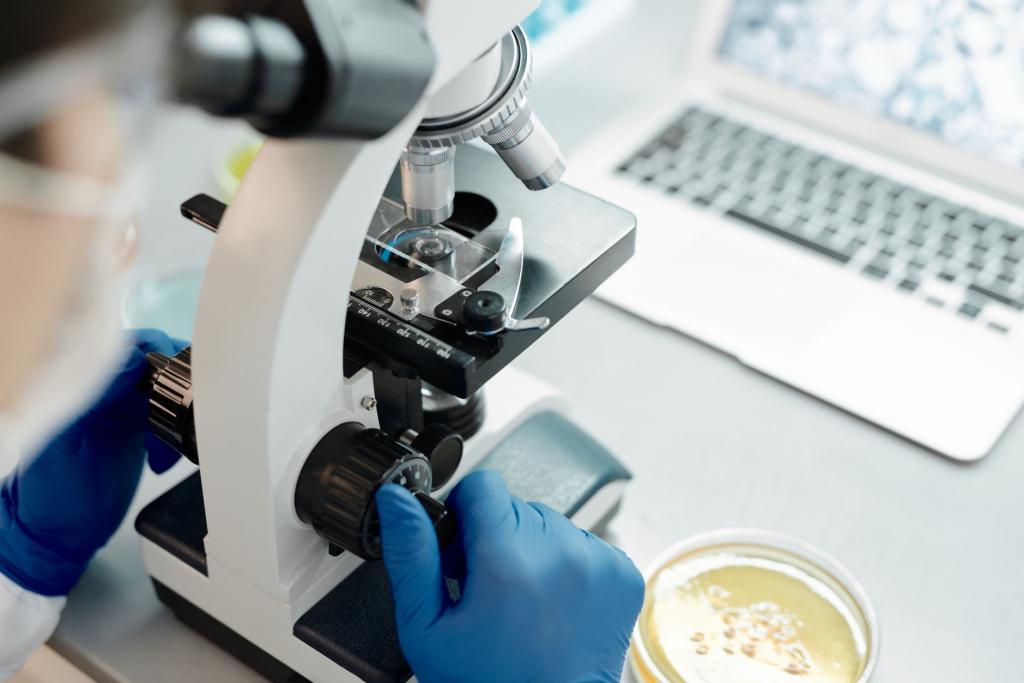
To see what was happening inside, the scientists used human cells with fluorescently labeled chromatin, the packaged form of DNA, and watched them with advanced imaging. After a day without gravity, nuclei had grown in area by about fourteen percent and in volume by about eighteen percent. The membrane around the nucleus stayed about as thick as before. Chromatin density shifted by less than five percent, and the motion of the genetic material showed no meaningful change in speed or coordination, according to Universe Today's report on the study.
What the Researchers Said
"What would happen if we did not have gravity?" That was the question driving associate professor Alexandra Zidovska, who led the work at the university's Center for Soft Matter Research. "If you want to ask this question, then you have to remove gravity and look how it affects the genome," she told Washington Square News, the campus paper that first covered the September study. The project began in 2021, and she collaborated with Leif Ristroph, a mathematician, to build the tumbling machine.
"Gravity is acting on everything," Ristroph told the paper. "It's all happening together in a big soup in the body. The genome moves, so it's not just sitting there, still like spaghetti in a bowl. It's actually wiggling around like worms and moving around."
Why a Tough Genome Matters for Deep Space
The finding lands against a long list of ways spaceflight wears the body down: muscle loss, bone thinning, vision changes, and strain on the heart and nervous system documented across decades of station missions. NASA's Twins Study, which compared astronaut Scott Kelly's year in orbit with his Earthbound twin, found genetic-level changes too. Yet the physical rules linking gravity to genome organization have stayed murky, which is exactly the gap this work targets.
The caveat is the clock. Twenty-four hours is a blink next to a months-long Mars transit, and a surface stay would last far longer. The team describes the genome as robust against this mechanical stress over short timeframes, but stresses that effects could accumulate. The study's bigger contribution may be methodological: a cleaner way to isolate weightlessness from the sloshing of the dish, giving future missions a better tool for asking how little gravity a human genome actually needs.
That question is becoming urgent fast. NASA is already growing brain organoids in orbit to learn how weightlessness affects neural tissue, and SpaceX is pushing toward fully reusable rockets that could make long-duration flights routine. If the hardware is nearly ready, the biology has to keep up.
For the would-be Mars generation, the takeaway is cautiously good news. A day without gravity swells the nucleus but leaves the DNA's organization intact, a hint that the blueprint of life is sturdier than the body carrying it. The next question is what happens on day thirty, and day three hundred.
Comments 0
No comments yet. Be the first to share your thoughts!
Leave a comment
Share your thoughts. Your email will not be published.