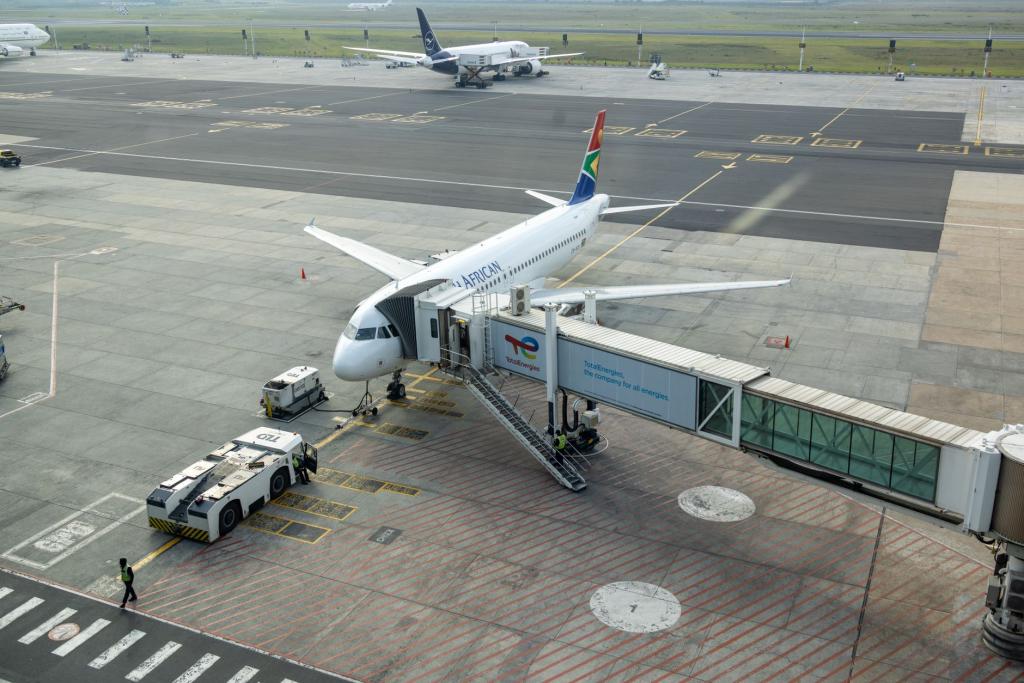
Ethiopia's Tigray regional government said on Wednesday that its fighters have entered a Tigray defensive war against federal troops, just hours after Tigrayan forces seized the main airport in the northern region, according to Reuters reporting from Nairobi. The announcement shatters a peace deal that had held, more or less, for four years after one of the deadliest conflicts of this century.
Local sources said Tigrayan forces took control of Alula Aba Nega airport in Mekelle, the regional capital, from a small contingent of federal police overnight. Ethiopian Airlines suspended flights to Mekelle, Shire and Axum, writing in a social media post that the halt was "due to the current situation in Tigray region." The carrier gave no further details, and spokespeople for Prime Minister Abiy Ahmed, the federal government and the Tigray People's Liberation Front did not immediately answer requests for comment. Witnesses reported armed fighters at the airport but no gunfire nearby, and staff heading to work were told to turn back after supervisors confirmed the facility had been taken over, the Mesob Journal reported on Wednesday.
Why the Tigray defensive war is happening now
The Tigray People's Liberation Front fought Ethiopia's federal government in a civil war that ran from twenty twenty to twenty twenty two and left hundreds of thousands of people dead. The two sides signed the Pretoria Agreement in November of that final year, and the return of commercial flights to Mekelle afterward became one of the clearest signs that relations were normalizing. The seizure of the airport reverses that symbolism completely.
Wednesday's announcement turns a cold standoff into an open Tigray defensive war. Relations had been deteriorating for months. In May, the TPLF took control of Tigray's regional government from the interim administration set up under the peace deal. Ethiopia's military has carried out several drone strikes against Tigrayan forces in recent months, according to data from the Armed Conflict Location and Event Data project, and last week the military said nearly three hundred Tigrayan fighters had surrendered. Both sides have spent the year accusing each other of violating the agreement.
Then on Sunday, the TPLF announced it had joined six other armed groups in a new alliance with the stated aim of overthrowing Prime Minister Abiy Ahmed's government. Several of the coalition's members fought the TPLF during the last war, which makes the new lineup a striking realignment, OkayAfrica noted in its Africa roundup. Three days later, the airport fell.
Two versions of who started it
In a statement posted on Facebook, the Tigray regional government said its forces were responding to "intensive bombardments" by federal troops on Tuesday involving aircraft, drones and artillery, and that the Tigray army "has been instructed to counter the attack and genocidal invasion launched against us, and has entered into a defensive battle." The reported federal bombardments could not be independently verified, according to AFP.
Addis Ababa tells a different story. Getachew Reda, a former TPLF official who broke with his colleagues and now advises the federal government, wrote on X that the TPLF had "early in the morning today launched an all out offensive against government positions in Afar and Amhara," calling the renewed fighting heartbreaking. A former TPLF senior official told AFP that Tigrayan fighters now control Berhale, Erebti, Abala, Megale, Dalul and Konoba in the Afar region, and that federal forces are "fast-retreating," claims AFP said it could not confirm. The federal government had not publicly commented on the Tigray defensive war as of Wednesday afternoon. Readers tracking Ethiopia's military escalations may also want to read our coverage of the Houthi missile attack on Riyadh for a sense of how fast a regional airport seizure can spiral.
What happens next
The immediate question is whether this stays a standoff over airports or slides back toward the kind of war that devastated the region just a few years ago. The 2022 peace agreement's security framework is steadily losing its ability to contain events on the ground, and a seven-group anti-government coalition is a far larger threat to Abiy than the TPLF acting alone, and it suggests this Tigray defensive war could widen beyond the north.
For the people of Tigray, the stakes are brutally concrete. Hundreds of thousands died in the last war, many of them civilians, and the region's recovery depended on the ordinary ties the airport stood for, starting with flights and trade. If those links close again, the humanitarian fallout could follow fast. Keep an eye on whether Addis Ababa responds with more drone strikes or a ground offensive, and whether the new alliance holds together long enough to become a real parallel authority.
Africa has been one of the most undercovered regions in mainstream English-language news this year, which is part of why the last war caught so many readers off guard. GenZ NewZ has been following the continent's youth movements too, including the story of how young African climate activists are rewriting the rules of protest and organizing.
Comments 0
No comments yet. Be the first to share your thoughts!
Leave a comment
Share your thoughts. Your email will not be published.