On Saturday, September 19, 2026, Yemen's Houthi movement claimed it had launched a Houthi missile attack on the Saudi capital, Riyadh, using large-scale missile and drone strikes, and also hit an Aramco facility in Yanbu, a major industrial port on the Red Sea coast. Houthi military spokesperson Yahya Sarea announced the operations on the group's al-Masirah TV channel, saying they involved "a large number of ballistic and cruise missiles and drones," and described both as successful.
Saudi Arabia's account was very different. The Saudi-led coalition in Yemen said its air defenses intercepted and destroyed a ballistic missile aimed at Riyadh and thwarted additional attacks on Baish, Taif, Farasan and Yanbu. Coalition spokesperson Turki Al-Maliki said the strikes targeted "civilians and civilian objects" and promised "appropriate measures" to deter further attacks. Earlier in the day, Saudi authorities issued an aerial threat alert for the capital, reportedly the first such alert for Riyadh since the latest escalation with the Iran-backed rebels, before announcing that the danger had passed.
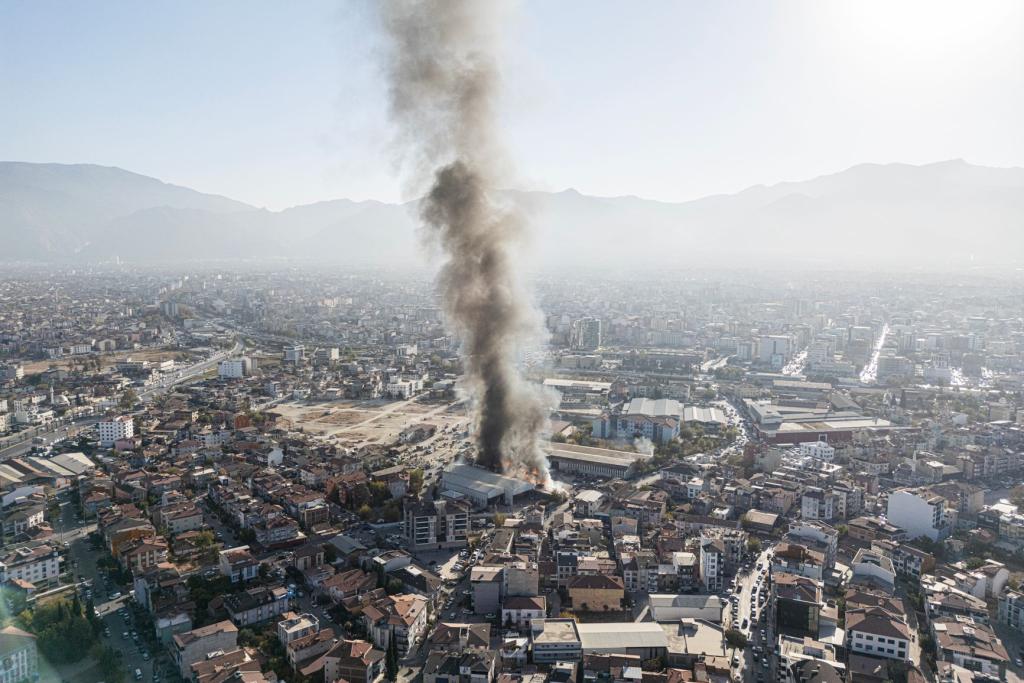
What is confirmed on the ground sits between the two stories. According to reporting by the Associated Press carried by NPR, residents of Riyadh heard two explosions on Saturday, and a plume of smoke was seen rising near King Khalid International Airport, where some flights were delayed. The Houthis claimed large fires broke out at the targeted sites, but Saudi officials did not confirm that. There were no reports of casualties or damage, and Aramco did not respond to a request for comment.
Why this strike is a bigger deal than the last one
This is the first time Riyadh has been targeted since the current round of fighting opened a new front in the wider war with Iran. For the past two weeks, the Houthis have been on the offensive along Yemen's Red Sea coast. Yemeni officials say the group seized new territory, including the historic coffee port of Mokha and the strategically vital Perim Island at the mouth of the Bab el-Mandeb strait. Video from Mokha showed deserted streets and shuttered shops and schools after the Houthi takeover.
The geography is what makes oil markets nervous. Earlier in September, an aerial attack knocked Saudi Arabia's 1,200-kilometer east-west pipeline offline, and Riyadh blamed Iranian-backed militias in Iraq. Traders warned that a prolonged pipeline shutdown could cut as much as 4 percent of global oil supply while the Strait of Hormuz stays effectively blockaded in the US-Iran standoff. Crude traded above $100 a barrel on Saturday. Saudi Arabia had been rerouting exports through Yanbu, the Red Sea city the Houthis say they hit this weekend. Whether or not the strike did real damage, it landed on the backup route Riyadh was counting on. Saudi officials went public quickly with the interception claim, as smoke and flight cancellations near Riyadh's airport made the escalation impossible to ignore.
The claim versus the interception
Neither side's version of the Houthi missile attack on Riyadh can be independently verified yet, and both have reasons to spin it. The Houthis announced their "successful" operation without providing evidence, while Saudi Arabia has every incentive to play down any damage to keep markets and the public calm. Sarea said the Riyadh strikes were retaliation for intensified Saudi airstrikes on Houthi-held areas in Yemen. A day earlier, the Houthis accused Saudi Arabia of launching 26 air attacks against them in a 24-hour period.
Meanwhile the diplomacy is moving on a strange parallel track. Iran's Supreme National Security Council head, Mohsen Rezaei, told Al Jazeera in an interview that Tehran has conveyed conditions for ending the war to the United States through Qatar and is waiting for President Trump's response. The reported conditions include ending the war on all fronts, releasing seized Iranian assets, and ending the US naval blockade of Iranian ports. Reuters reported last week that Saudi Crown Prince Mohammed bin Salman asked Trump for military support in the campaign against the Houthis, and that the president did not agree.
What to watch next
Al-Maliki's promise of "appropriate measures" points to Saudi retaliation in the coming days, and the Houthis have dug into positions along the Red Sea coast rather than pulling back. The UN General Assembly opens its high-level week in New York on Tuesday, which means this conflict is about to get a very crowded diplomatic stage. US-Iran negotiations already fell apart once this year, so the window for a deal is narrow.
For anyone tracking the fallout, the two numbers that matter are the oil price and satellite photos of Yanbu. If the pipeline stays down and the Houthis keep squeezing the Red Sea, the $100 barrel could start to look cheap. And an independent look at the Aramco facility in Yanbu would settle the claim-versus-interception debate faster than any press release from either side.
Comments 0
No comments yet. Be the first to share your thoughts!
Leave a comment
Share your thoughts. Your email will not be published.