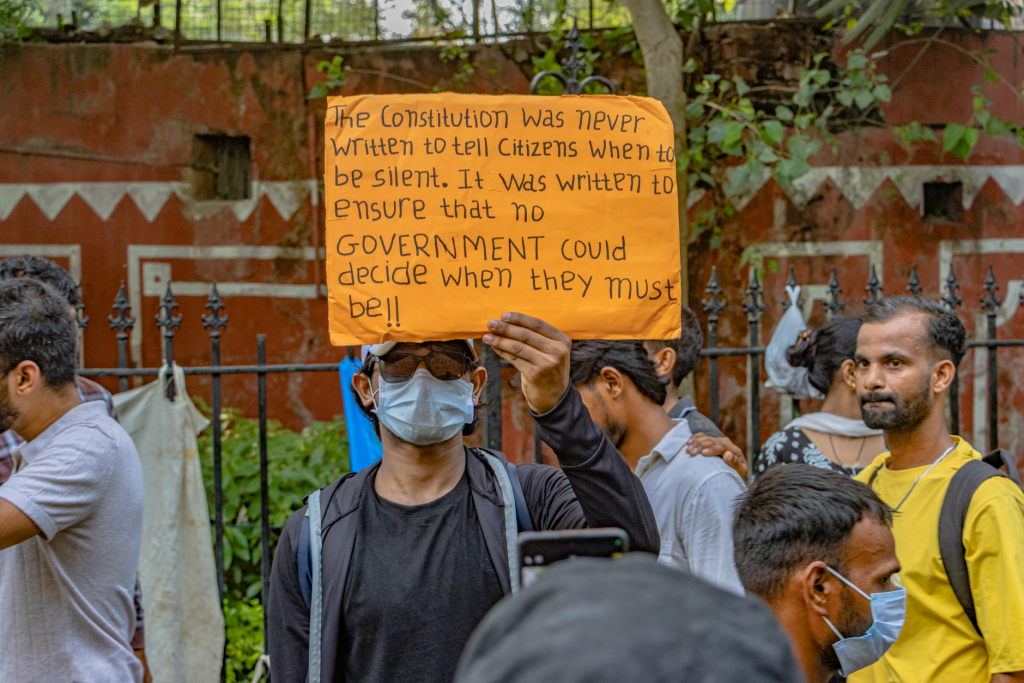
More than forty Tibetan youth activists stormed the Chinese Embassy in New Delhi on October 1, 2026, the seventy-seventh anniversary of the founding of the People's Republic of China. Chanting "Free Tibet" and "China out of Tibet," the activists ran toward the embassy gates in what organizers called a "storm protest" before Delhi Police moved in and detained them. The demonstrators were taken to the Mandir Marg police station, the Tibet Post reported.
The Tibetan Youth Congress organized the action to demand the repeal of China's Law on Promoting Ethnic Unity and Progress, sweeping legislation that took effect on July 1, 2026, and that Tibetan groups describe as a legal framework for forced assimilation.
Why Tibetan Youth Activists Chose China's National Day
The timing was the message. October 1 is the most important date on Beijing's political calendar, and the activists used it to draw global attention to what they call the erosion of Tibetan identity, culture, and language. TYC president Tsering Choephel said the Congress "unequivocally condemns" Beijing's continued political control over Tibet, East Turkistan, Southern Mongolia, and Manchuria, in a statement marking the anniversary.
The law at the center of the protest was passed by China's National People's Congress on March 12, 2026. It requires schools to use Mandarin as the basic language of teaching, mandates the cultivation of a "community of the Chinese nation" throughout education, and folds patriotic education into every level of schooling, according to the Tibetan Centre for Human Rights and Democracy. Amnesty International has argued the law turns decades of assimilationist practice into binding statute, warning that "progress" risks becoming "another justification for erasing distinct cultures and histories." Beijing, for its part, frames the legislation as a path to social harmony and national rejuvenation.
A Summer of Escalation, From Self-Immolation to the UN Gates
The New Delhi protest did not come out of nowhere. On July 2, 2026, one day after the unity law took effect, fifty-two-year-old Tibetan activist Lobga Rangzen, also known as Lobsang Palden, set himself on fire in front of United Nations headquarters in New York. He later died of his injuries, becoming the first Tibetan to carry out a self-immolation protest on American soil, Free Tibet reported. More than one hundred seventy Tibetans have self-immolated since 2009.
Rangzen's death galvanized the exile movement. The Tibetan Youth Congress launched a worldwide chain hunger strike, the Tibetan Parliament-in-Exile adopted a solidarity resolution on September 21 urging UN leaders to raise the matter with Beijing, and Tibetan groups protested Chinese leader Xi Jinping's September visit to Washington. In July, about eighty TYC activists were detained during a similar demonstration at the same New Delhi embassy, and in September, Delhi Police detained Tibetan protesters preemptively near the BRICS summit venue.
On the same day as the Delhi action, the pressure reached the United Nations directly. Activists from Students for a Free Tibet chained themselves to the gates of the UN offices in Geneva, demanding that UN human rights chief Volker Turk break his silence on Tibet. "Lobga Rangzen's sacrifice was a direct warning," the group's executive director Tenzin Myinlek said, calling the new law "a legislative death sentence" for the Tibetan people, according to the outlet covering the blockade.
What Happens Next
The detained activists face an uncertain legal path. Indian authorities have for years detained Tibetan demonstrators around high-profile diplomatic moments and then released them, an established rhythm rather than a one-off crackdown. The legal cases from Thursday's protest will test whether this time is different.
For the Tibetan youth activists, the question is whether visibility converts into pressure. The Tibetan Youth Congress has announced plans to take its campaign to diplomats at more than one hundred sixty embassies and international bodies. Whether the United Nations answers, and whether New Delhi's balancing act between hosting Tibetan exiles and managing ties with Beijing holds, will shape what the next National Day looks like. Morocco's Gen Z activists recently marked a very different anniversary: one year since their own uprising. For more on young people pushing for change, see our youth activism coverage.
Comments 0
No comments yet. Be the first to share your thoughts!
Leave a comment
Share your thoughts. Your email will not be published.