On September 2, the United Nations Environment Programme published a report dedicated to a possibility the climate movement has spent years trying to avoid. The conclusion, in a document titled "Limiting Overshoot," is blunt: holding warming to 1.5C above pre-industrial levels is no longer possible. For a decade, the promise was that 1.5C warming could be prevented. That promise is now off the table, and the world will cross the threshold within the next few years. What matters now is how far above it temperatures go, and for how long they stay there.
That is a shift in how the UN talks about the goal set at the 2015 Paris climate summit. Inger Andersen, the executive director of UNEP, told NPR that avoiding a breach of 1.5C warming is now near impossible, and called the moment the legacy of inaction.
What the report actually says
The numbers are specific. Human-caused warming is already close to 1.4C above pre-industrial levels, and observed temperatures are rising by about 0.25C per decade. If countries continue on their current policies, the median projection is about 2.6C of warming by 2100, with a plausible range of 1.9C to 3.6C, according to the report. Even the most optimistic scenario, in which every government fully implements its current national pledges and long-term net zero targets, still sees temperatures peak at 1.8C, well above the 1.5C warming limit.
Instead of dropping the 1.5C warming target, the report proposes what it calls an overshoot, peak and decline pathway: temperatures rise past the limit for a time, then come back down to at or below 1.5C warming by the end of the century. Getting there requires going beyond net zero to net negative emissions, by scaling up carbon removal technologies while cutting fossil fuel emissions sharply, Reuters reported.
The damage is already underway
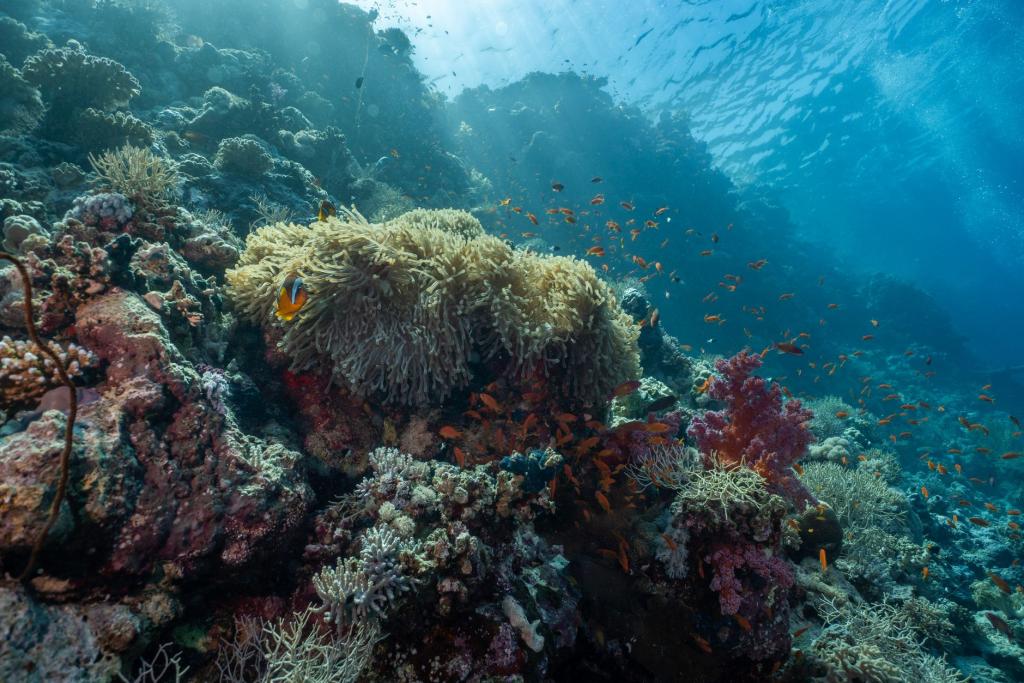
The damage the report describes is not theoretical. Between 2023 and 2025, more than 80 percent of the world's tropical coral reefs experienced bleaching, across at least 83 countries and territories. And of all the glacier ice lost worldwide since the 1970s, more than 40 percent disappeared in a single decade, from 2015 to 2024. In late August, a collapsing glacier in Nepal's Langtang valley triggered flooding that killed more than 1,400 people, a disaster covered here just days ago.
The International Union for Conservation of Nature, responding to the findings, said species lost to climate change and ecosystems that are irreversibly damaged will not come back when temperatures eventually fall below 1.5C warming again. According to the IUCN, its president, Razan Khalifa Al Mubarak, called the report a wakeup call, saying the responsibility now is to reduce how far this goes and how long it lasts. Grethel Aguilar, the IUCN director general, said the world is set to exceed 1.5C warming, but that accelerating emissions cuts now is essential because every fraction of a degree matters.
What it means for the next generation
The report lands hardest on the question of time. Each year of delay makes recovery harder, and even a small overshoot of 1.5C warming can cause losses that later cooling cannot reverse. Low-lying islands and coastal cities face more flooding from sea level rise, and droughts could affect food supplies around the world, NPR reported. The overshoot is already overlapping with punishing weather: UN agencies recently warned that a strong El Niño threatens 50 million people. For people in their twenties now, the decade of decisions the report describes is the decade in which their adult lives take shape.
New tools are also starting to watch the fallout from orbit. The European Space Agency's FLEX satellite now reads plant health from space, giving scientists another way to track how ecosystems respond as 1.5C warming becomes the baseline rather than the limit.
Can anything still pull temperatures back down?
The report says carbon dioxide removal will be an essential part of the response, but it cannot replace emissions cuts. Scaling up removal carries its own risks, including risks to nature, and even optimistic expansion is unlikely to deliver a reversal of more than a few tenths of a degree this century, the report found. That puts most of the weight back on cutting fossil fuel emissions quickly.
The IUCN also said it is developing a policy on geoengineering, covering both carbon removal and solar radiation modification, for its members to consider ahead of its 2029 congress, guided by the precautionary principle. The resolution behind that work discourages using geoengineering as an offset for continued fossil fuel extraction and use.
The report does not describe a cliff. Crossing 1.5C warming does not mean the planet suddenly falls apart, but it does increase the odds of harsher and more frequent disasters. The UN's message is narrower: the goal that anchored a decade of climate politics will not hold, and the remaining task is to make the overshoot of 1.5C warming as small and as short as possible. Every tenth of a degree from here is still a choice.
Comments 0
No comments yet. Be the first to share your thoughts!
Leave a comment
Share your thoughts. Your email will not be published.