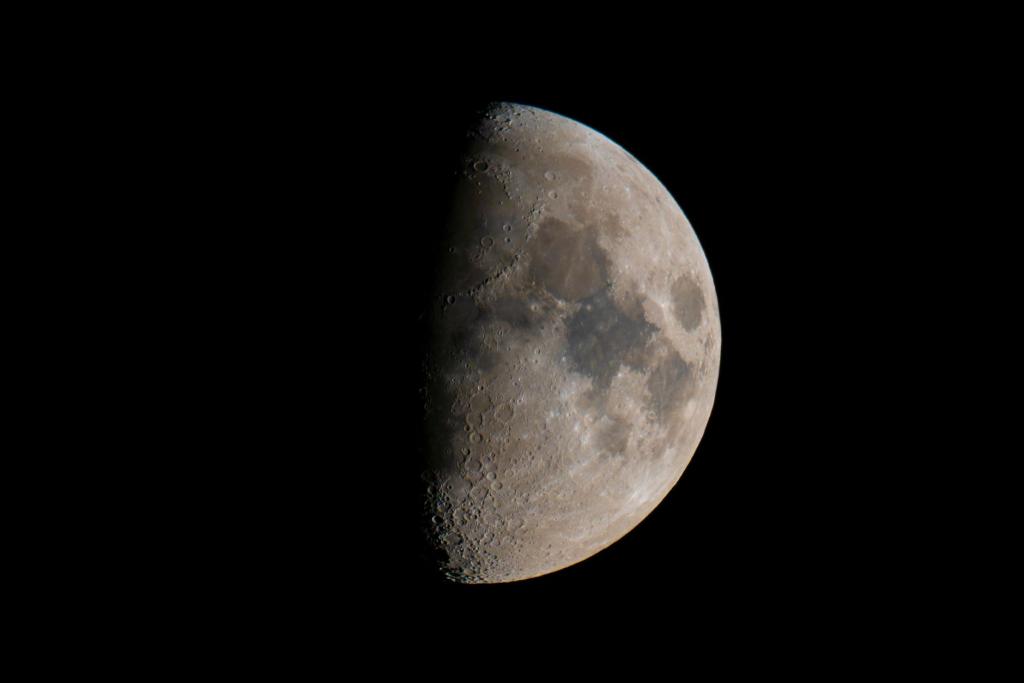
The Moon Is Still Shrinking, and researchers finally have a hard number for the pace. A Smithsonian-led study published in October 2026 found that the Moon's radius has decreased by roughly 45 meters over the past 400 to 800 million years, the most precise estimate yet of our nearest neighbor's slow contraction as its interior cools.
The team, led by planetary geologist Thomas R. Watters of the Smithsonian's National Air and Space Museum, mapped more than 10,000 young faults across the lunar surface using images from NASA's Lunar Reconnaissance Orbiter Camera, according to the study published in The Planetary Science Journal. Each of those cracks is a wrinkle left behind as the cooling interior pulls the crust inward.
If the contraction has held steady across that span of time, the figures translate to a shrinkage of 6 to 11 centimeters per million years, or about 0.1 micrometers per year. That creep is far slower than the motion of Earth's plates, which shift about 1.5 centimeters a year — roughly the rate fingernails grow, driven by heat escaping our planet's interior.
Earth concentrates roughly 90 percent of its seismic activity along plate boundaries, but the Moon has no such boundaries at all. Its crust acts like a single unbroken shell, so as the interior cools and contracts, faults can appear almost anywhere. That means a moonquake can strike at any point on the surface rather than along a few seams, the researchers note.
Seventeen years of images, thousands of cracks
The estimate rests on a remarkable observational record. The Lunar Reconnaissance Orbiter launched in June 2009, and the orbiter's camera has since returned millions of images of the lunar surface. Watters and co-authors Maria Banks, Cole Nypaver and Mark Robinson spent years combing through them to trace lobate scarps — curved, cliff-like ridges where a thrust fault pushed one slab of crust up and over another — along with small ridges across the dark volcanic plains known as the maria.
"The number of these young faults revealed in LROC images is much greater than I ever imagined," Watters said in a statement. "As the interior of the moon continues to cool and contract, it is expected that the growth of existing faults and formation of new faults continues today."
The census also showed the faulting is uneven. Areas with the thickest crust host the fewest faults, suggesting those regions may be the most stable. The researchers add that widespread faulting likely did not begin early in lunar history, because a thick, porous, heavily fractured crust insulated the interior and delayed cooling until relatively recently.
For the full breakdown of the numbers and the fault maps, see the Smithsonian release on the shrinking Moon, which details the study's methods and findings.
Why it matters for a return to the Moon
This is more than planetary bookkeeping. NASA is planning a lasting human presence on the Moon, and a map of live faults tells planners where the ground is steadiest. Regions with thick, quiet crust now look like the safest candidates for future habitats, according to the Smithsonian.
Moonquakes themselves are real. Seismometers left on the surface during the Apollo era recorded shallow tremors from slipping faults, and new faults are expected to keep forming as cooling continues. Mission planners can now fold that shaking risk into site selection — but on a single-plate world, the risk can be mapped, never fully zoned away.
It joins a run of strange space-rock stories on the science beat, including a report on the ultra-fast spinning asteroid that breaks every rule, another reminder that small bodies in our solar system rarely sit still.
What the number cannot yet say
One caveat travels with the headline figure. The estimated rate assumes contraction stayed constant across the entire window of time the faults cover; if the interior cooled in bursts or slowed down, the true history could look different. The tally of surface cracks measures deformation, so it cannot directly sample the heat it is inferred from.
The headline still stands in plain language: the Moon Is Still Shrinking, just on a timescale no human will ever feel. You will never notice the change in a lifetime of looking up at it — but nearly two decades of orbital photography can, and now the number is finally on the books.
More from the science desk: braille-reading brain organoids inching toward living computers and a giant water lily found thanks to a selfie.
Comments 0
No comments yet. Be the first to share your thoughts!
Leave a comment
Share your thoughts. Your email will not be published.