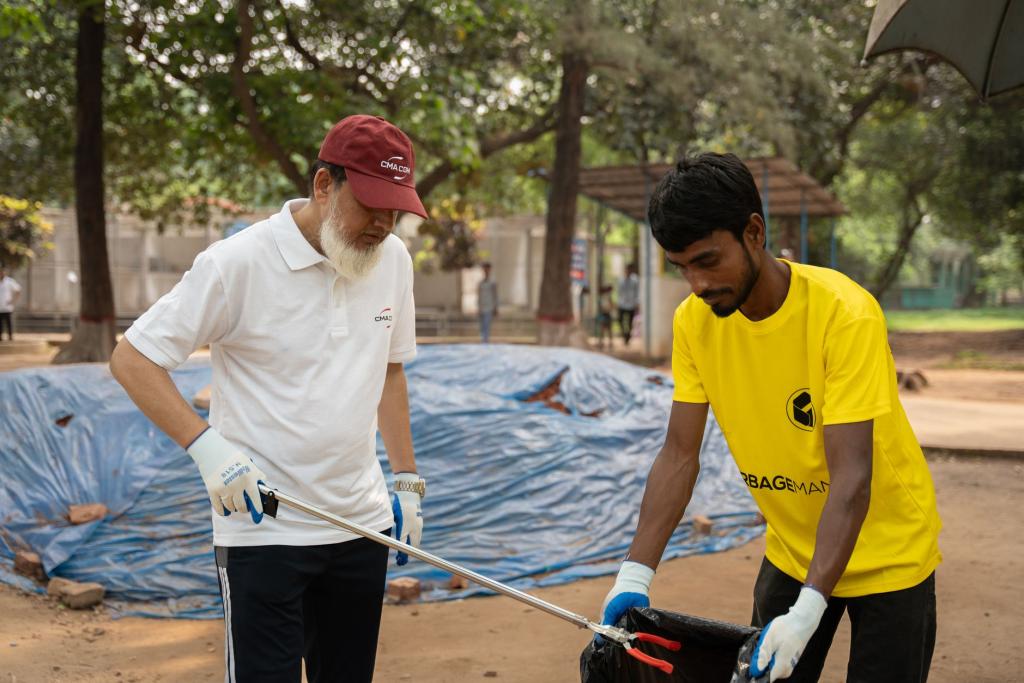
South Africa is in the middle of one of the biggest tree planting drives happening anywhere in the world right now. According to a statement from the country's Department of Forestry, Fisheries and the Environment, exactly 7,134,711 trees have gone into the ground since 1 April 2026, all logged under President Cyril Ramaphosa's Presidential One Billion Trees Programme. The milestone was announced days after a nationwide Heritage Day campaign on 24 September 2026 supercharged the effort, with planting events taking place across all nine provinces. For a country racing to green its cities and push back on climate change, the numbers mark a real acceleration — and an open invitation for everyone else to grab a shovel.
The September push was the campaign's showpiece. The president kicked it off by planting a tree at Bongolethu Stadium in Oudtshoorn in the Western Cape, after which coordinated planting unfolded province by province, led by premiers, environmental affairs MECs, municipalities, traditional leaders, businesses and ordinary citizens. Deputy Minister Bernice Swarts led the national activities at Freedom Park in Salvokop, Pretoria, where she was joined by ambassadors and high commissioners. The release, distributed through EIN Presswire, says Swarts thanked South Africans from all walks of life for embracing the programme and called the turnout proof of their shared commitment to environmental sustainability.
The provincial breakdown shows where the momentum lives. The Western Cape led every other region with 2,053,786 trees, followed by KwaZulu-Natal with 1,052,494 and Gauteng with 1,012,051, while the remaining six provinces each contributed between roughly three hundred thousand and seven hundred thousand trees. The Department is asking citizens to keep planting through the year and to register each tree on the programme's official website by uploading a photograph and GPS coordinates, so officials can track participation and monitor how many saplings actually survive. That tracking detail matters: it shifts the effort from a one-day planting count to a long-term forest-building exercise, tied to goals including healthier cities, climate action and life on land.
Why tree planting still works as climate action
Trees do far more than decorate a park. They store carbon, cool streets, filter the air and give wildlife somewhere to live — and in South Africa's sun-baked cities, shade is a public-health asset. Urban heat islands, where concrete holds warmth long after sunset, are exactly the problem tree planting programmes are designed to attack. Swarts said in her statement that greener, healthier communities sit at the heart of the programme, alongside meeting international sustainable-development goals. The climate stakes keep rising, as we reported in our piece on how heat and wildfires are driving a global ozone pollution crisis — which makes every new canopy a small piece of defence.
South Africa is not alone: the global tree planting wave
Mexico City launched its own programme in September 2026 aiming to put up to 1.5 million trees in the ground by 2030, reported by WhySoMexico, with roughly two hundred thousand trees planned each year to fight urban heat islands and help rainwater soak into the soil. City officials there have said that planting a tree where concrete once ruled is a way to recover life. Across the ocean, Santa Clara County in California approved a 40-year Urban Forest Master Plan in September 2026, modeled on Palo Alto's tree ordinances, according to reporting by Palo Alto Online. Different continents, same conclusion: cities everywhere are betting on canopy. You can follow more green stories on our Plants and Trees topic page.
How you can join the tree planting movement
You do not need a government programme to start. In South Africa, the Department wants every planter to log their trees with a photo and GPS coordinates, so survival — not just planting day — gets counted. The honest counterpoint: millions of saplings are a strong start, but simple math shows the billion mark stays decades away at this pace unless planting keeps accelerating and young trees survive to maturity. Wildfires, invasive species and drought can undo a season of work, which is why monitoring and aftercare matter as much as the first dig. Still, every tree registered is one more data point — and one more patch of shade — in a warming world.
Comments 0
No comments yet. Be the first to share your thoughts!
Leave a comment
Share your thoughts. Your email will not be published.