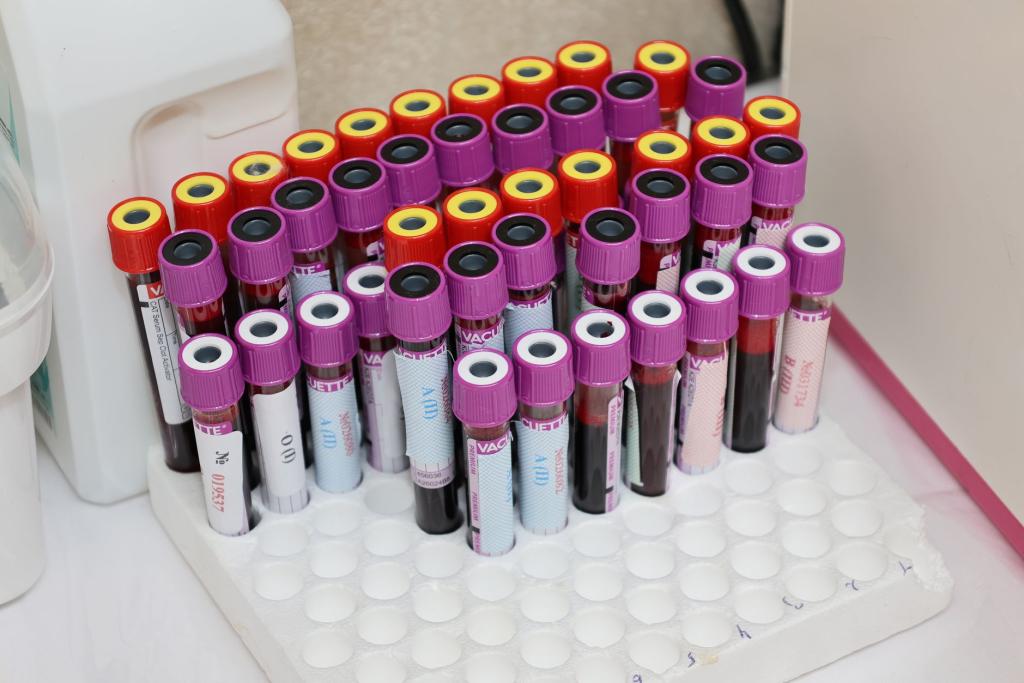
Most people picture menopause as a slow downhill walk: hormones easing down over years, symptoms arriving one by one. A new study says the picture is wrong. The Menopause Cliff — a sudden, step-like shift across the body's systems — is what more than three hundred million blood tests reveal, according to research published in Nature Medicine by the Uri Alon lab at the Weizmann Institute of Science.
The research team reconstructed physiological changes around the final menstrual period using routine laboratory tests from more than a million women in the United States and Israel, collected between 1999 and 2024. Across both datasets, they found abrupt changes at menopause in multiple body systems — not just sex hormones, but also bone health, liver and kidney function, blood chemistry, and blood fats. The authors describe the pattern as a step-like physiological cliff rather than a gradual decline.
The Menopause Cliff appears across the whole body
In the United States dataset, fifty-two of ninety laboratory measures showed a statistically significant abrupt change at menopause. The biggest shifts appeared in systems that are highly sensitive to estrogen — bone, liver, and kidney measures — while systems with a weaker known link to estrogen barely moved. As reported by Medical Xpress, comparable changes were not observed in male individuals, suggesting The Menopause Cliff is a menopause-specific transition rather than ordinary aging.
"This study provides new insights into changes at menopause beyond fertility, and uses laboratory test results for two very large population datasets from the United States and Israel," said Dr. Mia Schaumberg, an associate professor of physiology at the University of the Sunshine Coast, in an expert reaction collected by the Science Media Centre. She noted that the systems showing the largest changes are, in her words, "very sensitive to oestrogen."
For women approaching menopause, the direction of the postmenopausal changes matters: most pointed toward poorer health outcomes. Bone density and metabolic markers moved in the wrong direction once the final menstrual period passed. That is the core of the cliff idea — many of the body's settings appear to change at once, like a switch being flipped.
The Menopause Cliff begins more than a decade early
Paradoxically, the step is preceded by a long runway. Three sex hormones started changing well before the final period: anti-Mullerian hormone declined rapidly roughly fifteen years beforehand, estradiol fell about twelve years beforehand, and follicle-stimulating hormone began rising faster roughly fourteen years beforehand. According to the researchers, these early hormone shifts could eventually help predict the systemic changes of The Menopause Cliff much sooner than currently possible.
That timeline matters for how medicine thinks about perimenopause. If the hormonal fuse is lit in a woman's late thirties, the care conversation needs to start there — not at the first hot flash. Knowing where The Menopause Cliff begins could reshape when screening and support start. Researchers have long suspected that perimenopause is medically under-served, and these data give the suspicion a physiological foundation. For more on how women's health risk shows up early, see our earlier look at heart risk in your thirties.
Hormone therapy softened the jump
One of the study's most talked-about findings concerns menopausal hormone therapy, or MHT. Women who had used MHT showed smaller systemic jumps at menopause — particularly in bone, liver, and kidney measures. The authors suggest this may indicate a protective effect of MHT on the skeletal system and beyond.
Dr. Schaumberg called this another interesting finding of the study, noting the smaller jumps among MHT users. Professor Andrew Shelling of the University of Auckland, also commenting via the Science Media Centre, said the observation raises the possibility that MHT's benefits "may extend more broadly across the body," given that MHT is already known as the most effective treatment for hot flushes.
But the hormone-therapy finding is also the most contested. If The Menopause Cliff can be softened, the next step is finding out for whom MHT is safe and useful — and this paper alone cannot answer that.
Why some experts urge caution
Professor Martha Hickey of the University of Melbourne and the Women's Hospital Victoria offered a sharp counterpoint. Describing menopause as a "physiological cliff," she said, is potentially alarming and implies a dramatic decline the study does not demonstrate. She also noted that the research is retrospective and cross-sectional — "low-level evidence" in her assessment — and that pinning down the exact age of menopause is often problematic when many women use hormonal medications.
Hickey added that the MHT conclusion rests on a small proportion of the sample taking hormone therapy, and that it sits uneasily with randomized controlled trials that do not support MHT for preventing chronic conditions. Shelling agreed the findings should be viewed as "hypothesis-generating rather than conclusive" and called for prospective studies that track individuals over time.
Those caveats are real. Routine lab data comes from women who had clinical reasons for blood tests, which can skew results toward people with health conditions. And self-reported menopause timing is imprecise. That is why independent experts describe the results as a new way of thinking about menopause, and why The Menopause Cliff has already entered the scientific vocabulary. The authors themselves say the hormone-therapy effects will need confirmation in future studies.
Still, the scale of the work is hard to dismiss: two independent populations, a quarter-century of data, and the same cliff shape appearing across dozens of independent lab measures. The Menopause Cliff may not be the whole story of menopause — but it is, for now, the sharpest picture we have of what happens when estrogen leaves. Read more of our coverage on the health beat.
Comments 0
No comments yet. Be the first to share your thoughts!
Leave a comment
Share your thoughts. Your email will not be published.