Radon, the invisible radioactive gas seeping into homes from soil and rock, may be doing more damage than lung cancer alone. A major American study tracking nearly one hundred sixty thousand women across nearly two decades found that brain cancer risk climbed as residential radon exposure rose, as reported by MedicalXpress.
The research, published in the journal Neuroepidemiology, is the largest examination of its kind. Scientists at Oregon State University followed 159,391 participants drawn from the Women's Health Initiative, a long-running national project studying disease prevention in postmenopausal women. Across an average of eighteen years of follow-up, the team recorded 451 malignant central nervous system cancers and estimated each participant's radon exposure using geological and environmental data from the US Geological Survey and the Environmental Protection Agency.
What the researchers actually found
The headline result is a dose-response pattern: the higher the estimated radon concentration, the higher the brain cancer risk. "Absolute risks of malignant central nervous system cancers rose with higher radon concentration across all metrics," said Matthew Bozigar, an epidemiologist at the university's College of Health who led the study, as reported by MedicalXpress. His co-author, graduate student Carson Mowrer, now a doctoral student at the University of North Carolina, added: "Our findings indicate residential radon exposure may contribute meaningfully to the overall burden of central nervous system cancers."
Brain and central nervous system cancers are rare but exceptionally deadly, which is why even a modest new risk factor matters. The National Institutes of Health projects roughly twenty-five thousand new cases in 2026, with a five-year survival rate of just thirty-three percent and about eighteen thousand deaths. The incidence rate sits near six cases per one hundred thousand people, so the absolute brain cancer risk for any one person stays small — but across a population, a widespread exposure like radon adds up to a meaningful share of the total cancer burden.
Radon forms when uranium in certain rocks and soils decays. The gas itself is odorless, tasteless and colorless, and it dilutes harmlessly in open air. Indoors, though — especially in basements and crawl spaces with poor air exchange — it can concentrate to dangerous levels. Its decay products emit radioactive particles that collect in tissue and damage DNA, the same mechanism behind radon's established link to lung cancer. That a gas known to injure lung tissue might also raise brain cancer risk is biologically plausible, and it is exactly what the new data suggest.
Radon was already a known killer
Health agencies have warned about radon for decades, but the spotlight was always on the lungs. Brain cancer risk was never part of the official warning. Radon is the leading cause of lung cancer in people who never smoked and the second-leading cause overall, tied to about twenty-one thousand American deaths every year, according to Earth.com. The Environmental Protection Agency says no level of exposure is safe, advising mitigation when indoor levels reach four picocuries per liter and urging homeowners to consider action at half that level.
This is not the first hint of a brain connection. A 2013 Danish study found a similar pattern linking radon to central nervous system cancers, but it was far smaller. The new American cohort is more than double that size and far more geographically and geologically diverse, spanning the varied soils and housing stock of the United States. That scale makes the brain cancer risk signal harder to dismiss — and gives public-health officials a stronger evidence base than they had a decade ago when weighing whether radon guidance should account for more than lung damage.
What this means for where you live
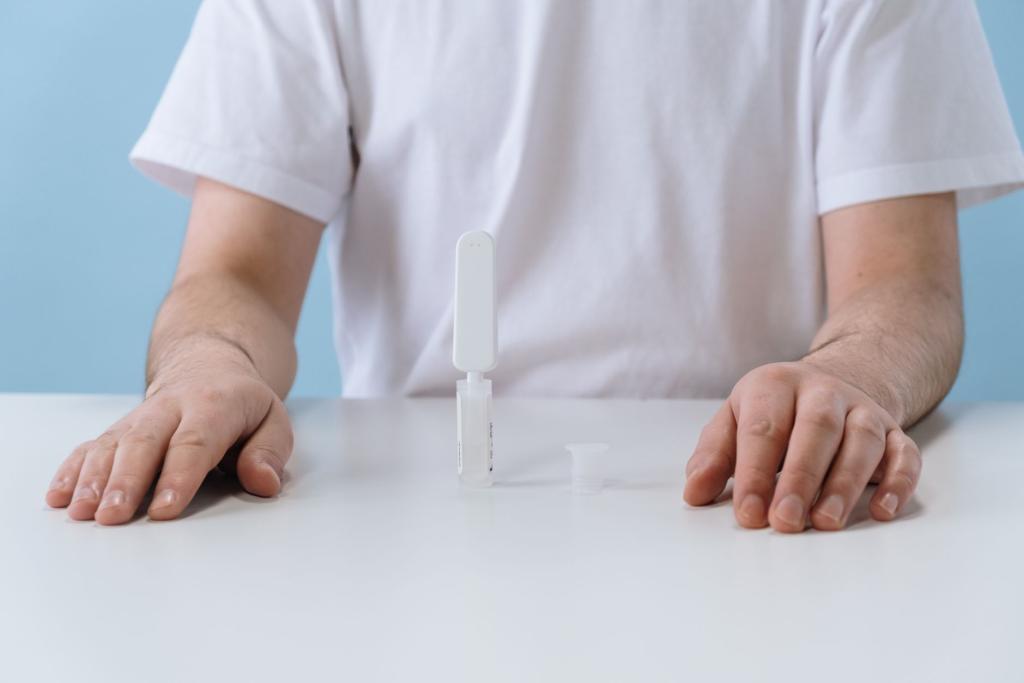
Here is the practical part: radon is one of the few cancer risks you can actually measure yourself. Indoor concentrations can be checked with small, inexpensive passive detectors, and high readings can be fixed with ventilation systems in basements and crawl spaces. Roughly one in fifteen American homes has elevated levels, with the Midwest running highest, according to Earth.com — and because the gas is undetectable to human senses, testing is the only way to know your number.
Renters can ask landlords about testing history, and anyone buying a home can request a radon test during inspection, a contingency that costs little and is standard practice in many states. If you spend long hours in a basement bedroom, office or gym, that is the room to test first, since concentrations run highest closest to the ground. Small, concrete steps that chip away at household brain cancer risk are the reason radon stands apart from most environmental scares: the science homework and the to-do list are the same thing. For more on environmental health, see the Health topic page, and for related coverage of emerging research, this report on an early biomarker signal in dementia drug research.
The caveats scientists want you to hear
The researchers are careful not to overclaim. The study is observational, so it shows a correlation between estimated radon exposure and brain cancer risk rather than proof that one caused the other. Exposure was modeled from geological and agency data rather than measured inside each participant's home, which introduces uncertainty. And the cohort was limited to postmenopausal women, so the findings may not generalize to men or younger people — a limitation the authors acknowledge.
Still, the direction of travel is now consistent: two large studies, thirteen years apart, on two continents, pointing the same way. With a cheap test and proven fixes available, a household gas quietly joining the list of factors tied to brain cancer risk is a story worth acting on, not just reading.
Comments 0
No comments yet. Be the first to share your thoughts!
Leave a comment
Share your thoughts. Your email will not be published.