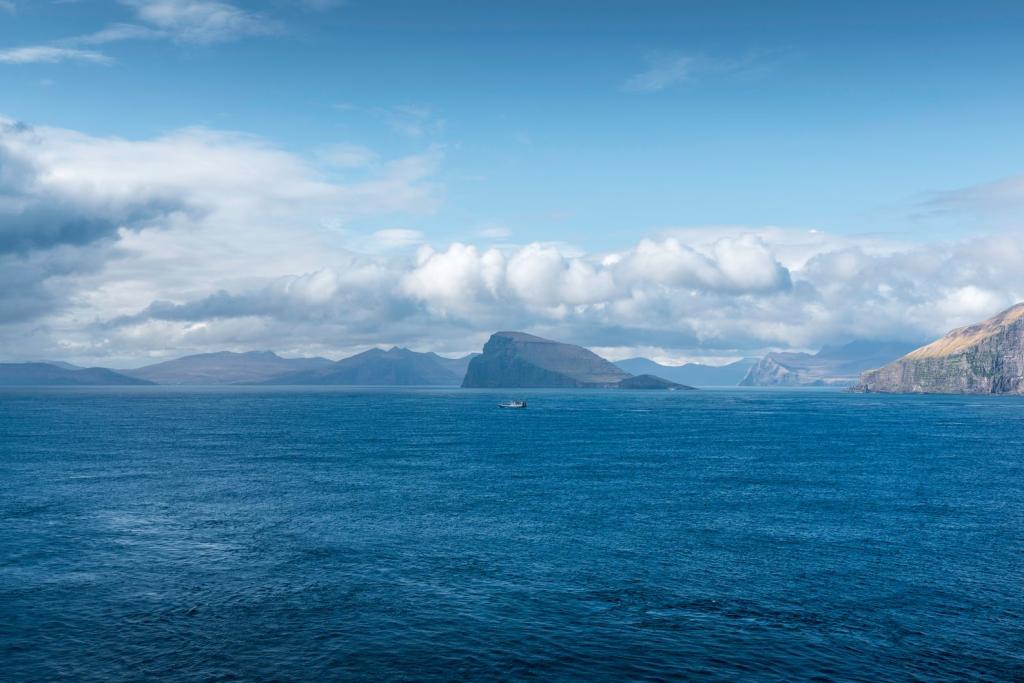
Royal Marines have returned to the Faroe Islands for the first time since the Second World War, as the United Kingdom steps up security efforts in the strategically vital Greenland-Iceland-UK Gap. The deployment, announced by the Ministry of Defence on October 2, 2026, saw the UK Commando Force dispatched to work alongside Danish forces and Faroese maritime agencies as part of Exercise Lion Protector — a show of allied resolve in the North Atlantic.
Exercise Lion Protector
The UK Commando Force was sent to the Faroes to strengthen allied security and test the responses of the UK-led Joint Expeditionary Force, according to the Ministry of Defence. The three forces — British, Danish and Faroese — conducted maritime interdiction operations drills, the military term for boarding, inspecting and seizing target vessels, alongside specialist coastal landings onto steep and inaccessible terrain and small boat missions. The elite teams set up clifftop observation posts to monitor maritime traffic routes before conducting cliff ascents in the archipelago's punishing landscape.
The UK Commando Force deployed its Allied Reaction Force Special Operations Maritime Task Group to the islands for the exercise. According to the Ministry of Defence, the task group provides NATO with elite troops able to deploy at extremely short notice to carry out missions such as recapturing vessels and oil rigs, as well as covert coastal raids to pave the way for allied amphibious landings. The task group draws specialist teams from across the Royal Navy and UK Commando Force — pilots, boarding teams, engineers and boat operators — and Lion Protector served as its first major workout, proving the force's ability to deploy rapidly alongside allies. The exercise ran between August and October.
Why the GIUK Gap matters
The Faroe Islands, a self-governing country that is part of the Kingdom of Denmark, sits in the center of the Greenland-Iceland-UK Gap, one of NATO and the Joint Expeditionary Force's most important maritime approaches. As the Ministry of Defence notes, the gap is the North Atlantic gateway for Russian ships sailing to and from the Arctic — a chokepoint that has taken on renewed importance as Moscow expands its Arctic military footprint. The deployment is designed to deepen operational understanding with allied forces, solidifying their ability to react rapidly to events in the region and to operate effectively in what the Ministry calls the deeply complex terrain of the Faroes.
The 18-island volcanic archipelago is defined by basalt layers, extreme vertical drops and a fractured landscape carved out over millennia by glaciers, wind and the sea — conditions that make it one of the most demanding training environments in the North Atlantic. The Commandos, alongside the Danes and Faroese forces, practiced boarding, searching and seizing vessels, techniques for approaching ships, and operating with boarding ladders to climb onto targets. It is the kind of unglamorous, technical work that underpins maritime security — and that rarely makes headlines until a crisis demands it.
Echoes of Operation Valentine
The return carries heavy historical weight. The exercise marks the first time Royal Marines have been back in the Faroes since the Second World War, when Britain launched Operation Valentine to occupy the islands and shield them from Nazi invasion — and, as Winston Churchill said, from "all the severities of war." After Denmark fell to the Nazis on April 9, 1940, the Royal Navy deployed two destroyers to the Faroese capital of Tórshavn before 250 Royal Marines were landed ashore from HMS Suffolk. The British stayed until 1945 before handing the islands back to Denmark in what the Ministry of Defence describes as a cordial occupation that is still celebrated to this day.
That history gives the current deployment a symbolic resonance that goes beyond training. Just as in 1940, the islands sit at a maritime crossroads where great-power competition plays out in shipping lanes and surveillance zones. The difference is that today's Royal Marines arrived as invited partners of Denmark and the Faroese government, not as occupiers — a distinction the Ministry was keen to underline.
A signal to the High North
General Sir Gwyn Jenkins, First Sea Lord and Commandant General Royal Marines, framed the deployment in stark terms: "Defending the Atlantic is fundamental to our economy, national security and way of life. In troubling times, we cannot be complacent." He added: "The return of the Royal Marines to the Faroe Islands should send an unequivocal message: the UK, alongside Denmark and our other allies in the Joint Expeditionary Force, stand ready to protect the waters, islands and vital routes that keep our nations secure," according to the Ministry of Defence.
The Joint Expeditionary Force brings together ten like-minded nations — Denmark, Estonia, Finland, Iceland, Latvia, Lithuania, the Netherlands, Norway, Sweden and the UK — who work together to protect democracy and the rule of law through military cooperation. All member nations are currently stepping up their work to reinforce collective security across Northern Europe ahead of the Atlantic Future Forum and the International Sea Power Conference on HMS Prince of Wales later this autumn, which will bring together defence leaders, industry and policymakers to discuss the future of Euro-Atlantic security. Russia's campaign against Ukraine's energy grid has already shown how quickly northern security assumptions can be upended — and the Royal Marines' return to the Faroes is London's answer to a North Atlantic that feels less secure than it did a decade ago. (Royal Navy / Ministry of Defence)
Comments 0
No comments yet. Be the first to share your thoughts!
Leave a comment
Share your thoughts. Your email will not be published.