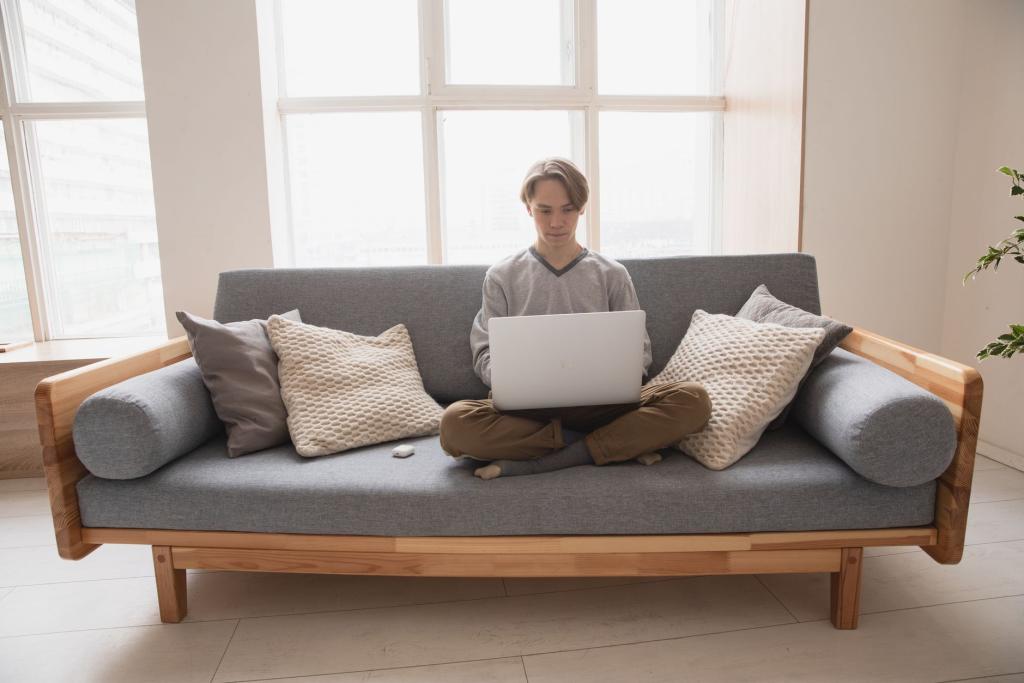
Your work-from-home days are giving you more sleep and less movement at the same time. A new remote work sleep study from researchers at the University of Turku in Finland, published September 23, 2026, found that people slept about 14 minutes longer on days they worked remotely compared with office days, according to reporting by ConsumerAffairs. But that bonus time in bed came with a trade: remote workdays also included roughly 44 more minutes of sedentary time, and people spent less of the day being physically active. The researchers tracked people who split their time between home and the office, so the comparison is direct: the same person, the same job, two different settings, two different bodies by evening.
The sitting wasn't replacing deep work or exercise. It was replacing the kind of low-grade movement most of us never think about. "The increase in sedentary behaviour during remote workdays was mostly caused by spending less time standing," researcher Dr. Kristin Suorsa said in a news release. One likely explanation: unlike offices, home setups rarely include standing workstations, so people who would have been on their feet during parts of an office day ended up parked on the couch instead. Some of the movement that commuting used to force, from walking to the station to climbing office stairs, was replaced by sitting, lying down, and sleeping. Fourteen extra minutes of sleep looks great on paper, but nearly three-quarters of an hour of extra sitting is a very different story for your back, your metabolism, and your energy.
What actually improves your sleep: structured exercise, not steps
If the fix sounds like "walk more," the science says to think bigger. A large-scale analysis of 702,007 Japanese adults found that starting a structured exercise routine was associated with 37% higher odds of improved perceived sleep restfulness, according to a report published September 15, 2026 by mindbodygreen and covered by NewsTarget. Maintaining an existing exercise habit was linked to 23% higher odds of better sleep, while stopping exercise was associated with reduced sleep restfulness. The striking part is what didn't matter: general daily physical activity, including step counts, showed no consistent pattern of improving sleep. The remote work sleep study tells us home workers move less, but this one tells us which movement actually counts when it comes to rest.
The distinction matters because most of us optimize for the wrong number. A structured session means a planned effort with a start and a finish, like strength training, running, cycling, or a brisk walk you actually put on the calendar. Incidental movement, the steps you rack up wandering the office or pacing the kitchen, still helps overall health, but the research suggests it doesn't move the needle on how rested you feel. For a remote worker whose day has collapsed into a single room, that is the most actionable finding in both studies: the commute won't come back, but a deliberate workout will do more for your sleep than any step-goal badge ever could. For more on short, deliberate movement, see our earlier piece on movement bursts and diabetes risk.
The viral sleep hacks are not the answer either
While scientists study treadmills, social media is prescribing kiwis and onions. A survey of 2,000 adults in the United Kingdom found that nearly half have tried sleep hacks they saw online, averaging two different methods each over the past year, as reported by the Gazette. The sensible entries top the list: avoiding blue light before bed was tried by 39%, white or brown noise by 31%, and herbal tea by 28%.
Then it gets strange. Seven percent ate kiwi fruit before bed, another seven percent mixed the viral "sleepy girl" mocktail, and six percent went to sleep with onions in their socks. Across the 13,000 adults polled in twelve countries, 71% had tried at least one online sleep method, with Brits notably more skeptical than the global average of 48% versus that higher worldwide figure.
Sleep expert Olivia Arezzolo, who partnered with Novotel on a sleep masterclass for the hotel chain's worldwide Longevity Week, drew the line between what works and what just goes viral. "It is important to give ourselves the best chance of a successful night's sleep as we wind down in the evenings," she said. "Sorting fact from fiction and uncovering which viral fads are worth your time can feel like a minefield." Her verdict: "While some popular sleep hacks have a scientific basis, many are oversimplified, exaggerated or simply ineffective." The onions-in-socks crowd, in other words, might want to redirect that effort toward the two things with real evidence behind them: an earlier bedtime and an actual workout.
Put the two studies together and the remote worker's playbook writes itself. First, treat the missing commute as a gap to fill deliberately, not a bonus you bank. If your office days used to include twenty minutes of walking and eight hours with standing breaks, your home day needs a substitute, and the Finnish research suggests the substitute that matters most is time on your feet, not just time in bed. A standing desk, a walking pad, or simply a rule that every call you take is a call you take on your feet can claw back the posture your office used to give you for free. Second, schedule one real workout rather than chasing ten thousand steps. The Japanese analysis is clear that a structured session beats diffuse ambling for sleep, so a thirty-minute run or a lifting session three times a week is a better sleep prescription than any sleepy girl mocktail.
There is a broader point here for how we talk about remote work. The debate usually gets framed as freedom versus culture, flexibility versus collaboration, and the health angle gets reduced to "you can sleep in." The remote work sleep study shows the reality is more mixed and more interesting: you do sleep more, measurably, but you also sit much more, and the net effect depends entirely on what you do with the hours the commute gave back. Companies that celebrate work-from-home flexibility without helping people build movement into the day are handing out half a wellness benefit. The other half is on you, and it starts with standing up. Explore more ideas on the Life Hacks topic page.
Comments 0
No comments yet. Be the first to share your thoughts!
Leave a comment
Share your thoughts. Your email will not be published.