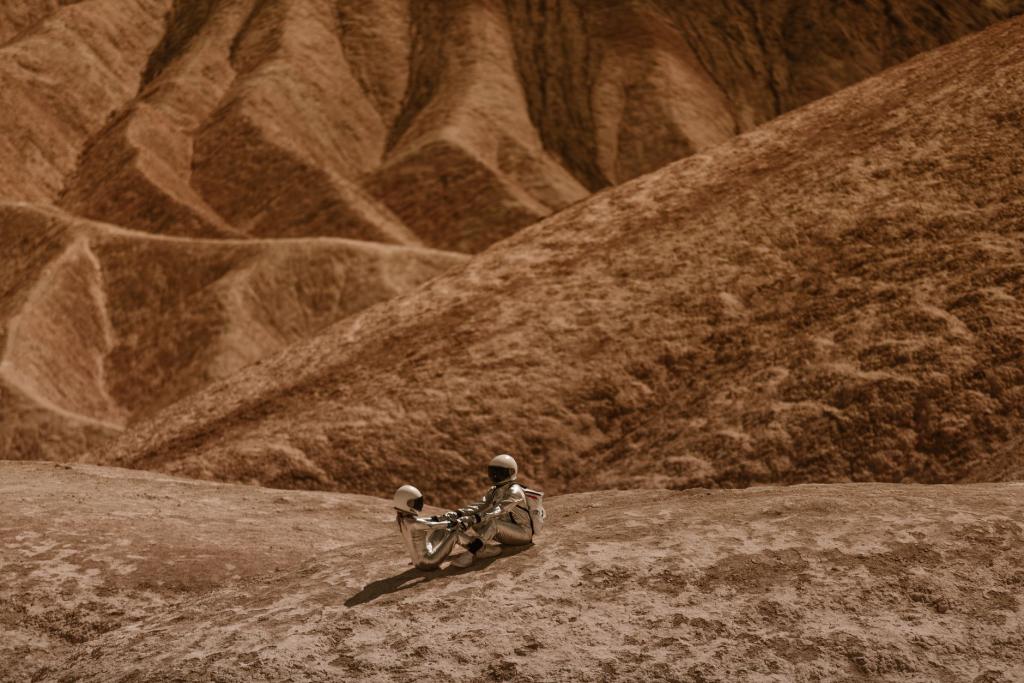
NASA announced this week that its Perseverance rover has driven 28.1 miles (45.2 kilometers) across Mars since its 2021 landing, the longest drive of any vehicle on the surface of another world. The new Perseverance driving record came Sunday, when a 299.6-foot trek toward a region called Idubi pushed the car-sized rover past the previous mark, according to reporting by Reuters.
The old Perseverance driving record of 28.06 miles belonged to Opportunity, NASA's solar-powered rover that roamed Mars from 2004 to 2018. The new record holder beat it in less than half the time, and both rovers have now outdriven every vehicle that ever rolled on the Moon. The agency also noted that Curiosity, the other active NASA rover, has covered more than 23 miles in Gale Crater since 2012.
How the rover steers itself
Much of the credit goes to the rover's self-driving system. Perseverance runs autonomous navigation software called AutoNav, which photographs the terrain while rolling, builds a 3D map of hazards, and plots a course between waypoints picked by planners back on Earth. Images from its navigation cameras feed the system constantly as it rolls. The team describes the approach as thinking while driving, and it is the reason the rover could keep moving across rough ground without waiting for detailed driving commands from home. That independence is what separates Perseverance from every rover before it. That onboard planning is why the rover can drive at or near its top speed instead of inching along while engineers review each route.
The system has handled about 90 percent of Perseverance's total distance on its own, according to NASA, and the rover can cover up to 412 meters in a single Martian day, a span scientists call a sol that lasts about 24.6 hours. Opportunity and Spirit, running a far earlier version of the software, managed only about 5 percent of their driving autonomously. NASA's first Mars rover, Sojourner, checked just twenty points ahead of it per look, while Perseverance measures hundreds of thousands. That jump in capability is what powered the Perseverance driving record.
The Perseverance driving record also says something about how planetary exploration gets done now. A rover that steers itself can cover ground between planning sessions instead of sitting still, which means more rocks sampled and more ground surveyed in the same stretch of mission time. For a mission hunting traces of ancient life, distance covered is science covered. Each autonomous mile is a mile the team did not have to plan by hand.
Where the record drive is headed
Perseverance set the record while rolling through Lac de Charmes, a region off the western rim of Jezero Crater, toward some of the oldest terrain scientists have ever seen in the solar system. The rover has spent its mission exploring the crater, which once held a lake basin and was flooded with water billions of years ago, looking for signs of ancient microbial life and collecting rock and soil samples that could one day be returned to Earth.
At Idubi, the team hopes to find traces of ancient hydrothermal systems, heated water that could have supported life long ago. Guinness World Records confirmed the Perseverance driving record as the greatest distance travelled on another world, noting the odometer crossed from 28.04 to 28.09 miles in a single push. The number keeps climbing because the rover keeps driving, and every new mile is new terrain under its wheels.
The rover is in good shape for the long haul. Steven Lee, the project manager for Perseverance and Curiosity at NASA's Jet Propulsion Laboratory, said the hardware and instruments are in excellent shape with redundant systems still available, and a recent assessment concluded the rover could keep operating well into the 2030s. The original mission called for no more than 12.4 miles of driving, and NASA recently approved an extension carrying exploration of the crater rim through roughly the end of 2028. The Perseverance driving record, Lee said, should keep growing for years. The gap between the two records shows how quickly the driving technology has matured, and there is no sign the rover plans to slow down.
Comments 0
No comments yet. Be the first to share your thoughts!
Leave a comment
Share your thoughts. Your email will not be published.