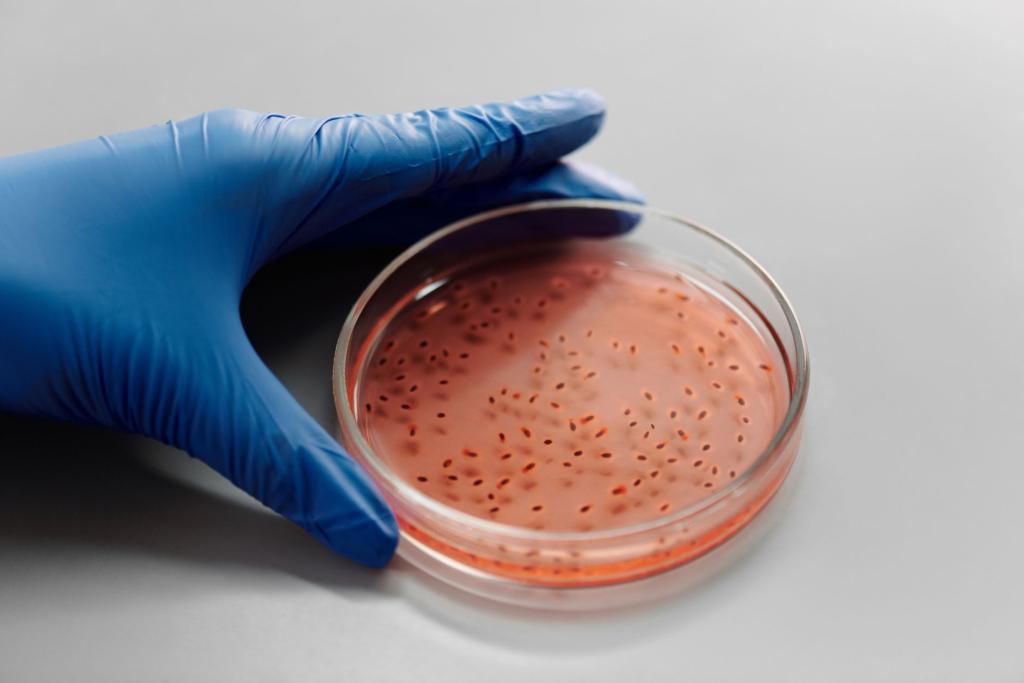
Scientists analyzing the genetic material of individual ocean plankton cells have found a microbe with the smallest genome ever recorded in a cell. The Sukunaarchaeum genome spans 238,034 base pairs and encodes only 189 protein-coding genes, less than half the size of the smallest archaeal genome known before it. The discovery, published October 9, 2026, in the journal Current Biology, redraws the lower limit of how little genetic machinery a cell needs to keep running.
The organism is formally named Candidatus Sukunaarchaeum mirabile, after a small Japanese god, and it belongs to the archaea, a domain of microscopic single-celled life that is distinct from bacteria. An international team of researchers from the University of Nottingham and the University of Tsukuba in Japan found it by sequencing DNA from individual marine microorganisms, according to the study. The Sukunaarchaeum genome looks nothing like the DNA of any known archaeal group, and matching sequences in other seawater samples suggest it belongs to a much larger family of microbes that has gone unnoticed.
Finding the microbe took cell-by-cell detective work. The researchers sequenced DNA from individual marine microorganisms pulled from seawater, and the tiny archaeal genome turned up inside that single-cell data. It was not hiding in a mixed sample; it was read directly from one cell at a time.
A cell running on almost nothing
Most of what makes a genome large is missing here. The microbe has shed nearly all the genes needed to make nutrients and energy, leaving it dependent on host organisms for survival. What it kept is the core toolkit for copying its own DNA and turning genetic instructions into proteins, the basic replication machinery every cell needs. The Sukunaarchaeum genome is therefore a stripped-down instruction set for self-copying, with metabolism outsourced to whatever host it lives in.
That combination is unusual. Mitochondria and chloroplasts, the energy and photosynthesis structures inside plant and animal cells, were once free-living bacteria, and over time they handed some of their copying machinery over to their host cells. Sukunaarchaeum took the opposite route: it gave up nearly everything metabolic and held on to the machinery for reading and replicating its own genetic code. The researchers say the Sukunaarchaeum genome may sit close to the minimum genetic information an organism needs to remain an independent cell.
Thorsten Allers, a professor in the School of Life Sciences at the University of Nottingham and a co-author of the study, put the Sukunaarchaeum genome in terms of the definition of life itself. Phys.org reports his comments as follows:
"The key to defining life is whether something can replicate itself, and whether it can do this autonomously. This exciting discovery provides new clues about how simple a living cell can become while remaining capable of reproducing and maintaining its own genetic information."
A hidden family in the ocean
The Sukunaarchaeum genome is also strange in a second way: its DNA is genetically distant from every known group of archaea. That distance, plus related genetic sequences already spotted in other marine samples, points to a much larger group of related organisms that researchers have simply not noticed until now. The microbe turned up during routine analysis of single plankton cells, the kind of find that modern DNA sequencing keeps producing from ordinary seawater.
That hidden family could be large. Matching DNA sequences have already turned up in marine samples from elsewhere, which suggests researchers have been passing these organisms by for years without recognizing them as a group. Minimal genomes like this one also give researchers a practical yardstick: strip a cell down, and the parts left behind are the ones life cannot do without. For Sukunaarchaeum, what remained was the replication core, and almost nothing else.
News-Medical, reporting on the same study, notes that the genome is less than half the size of the smallest archaeal genome previously known. Beyond its record-setting size, the finding gives biologists a living reference point for the boundary between cellular life and simpler replicating systems. The Sukunaarchaeum genome is now the smallest recorded example of that lower limit.
Comments 0
No comments yet. Be the first to share your thoughts!
Leave a comment
Share your thoughts. Your email will not be published.