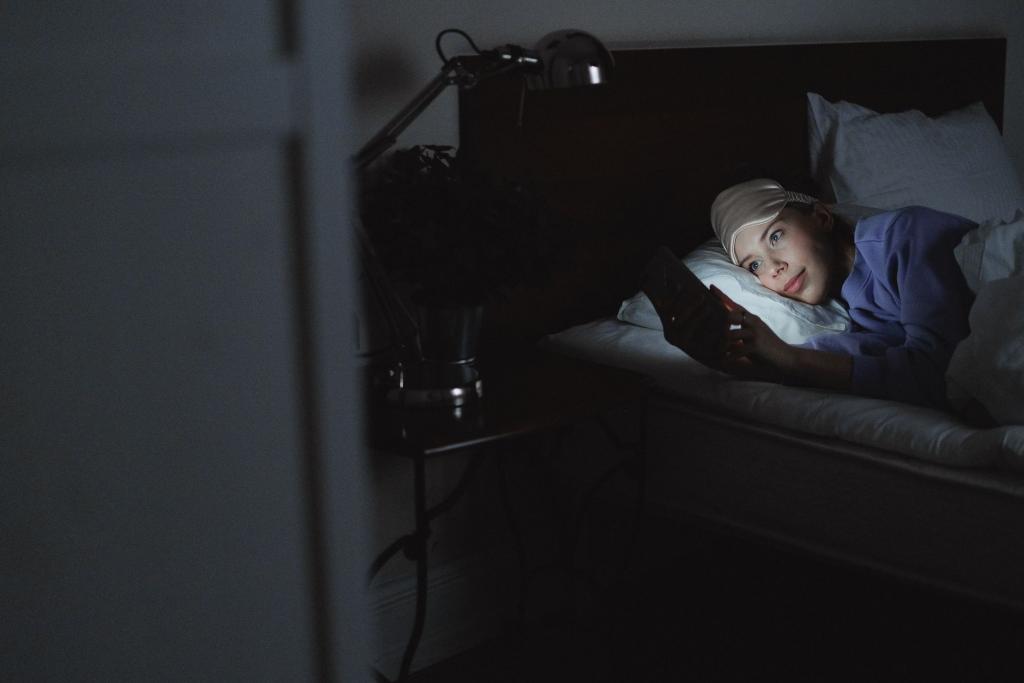
Sleeping with even a little light in your bedroom may be changing the shape of your heart. In a study of more than 11,000 adults, researchers found that people exposed to higher levels of nighttime light had thicker walls in the heart's left ventricle and reduced flexibility in the heart muscle — early signs of dysfunction that can precede heart failure. The research, published September 9 in the European Heart Journal, is the first to track what happens to the heart's structure over time under nighttime light exposure.
Led by Lu Qi of Tulane University's Celia Scott Weatherhead School of Public Health and Tropical Medicine, the team analyzed data from 11,071 UK Biobank participants who wore wrist sensors for seven days to measure their overnight light exposure. Some participants slept in near-total darkness, around 0 lux, while the highest-exposure group received more than 3 lux — roughly equivalent to a phone screen at low brightness on a nightstand or a hallway light shining through a partially open door.
About three years later, each participant underwent cardiovascular magnetic resonance imaging to examine the heart in detail. The scans showed that the high-exposure group had thicker walls in the left ventricle, the chamber that pumps oxygen-rich blood around the body, leaving less space inside. The researchers also found reduced flexibility of the heart muscle during a beat, plus changes involving the right ventricle and left atrium. The pattern matched cardiac remodeling, where the heart adapts its structure and function to ongoing stress.
"Previous observational studies have linked nighttime light exposure with a higher risk of cardiovascular diseases, but little is known about the related cardiac structure and functional changes," Qi said in a Tulane news release. "We carried out this research to find out what happens to the heart over time when people are exposed to too much light at nighttime." The team also reported that the highest-exposure group spent about 34 minutes a night in light levels that may suppress melatonin, and that shorter sleep appeared to play a role in the link between the glow and the heart changes, according to HealthDay.
Why doctors are paying attention
What makes the findings hard to ignore is the dose. Three lux is dimmer than most people assume is harmless — closer to moonlight than to a lit room. Previous studies had already tied nighttime light exposure to higher cardiovascular risk, but they stopped at diagnoses. This study is the first to show the physical changes happening underneath: the remodeling that occurs before disease appears. "This is where the structure and function of the heart change, and we typically see it in response to chronic stress or injury to the heart," Qi said. "It's our body's way of adapting to that stress, but ultimately it weakens the heart and can lead to heart failure."
An editorial published alongside the study, led by Thomas Münzel of University Medical Center in Mainz, Germany, went further with the clinical takeaway. Noting that light exposure is a growing risk factor for heart disease, the editorialists urged clinicians — especially those treating heart failure or atrial fibrillation — to ask patients about room darkness, screen use, and night-shift work. Qi himself put it bluntly: "Light pollution has emerged as a new risk factor for cardiovascular disease," and reducing nighttime light exposure should be considered as a potential prevention strategy by clinicians and policymakers, as USA Today reported.
What this means for your bedroom
The study has limits: participants wore sensors for only one week, the researchers couldn't measure specific light types like blue light or account for individual light sensitivity, and as an observational study it cannot prove the light caused the changes. Still, the prescription costs nothing. Blackout curtains, a dark hallway, moving the charger across the room so the phone isn't glowing by your pillow — these are the cheapest health interventions available. Unlike most heart-health advice, which demands diet overhauls or gym memberships, this one asks only for darkness.
For a generation that falls asleep to glowing screens, the finding lands differently than another "sleep more" lecture. A 2026 study of more than 95,000 people showed that the composition of your sleep, not just its length, shapes disease risk — and this new research adds the environment around sleep to that picture. More on building healthier routines at the Mind & Body topic page.
Comments 0
No comments yet. Be the first to share your thoughts!
Leave a comment
Share your thoughts. Your email will not be published.