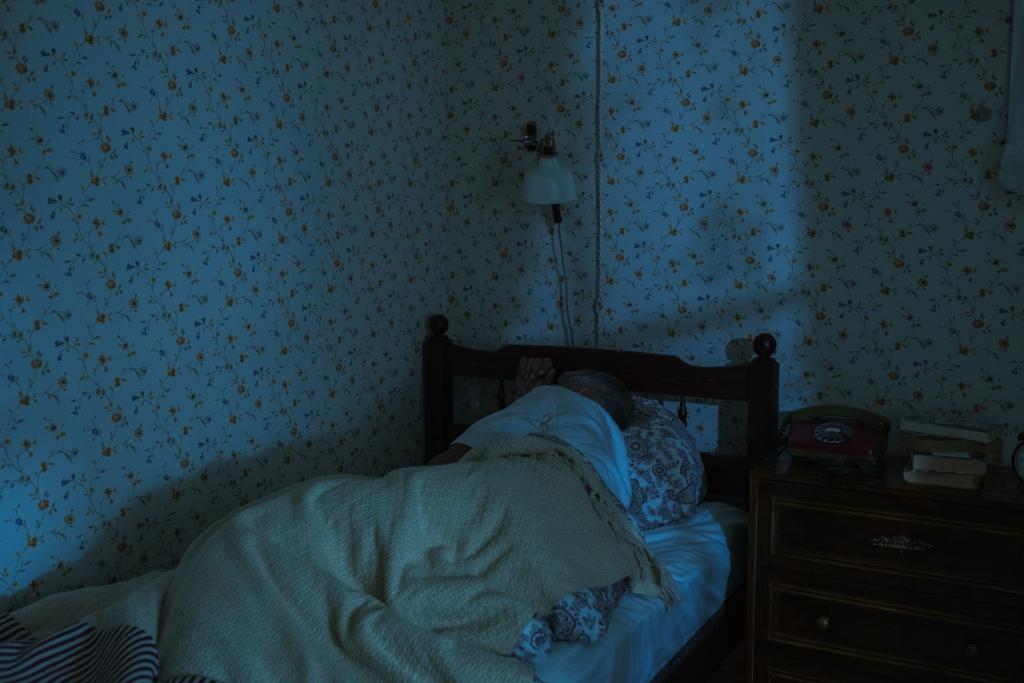
Researchers tracked the sleep of 95,559 British adults for nearly nine years using wrist monitors — and found that the type of sleep you get may matter as much as how long you sleep. The study, published September 17, 2026 in PLOS Medicine, is one of the largest investigations ever into how real-world sleep architecture connects to long-term disease risk. Its headline finding: more REM sleep was linked to a lower risk of 83 different diseases across 12 major disease categories.
The study, led by Jingsong Luo of Peking University's School of Public Health, drew on the UK Biobank cohort. All 95,559 participants — average age 56.2, 56.3% women — wore an Axivity AX3 triaxial accelerometer on their dominant wrist for seven consecutive days and nights, with data collected between 2013 and 2015. A deep-learning algorithm called SleepNet then estimated how much time each person spent in REM, deep, and light sleep, plus total sleep duration, sleep irregularity, and wakefulness after falling asleep. Participants were followed for a median of 8.9 years, with new diagnoses tracked through health records covering 1,049 different disease phenotypes.
What the REM sleep numbers showed
The REM findings were the most striking. For every interquartile increase in REM sleep — about 47.6 extra minutes — participants showed lower risk across 83 diseases. The strongest associations, all statistically significant, included Parkinson's disease (hazard ratio 0.20), multiple sclerosis (0.48), dementia (0.54), Alzheimer's disease (0.69), and heart failure (0.74). Deep sleep mattered too: more of it was linked to lower odds of seven conditions, including type 2 diabetes (0.89) and major depressive disorder (0.86).
Total sleep duration also followed a familiar curve, but with unusual precision. The lowest-risk window was six to eight hours per night across 69 of the disease phenotypes studied. Sleeping less than six hours raised the odds of 24 diseases — and dropping under five hours was associated with elevated risk for 37 conditions, including dementia, heart failure, and type 2 diabetes. As Luo and colleagues wrote in the paper: "The findings provide additional evidence supporting the role of a 6-8 hours' sleep duration as a health safeguard for middle-aged and older adults, likely attributable to more favorable distributions of sleep stages."
Why this study is different — and its limits
Most earlier research relied on people remembering how they slept, which is notoriously unreliable. Here, sleep was measured objectively over seven consecutive days — generally representative of habitual sleep patterns, as sleep researcher Greg Elder of Northumbria University noted in commentary via the UK Science Media Centre. And unlike consumer wearables, the research algorithm SleepNet was validated against 1,113 nights of lab-based polysomnography, the gold standard for measuring sleep stages.
But Elder also offered a note of caution: wrist-based estimation "isn't the same as actually knowing when people are in light sleep, REM sleep, or deep sleep." Independent validation studies of consumer trackers have found they tend to underestimate deep and REM sleep while overestimating light sleep — and this study remains observational, meaning it cannot prove that changing your sleep stages would change your disease risk. Sleep changes can also reflect underlying disease rather than cause it. As Elder put it: "Future work needs to look at where sleep alterations fit into the underlying mechanisms of each of these health conditions."
The sleep disruptors worth knowing about
One reason this study lands hard is that REM sleep — the dreaming stage when the brain consolidates memory and regulates emotion — is fragile. REM clusters in the second half of the night, which means cutting sleep short sacrifices REM disproportionately. Evening alcohol suppresses REM early in the night and fragments sleep later; a meta-analysis found that drinking before bed delays the first REM cycle by roughly 16 minutes on average, according to Harvard Health Publishing. Caffeine blocks adenosine, the chemical that builds sleep pressure, reducing deep slow-wave sleep. And irregular schedules scramble the circadian rhythm the brain needs to complete full sleep cycles.
How to protect your REM and deep sleep tonight
The evidence base points to a short list of moves that genuinely shift sleep architecture:
- Keep a consistent schedule — same bed and wake times, weekends included. Regularity lets the brain complete full sleep cycles, and since REM dominates the second half of the night, a consistent full-length sleep protects it. (Harvard Health Publishing)
- Cut the nightcap — alcohol speeds sleep onset but suppresses REM and fragments the second half of the night. There is no established "safe" dose for sleep architecture. (Harvard Health Publishing; Weibel et al., Scientific Reports 2021)
- Watch the caffeine cutoff — caffeine delays sleep onset and reduces deep sleep; one study found three 150mg servings a day measurably affected REM. (Harvard Health Publishing)
- Exercise, but earlier — regular physical activity builds sleep pressure and boosts deep sleep; a 2024 Scientific Reports study confirmed the effect. Finish vigorous workouts one to three hours before bed. (Harvard Health; Johns Hopkins Medicine guidance)
- Wind down screen-free — about 60 minutes before bed, swap scrolling for reading, stretching, a warm bath, or soft music. Evening light suppresses melatonin and delays REM. (Harvard Health; Jiang-Xie et al., Neuron 2025)
- Keep the bedroom cool, dark, and quiet — around 18–20°C (65–68°F). Sleep scientist Matthew Walker flags a cool room and no pre-bed screens as top science-backed steps. (Sleep Foundation guidance)
Eight hours of "good enough" sleep was always a rough target. What this study adds is specificity: the hours matter, but the architecture matters too. In a world where the average young adult checks a phone every few waking minutes, the cheapest health upgrade available might be the one that costs nothing at all — a dark room, a consistent bedtime, and a full night's dreaming.
Sources: Luo et al., PLOS Medicine, September 17, 2026; Medscape; Harvard Health Publishing
More on GenZ NewZ Health, including how four minutes of movement bursts could cut diabetes risk 36%.
Comments 0
No comments yet. Be the first to share your thoughts!
Leave a comment
Share your thoughts. Your email will not be published.