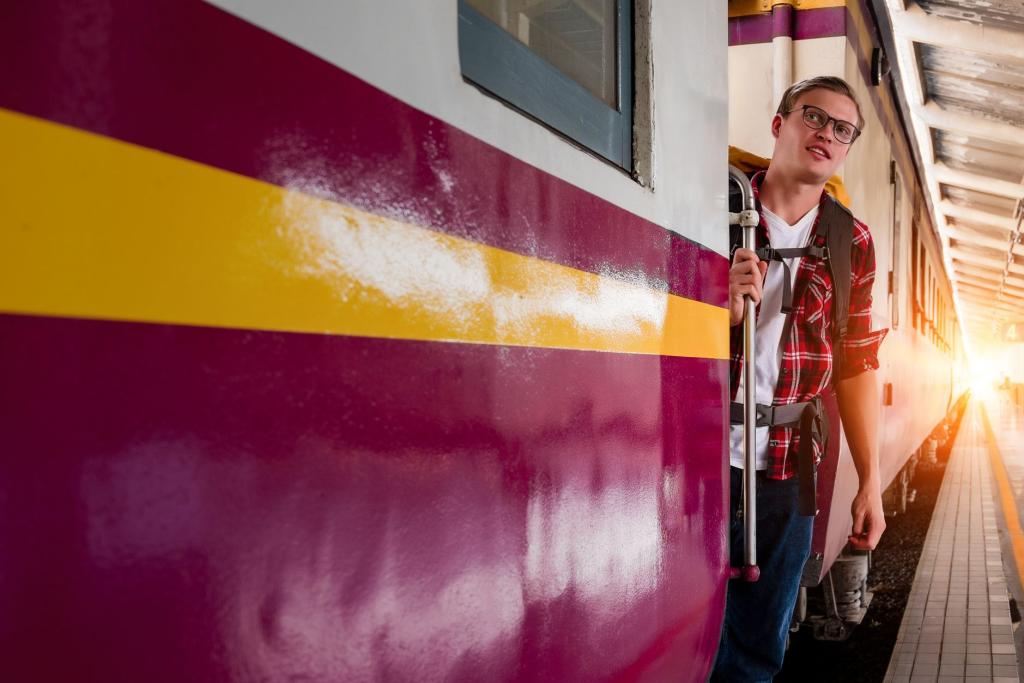
Europe's night trains have come back from the dead. In 2026, sleeper routes linking Paris, Berlin, Brussels, Prague and Milan are selling out berths weeks in advance, a Paris-Berlin service the state railways were ready to scrap has been rescued by a crowd-funded startup, and a new generation of travelers is choosing bunks over budget airlines. For Gen Z, the sleeper train is no longer a relic of another era. It is the trip itself — the very spirit of Europe's Sleeper Revival.
The revival almost ended before it began. When Austria's ÖBB and France's SNCF discontinued their Paris-Berlin Nightjet in mid-December 2025, the Paris-Berlin-Vienna corridor looked headed for the scrap heap even though its trains were running about seventy percent full, according to reporting by National Geographic. The state carriers saw a balance-sheet problem where passengers saw full compartments. A Dutch-Belgian startup, European Sleeper, stepped into the gap: in late March 2026 it launched its own Paris-Berlin overnight service, the Good Night Train, picking up the route the national operators had dropped.
The economics behind the rescue explain why 2026 became the breakout year. European Sleeper has raised about two point three million euros from crowdfunding with more than four thousand backers, and says it has carried over two hundred and thirty thousand passengers — a scale of demand the old state-run services never managed to turn into a business. Those riders skew young. Eurail data for 2025 shows travelers aged 12 to 27 made up 40 percent of its Australian passholders, up from 32 percent in 2019, with more than 52,000 Australians riding Eurail trains last year, reported by Karryon, which quotes the company's senior research analyst Jody Bauer. Interrail read the same signal: in a late-September 2026 sale it cut its one-month youth pass to roughly half the usual price for travelers under twenty-eight.
The six-stop timeline of the 2026 comeback
December 2025: the Paris-Berlin Nightjet ends, and the sleeper era looks finished. January 2026: the Caledonian Sleeper adds Birmingham as a calling point, its first new stop in more than three decades. Late March 2026: European Sleeper's Good Night Train starts running between Paris and Berlin. May 2026: the Prague-Copenhagen ComfortJet begins service. September 2026: after delays from its planned summer launch, European Sleeper's Brussels-Milan sleeper finally takes to the rails, departing Brussels on Monday, Thursday and Saturday evenings and returning from Milan on Wednesday, Friday and Sunday nights, according to Travel Tomorrow's coverage of the launch. December 2026: Leo Express has proposed an Ostend-to-Bratislava night route with more than fifty stops, and an Amsterdam-Barcelona sleeper is planned for late 2026, Travel and Tour World reported. Read together, the sequence shows the market moving faster than the national carriers ever did.
What a berth actually costs
At the budget end, the numbers undercut a weekend city break. European Sleeper's Brussels-Milan service sells shared compartments starting under fifty euros, according to Breaking Travel News, and its Paris-Berlin and Brussels-Berlin-Dresden-Prague routes use the same tiered pricing, with couchette bunks in the middle and private sleeper cabins at the top. Because you sleep through the journey, the fare also erases a night of hotel costs — the arithmetic that makes the sleeper competitive even when a budget flight looks cheaper on paper. Interrail and Eurail passes cut the cost further for multi-country trips, and night-train reservations for pass holders are typically a modest supplement.
At the other end of the platform sits the luxury tier. National Geographic reported on the 2026 launches of La Dolce Vita Orient Express in Italy and Belmond's Britannic Explorer in Britain, alongside the fortieth anniversary of Spain's Al Andalus train — hotel-on-wheels experiences priced for celebrations, not gap years. Between the two extremes, the sweet spot for a young traveler is clear: a shared compartment at the starting fare, booked early, on a route of three or fewer weekly departures. Those departure limits are the real constraint of the revival. Sleeper trains are frequent enough to plan around and scarce enough that the popular berths sell out — so flexibility on dates matters more than flexibility on budget.
Why Gen Z picked the berth over the budget flight
Part of the appeal is practical. A sleeper train leaves a city center in the evening and arrives in a city center in the morning, with no two-hour airport arrival, no baggage fees and no middle-of-the-night arrival in a suburb. Part of it is cultural: the journey is the content, and waking up in a new country after falling asleep in another is a story in a way that a budget-airline boarding queue never will be. Sustainability awareness among young travelers completes the picture — trains emit far less per passenger than short-haul flights, and the flight-shame debate has turned choosing rail into a statement as much as a convenience.
The counterpoint is worth stating honestly. Sleepers do not yet match budget airlines on price for every route, they run only a few nights a week, and a fifteen-hour journey with a shared bathroom is not everyone's idea of a good night. But the direction of travel is unmistakable: a route the state railways abandoned at strong occupancy is now run by a crowd-funded company, young riders are the fastest-growing segment on the continent's rail passes, and new berths keep opening from the Channel to the Alps. The night train was supposed to be a museum piece. Instead, Europe's Sleeper Revival has made it 2026's most interesting way to cross Europe.
Comments 0
No comments yet. Be the first to share your thoughts!
Leave a comment
Share your thoughts. Your email will not be published.