A sacred site can give a journey its purpose, while a historic town can give it a different pace. That idea runs through the latest Southeast Asia Travel findings from Traveloka, whose quarterly index shows faith and heritage shaping trips across the region in the July-to-September quarter. According to Traveloka's latest index, pilgrimage routes and temple towns led booking growth, while cooler cities, green-season landscapes and one breakout beach island rounded out a quarter of unusually intentional travel. The findings cover five markets across the region, and each one tells a different story.
What ties the quarter together for Southeast Asia Travel is not a single destination but a motive. Travellers booked around meaning, season and atmosphere, whether that meant a pilgrimage, a temple itinerary, a cooler city break or a rain-fed landscape. Beach holidays still matter, and one island stood out across the board. But the strongest signal was that travellers want a reason behind the journey, not just a change of scenery.
Pilgrimage routes and temple towns lead the way
In Indonesia, the quarter's clearest faith story played out on routes to Saudi Arabia. According to Traveloka, accommodation bookings to Mecca rose by more than half year on year, and Mecca, Jeddah and Madinah all landed among the ten biggest climbers among international destinations for Indonesian travellers. At home, the mood was cooler in every sense: Wonosobo and Sukabumi led domestic growth, putting Central Java's highlands in focus as a break from dry-season heat.
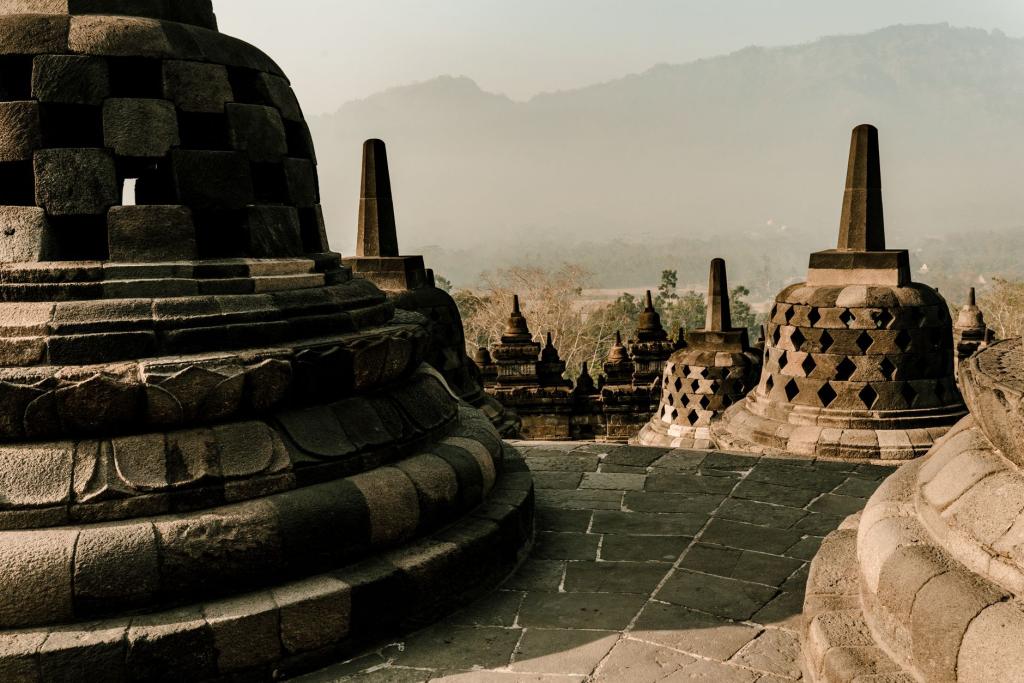
For Malaysia, a short hop across the strait opened a window onto centuries of shared religious history. Interest in Borobudur put the Buddhist monument in focus, and growing bookings to Magelang and Yogyakarta reinforced the connection, with the nearby Prambanan temple complex rounding out a temple itinerary through Java. As reported by Travel and Tour World, both Borobudur and Prambanan hold UNESCO World Heritage recognition dating to 1991, which makes the route as much a history lesson as a holiday. It is the kind of layered itinerary that defines Southeast Asia Travel at its best.
Cooler cities, green seasons and a beach standout
Singapore's travellers chased a change of season as much as scenery. Bookings to Melbourne more than tripled compared with a year earlier, as travellers swapped year-round tropical warmth for winter and spring weather, with Jeju also among the quarter's biggest climbers. The appeal is easy to grasp for Southeast Asia Travel fans: different light, cooler air and a city calendar built around the seasons.
Thailand showed that the rainy season has its own attractions. Khao Yai ranked as the country's fastest-rising domestic destination, as wet-season rain turned forests and grasslands lush and swelled the waterfalls near Bangkok. Overseas, Chongqing led the international list, offering the very different spectacle of a mountain city and its neon skyline. It is a reminder that Southeast Asia Travel is not only about beaches.
Vietnam paired a slow heritage escape with a big-city dream. Bookings to Luang Prabang more than doubled versus the same period a year earlier from a smaller base, drawn by temples, historic streets and a morning almsgiving tradition that remains part of daily life. Searches for New York City rose 152% in the same period, showing that a quiet riverside town and a long-haul metropolis can share one market's imagination. Beach discovery stayed in the picture too: Phu Quoc outpaced its origin-market benchmark in every market in the survey, cementing its place as a regional beach favourite. That range is Southeast Asia Travel in miniature.
What this means for your next trip
For anyone planning Southeast Asia Travel, the index is a practical nudge to book early around pilgrimage seasons and heritage festivals, when rooms near sacred sites fill first. It also pays to travel respectfully: dress modestly at temples and mosques, keep a quiet distance during ceremonies such as almsgiving, and follow local guidance on photography. For more destination ideas, see GenZ NewZ's Travel coverage.
Some caution is warranted. The index reflects activity on one platform, so its numbers measure booking demand rather than completed trips, and rankings track growth in bookings rather than total visitor numbers. Searches, meanwhile, signal interest rather than reservations. Still, the pattern is hard to miss: across the region, Southeast Asia Travel is shifting toward journeys with a reason behind them. More stories like this appear on the GenZ NewZ homepage.
Comments 0
No comments yet. Be the first to share your thoughts!
Leave a comment
Share your thoughts. Your email will not be published.