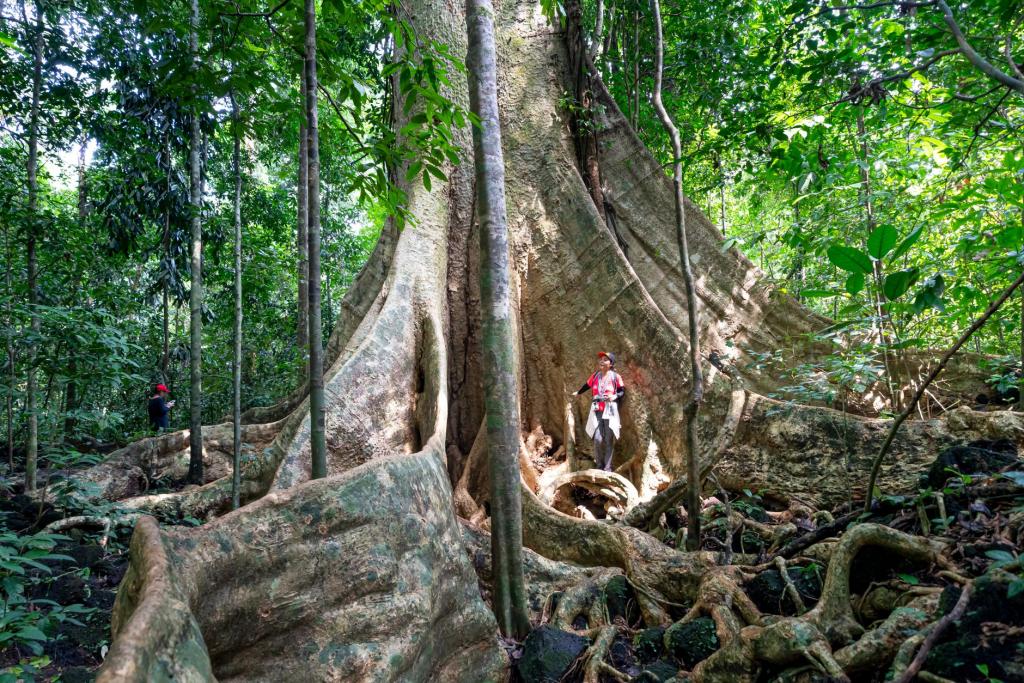
One of the most recognizable trees in the world just split in two. Scientists at the University of Wisconsin-Madison have recognized a new baobab species, Adansonia bozy, native only to Madagascar. For years the trees were counted as part of another Malagasy baobab, Adansonia za. Genetic testing showed the two populations were different species entirely, and that the newly named one is more closely related to baobabs from northern Madagascar than to the species it was filed under.
The finding landed in the journal Taxon, and it changes the global count of baobabs. Before this paper, botanists recognized eight baobab species in total: one in Australia, one on continental Africa, and six in Madagascar. With Adansonia bozy now raised to species rank, Madagascar hosts seven endemic baobab species instead of six.
Lead author Nisa Karimi did the work for her PhD in the university's former Department of Botany. To gather tissue samples, she traveled to remote parts of Madagascar and tracked down the trees on foot. Some Malagasy baobabs look so alike that identifying them from leaves alone is sometimes impossible, Karimi said, so the team turned to DNA.
DNA rewrote the family tree
The team, which included UW-Madison researcher David Baum plus collaborators from the Missouri Botanical Garden and Iowa State University, sequenced hundreds of nuclear genes and chloroplast DNA across the genus. The analysis showed that northern populations previously assigned to A. za were genetically closer to other northern Malagasy baobabs than to A. za itself. In the paper, the authors formally resurrected Adansonia bozy from a lower rank, listing it as A. za var. bozy before the split.
Baum, who has studied baobabs for more than 40 years, said the threshold for defining a new plant species can be complicated, but the genetic data in this case made it clear. "Any group that we choose to recognize in a taxonomy should be composed of organisms that are more closely related to each other, than to anything outside the group," he said. Karimi was struck by how basic the remaining questions still are. "It's surprising that we're still answering basic biological questions about baobabs, in terms of how many species actually exist on the landscape," she said in a statement.
The analysis also picked up signs of mixing between other species. According to the study abstract, the team found admixture between Adansonia rubrostipa and A. madagascariensis in northwestern Madagascar, and cases of introgression involving the widespread A. za. The authors even raised the possibility, pending more sampling, that A. rubrostipa might eventually be split into two species as well.
Why a new name matters for conservation
Conservation programs act on named species. That is the practical problem the new species creates: the population of A. za is now understood to be smaller than scientists thought, because part of it belongs to Adansonia bozy, while the newly named species has almost no data behind it at all.
Researchers suspect Adansonia bozy may already be endangered. Very little is known about where exactly it grows or how many individuals exist, and there is currently no dedicated framework for directing funding or protection toward it. "You can't conserve anything if you don't know how to describe and name them and understand how they're related to other things on the landscape," Karimi said.
The discovery also reshapes how limited conservation resources get divided. Baobabs are flagship trees for Madagascar's biodiversity, and several species there are already listed as threatened. Splitting one species into two means both groups could qualify for separate attention, which changes the math for the island's conservation plans.
The news reached a wider audience this month through coverage by IFLScience, and it fits a pattern of plant discoveries that keep turning up inside groups scientists thought they had mapped. Botanists recently described a new "devil flower" in Thailand that skips photosynthesis entirely, studied 15-million-year-old fossil flowers preserved in Chinese amber, and assembled the first pangenome of the European ash. A tree that can live for centuries and tower over the landscape turned out to be hiding a species in plain sight, mistaken for its neighbor until its genes were read. In practice, the map of what exists on the ground was wrong, and protecting Madagascar's baobabs now starts with counting them correctly.
Comments 0
No comments yet. Be the first to share your thoughts!
Leave a comment
Share your thoughts. Your email will not be published.