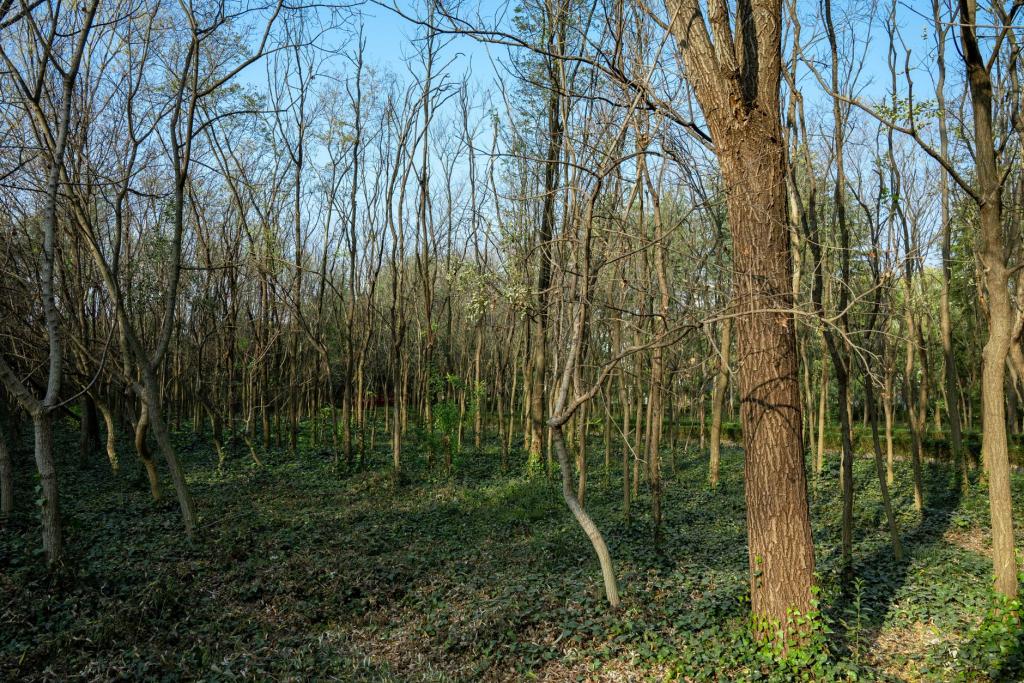
A fungus has been quietly stripping Britain's woodlands of ash trees for over a decade. Ash dieback was first detected in the UK in 2012, and since then millions of trees have died. Only a tiny fraction, as low as 0.5 percent, stay healthy after years of exposure to the disease. This week, scientists offered forests a new line of defense: the first complete European ash pangenome.
The study, published in the journal Nature Communications, comes from researchers at the Royal Botanic Gardens, Kew, Forest Research, and collaborating organizations. Rather than sequencing a single tree, the team built the pangenome from 50 ash trees of diverse origins, then screened genetic data from more than 1,000 trees to pin down genes tied to natural resistance against the fungus that causes the disease, Hymenoscyphus fraxineus.
One tree's DNA was not enough
A conventional genome assembly reads the DNA of one individual. A pangenome folds in the genetic sequences found across many individuals, including so-called dispensable genes that appear in some trees but not others. Those variable sequences matter: dispensable genes are not always essential, but they can carry advantages such as disease resistance or better drought tolerance, according to the researchers. The new European ash pangenome turned out to be 22 percent larger than a high-quality single-tree genome once those extra sequences were included.
Comparing the 50-tree pangenome against data from more than 1,000 trees, the scientists flagged 211 genes with possible links to ash dieback resistance. Sixteen of those were dispensable genes, present only in some individuals. In total the study identified more than 3,400 dispensable genes, just 9 percent of all the genes found, which may still shape the differences between individual trees.
"If each ash genome is the same movie, these findings highlight how many director's cuts, extended editions, deleted scenes and alternate endings nevertheless exist in wild populations," said Dr. Daniel Wood, the Kew research fellow who was the study's first author, describing the dispensable genes.
From genes to breeding
The practical payoff is prediction. With the full catalog of genetic sequences in hand, researchers can now forecast which trees are likely to be genetically shielded against ash dieback, and identify the most promising candidates for breeding resistant populations from their DNA alone. That could speed up woodland restoration, the same kind of recovery behind Paris's award-winning rewilding push, after the disease has killed so many mature trees.
The fungus damages trees when its spores land on leaves and work their way into the plant's inner structures, disrupting woody tissue, including the cells that transport water and nutrients. Repeated infections year after year usually kill the tree. Narrow-leaved ash, which grows mainly across southern continental Europe, is also among the species hit hard by the disease.
"The pangenome provides a powerful new tool in the continued fight against ash dieback, and in the response to the ever-growing threat from the emerald ash borer as its invasion advances across Europe," said Dr. Laura Kelly, the research leader at Kew and the study's senior author, as reported by the Forestry Journal.
The 50 sampled trees came from sites across the UK and Europe, including a young ash grown at Kew Gardens in London, a Forest Research trial plot outside Norwich, private land, and Paradise Wood in Oxfordshire, a site owned by the charity Earth Trust. The non-UK trees were grown at Paradise Wood from seed collected across Europe as part of the Realising Ash's Potential Trial. The findings are an output of the Centre for Forest Protection, a joint venture between Kew and Forest Research, funded and managed by the UK's Department for Environment, Food and Rural Affairs. The full study is published in Nature Communications.
forests a favor closer to home, too: recent coverage found houseplants improve air quality more than expected, and eco-friendly gardening practices are catching on with home growers. There is reason for optimism beyond the lab. Last year, researchers from Kew and Queen Mary University of London reported that a young population of ash trees in an East Surrey woodland was evolving resistance to the disease, a real-world case of natural selection unfolding as the survivors pass on tougher genes. Jess Allan, the Centre for Forest Protection coordinator, called the new research "an important and hopeful step towards a more resilient ash population in future."
Comments 0
No comments yet. Be the first to share your thoughts!
Leave a comment
Share your thoughts. Your email will not be published.