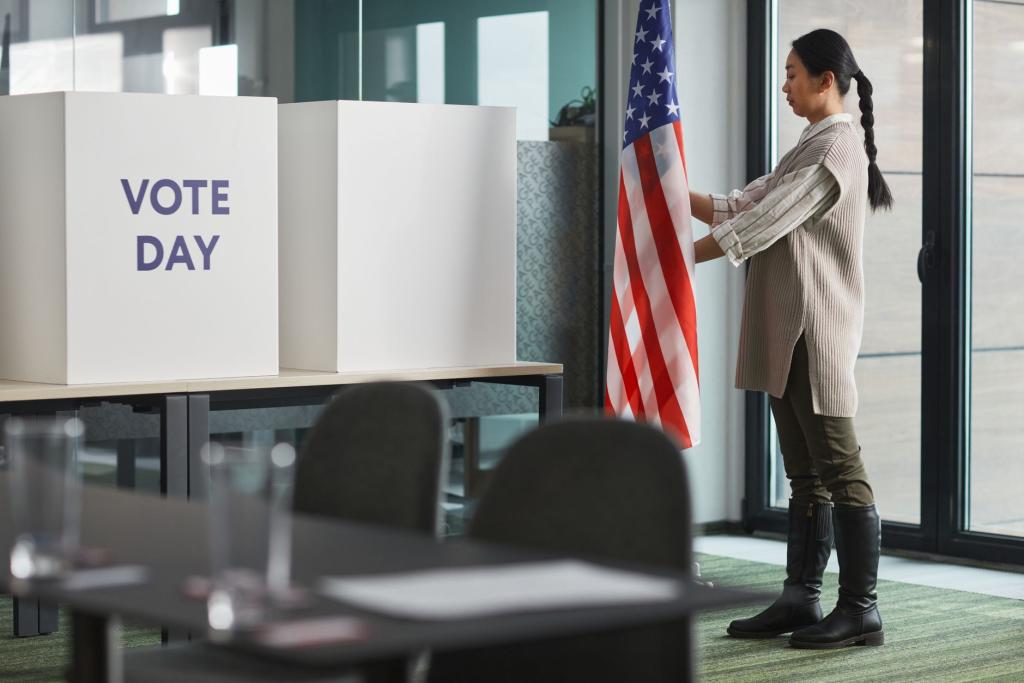
A coalition of civil rights groups and labor unions went to federal court on Friday, September 18, asking a judge to block ICE at polls this November, keeping federal agents away from election sites during the midterm elections. The lawsuit, led by the NAACP, names the Department of Homeland Security, Immigration and Customs Enforcement, the Justice Department and the FBI, along with DHS Secretary Markwayne Mullin, acting ICE Director David Venturella, Attorney General Todd Blanche, FBI Director Kash Patel and border czar Tom Homan.
The plaintiffs argue that ICE at polls would amount to voter intimidation prohibited by the Voting Rights Act. They say the threat is already having an effect: "voters across the country, particularly Black, Latino, and Asian voters, naturalized citizens, and members of mixed-status families, are afraid to vote, help others vote, and participate in civic life." The complaint argues that the prospect of ICE at polls would keep some voters home on Election Day.
The case was filed in the U.S. District Court for the District of Columbia, and, as Idaho News noted, it is the second legal challenge this month aimed at keeping federal law enforcement away from polling places. Nine organizations joined the action, including the NAACP, the National Urban League, the American Federation of Teachers, Mi Familia en Accion and Asian Pacific American Advocates. The Brennan Center for Justice and Protect Democracy are representing the plaintiffs.
Why the coalition says the law is on its side
The complaint points to long-standing federal statutes that bar "armed men" from election sites unless they are needed to repel armed enemies of the United States. The plaintiffs argue that a federal policy allowing ICE at polls violates those laws, and that the Voting Rights Act's ban on threats or coercion against voters covers an intimidating federal presence. The filing also draws a line around the role of the Homeland Security Department: "Congress did not create DHS to oversee elections or determine who is eligible to vote."
The coalition further contends that the administration's drive to uncover illegal noncitizen voting, which election experts say happens rarely, combined with aggressive immigration enforcement operations, has created an atmosphere of intimidation around voting itself. Democracy Docket reported that the plaintiffs are seeking a court order against putting ICE at polls in a way that unlawfully intimidates voters or anyone urging or aiding voters.
The primaries that set the stage
The complaint builds on a pattern from this year's primaries. Federal agents were deployed to monitor polling places during several primary elections, most recently during the New Hampshire primaries earlier in September, which is why the coalition argues the prospect of ICE at polls is not hypothetical. The filing cites that track record directly: "Defendants' past and present actions indicate that they plan to engage in such conduct to attempt to intimidate, or that results in intimidation of, voters in connection with upcoming 2026 elections if they are not enjoined from doing so," the NAACP wrote.
Public statements by administration officials feed the coalition's case. In May, Trump told reporters he would do "anything necessary" to make sure elections are honest when asked whether he would send ICE and the National Guard to polls in November. In July, Democratic senators sent a letter to administration officials asking whether federal agents or the National Guard would be sent to monitor the midterms. Back in February, the White House said it had no plans to send ICE to polling sites during the midterms, according to USA Today. The issue is also playing out at the state level, where California's governor recently signed the Protect Our Polls Act to shield the November vote.
FBI Director Kash Patel faced the question during Senate Judiciary Committee testimony on September 15 and would not rule out agents at polling sites. He told lawmakers the bureau would deploy only where there was a violation of law, adding that election integrity was of paramount importance. Two months earlier, at his July 15 confirmation hearing before the same committee, Attorney General Todd Blanche was pressed on whether he would commit to keeping ICE at polls away from November's election. He said he would "absolutely follow the law no matter what it includes" but rejected the characterization of deployments as illegal.
What the judge has to weigh
The case is before U.S. District Judge Loren L. Alikhan. Legal analysts note the plaintiffs may have to clear an early hurdle on ripeness: courts are often reluctant to rule before a formal order exists, and this challenge to ICE at polls rests largely on public statements and past practice rather than a published deployment plan.
The lawsuit lands amid a wider fight over immigration enforcement and civil liberties. A recent watchdog report slammed conditions at Florida's "Alligator Alcatraz" detention facility, where immigration detainees are held in metal cages, and the debate over what role ICE should play at sensitive public locations keeps growing. For the NAACP coalition, the polling place is the next front in that fight: the filing asks the court to make clear that ICE at polls is off limits before the first ballot is cast.
Neither the White House nor the named agencies had submitted a response to the court before USA Today's September 19 report on the case was published. With the November midterms less than two months away, the lawsuit is likely to become an early test of how far federal election-security efforts can reach into the polling place itself.
Comments 0
No comments yet. Be the first to share your thoughts!
Leave a comment
Share your thoughts. Your email will not be published.