California Governor Gavin Newsom signed the Protect Our Polls Act into law on September 19, barring law enforcement from making arrests within 200 feet of a polling place on Election Day. The law takes effect immediately and covers California's general election on November 3, 2026, plus every election through 2029, according to the announcement from the bill's author, state Senator Thomas J. Umberg.
The measure, Senate Bill 884, dubbed the Protect Our Polls Act by its backers, arrives six weeks before the midterms, as Sacramento and Washington clash over the role of federal agents near voting sites. According to Umberg's office, the legislation was written in response to statements from the Trump administration about potentially deploying Immigration and Customs Enforcement agents to polling places, and to FBI Director Kash Patel's refusal to rule out sending federal agents to the polls.
Umberg said California is sending "a clear message to President Trump," adding that the law means "no Californian has to choose between their safety and their right to vote." The Democrat from Santa Ana, who chairs the Senate Judiciary Committee, said the state is exercising "its constitutional authority to run safe and secure elections."
Newsom struck a blunter tone in a statement. "Donald Trump won't stop until he can exert dictatorial control over your free vote and disenfranchise millions of people this November," the governor said, adding that California "will stop him at every opportunity." Newsom said there is no bigger task than protecting the right to vote from interference and meddling, declaring that "the future of democracy is on the line."
What the law does
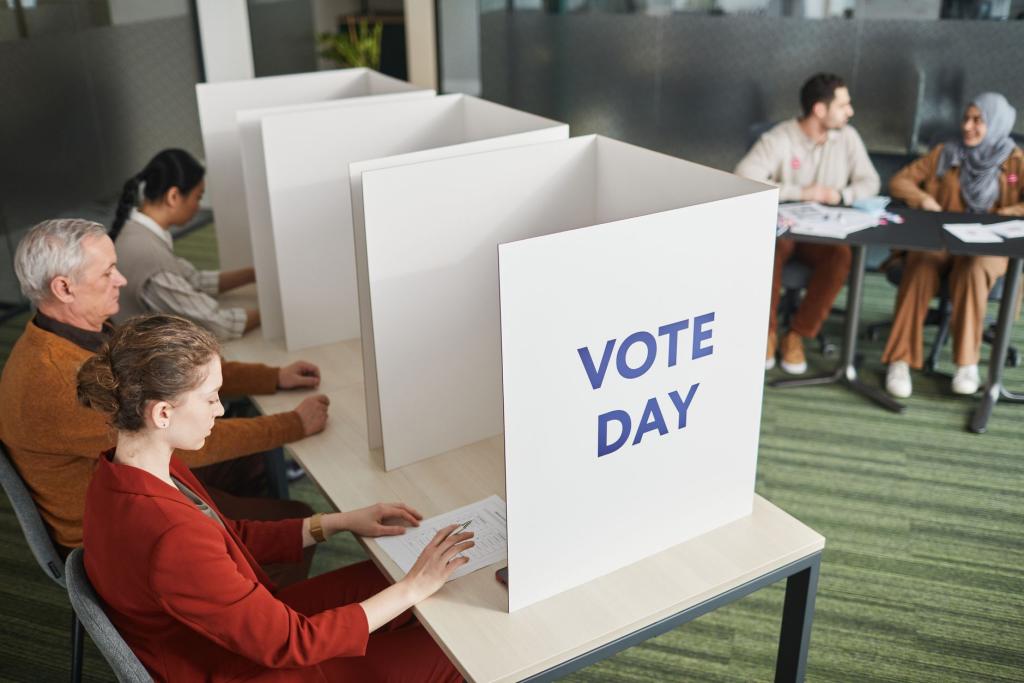
The core of SB 884 is a 200-foot no-arrest zone around polling places on Election Day. Police and federal agents alike are barred from making arrests inside that radius, with narrow exceptions for crimes that disrupt polling operations or crimes against people or property. A sheriff's deputy cannot use the law as a shield to ignore an assault at the entrance, but immigration agents cannot run a sweep in the parking lot either.
The bill also lets counties double the buffer zone for electioneering, from 100 feet to 200 feet, around voting locations. Law enforcement agencies must report suspected, planned, or actual violations of the new protections to both the Secretary of State and the Attorney General. And if prohibited arrests or electioneering disrupt voting, election officials gain the authority to extend polling hours so lost time is made up.
The law reaches beyond Election Day itself. Ballot drop-off locations must open at least 30 days before an election, widening the early voting window for anyone who wants to skip the polls entirely. Newsom said the new law builds on "the wall California has built to safeguard our electoral process."
Why Sacramento moved now
California Democrats are pointing to a series of federal signals. Earlier this month, Homeland Security Secretary Markwayne Mullin said agents could conduct immigration enforcement at polling places. This week, FBI Director Kash Patel declined to give senators an unequivocal commitment that FBI agents would stay away from the polls, and repeatedly refused to rule out deployments in response to reports of "problems" or "interference," according to Democracy Docket's account of the Senate Judiciary Committee hearing.
Federal law has barred armed men at election sites since 1948. Under 18 U.S.C. Section 592, it is a felony for a federal officer to order, bring, or keep "armed men" at any place where a general election is held, except to repel armed enemies of the United States, with penalties of up to five years in prison and disqualification from federal office. That is the statute Congressman Raja Krishnamoorthi cited in a letter to the Justice Department demanding answers after Patel's testimony.
Civil rights groups are already in court. On Friday, a coalition of civil rights organizations and unions filed suit in the U.S. District Court for the District of Columbia to block ICE agents from polling locations in November, the second such lawsuit this month, reported by the Oklahoma Voice. The groups argue the policy violates the federal armed-men ban and the Voting Rights Act's prohibition on voter intimidation, and say the fear is already chilling participation, particularly among Black, Latino, and Asian voters, naturalized citizens, and members of mixed-status families.
The Justice Department pushed back. A DOJ spokesperson said in a statement that the department "has never said it would send federal law enforcement to polling locations," calling suggestions otherwise "fearmongering." Border czar Tom Homan said Sunday he does not plan to use ICE agents to "sweep polling locations," despite past remarks suggesting he could, according to Democracy Docket. Nevada Secretary of State Francisco Aguilar, a Democrat, told Democracy Docket that an illegal FBI presence at the polls would be "a very bad decision to make as an executive leader."
The polling fight is part of a broader collision between the White House and independent institutions. The administration is pressing to put political appointees in charge of NIH research grants, while its Justice Department has subpoenaed former CIA Director John Brennan in a grand conspiracy investigation.
What it means for voters
For California voters, the practical effect is straightforward. Drop boxes open a month before Election Day, a two-hundred-foot protected zone surrounds every polling place, and any violation of the new rules must be reported to state election officials. Because the law runs through 2029, it will cover not just this year's midterms but the 2028 presidential election as well.
Umberg, the bill's author, is a retired U.S. Army colonel and former federal prosecutor who represents California's 34th Senate District. He framed the measure as the state's answer to what his office described as federal interference in California's elections.
Comments 0
No comments yet. Be the first to share your thoughts!
Leave a comment
Share your thoughts. Your email will not be published.