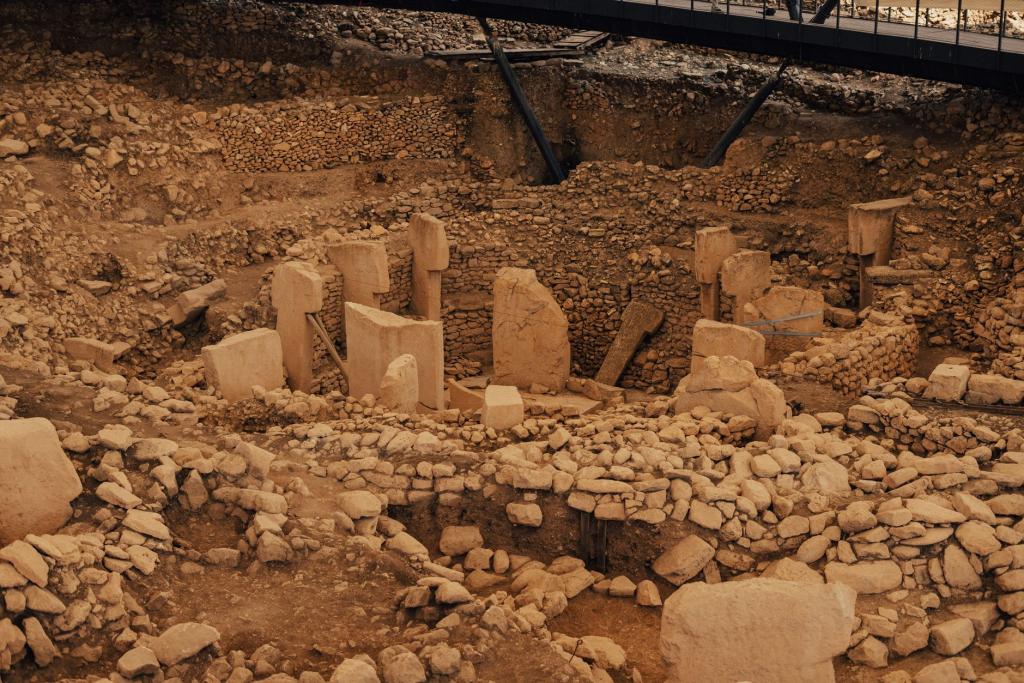
Archaeologists digging beneath a Paris hospital have uncovered a 2,000-year-old defensive structure that may be the Lutetia wall, the original rampart of the Gallic settlement that became Paris. France's Ministry of Culture announced the discovery on September 23, calling it a major breakthrough that could finally settle one of the oldest arguments in French archaeology: where Lutetia actually stood.
The Lutetia wall runs roughly 66 feet, built of stone and wood, on the Ile de la Cite, the island in the Seine River that sits across the street from Notre-Dame Cathedral. Initial radiocarbon dating places its origin between 200 B.C.E. and 10 B.C.E., according to Smithsonian Magazine, which first reported the discovery in English. That dating puts the structure squarely in the era of the Gallic Parisii tribe, the people who gave Paris its name.
What the archaeologists found
The excavations began in February, when France's Ministry of Culture, the National Institute of Preventive Archaeological Research, and architects for the City of Paris started digging in two courtyards at the Hotel-Dieu hospital, Paris' longest-running hospital. Over the summer, they hit the wall.
With its large stone blocks and interlocking beam system, the structure closely resembles other Gallic fortifications built near the end of the Iron Age, around the first century B.C. Behind it, researchers found a 6.5-foot-thick platform made of sand and gravel. Nearby turned up a Gallic spearhead, charred seeds, and the remains of a burned wooden building, according to the Smithsonian's report.
The wall also bears traces of a violent fire. That detail matters because Julius Caesar wrote in his account of the Gallic Wars that the Gauls set fire to their own town before the Battle of Lutetia against the Romans. As People reports, French officials say the burn marks could correspond to exactly that scorched-earth moment.
The dig itself is a reminder of how much of Paris remains unexplored below street level. The Ile de la Cite has been built over continuously for two millennia, and preventive archaeology, digging before construction, is often the only way to see what lies underneath. The Hotel-Dieu traces its founding to the seventh century, which makes its courtyards a kind of time capsule. Finds from the site are now being cleaned and analyzed, and the radiocarbon results will be refined before archaeologists make any final claims about the wall's age and function.
Why this Lutetia wall could settle a century-old debate
Lutetia is the Latin name for the settlement that would develop into Paris, and it first appears in Book Seven of Caesar's Gallic Wars, where he describes it only vaguely as sitting on an island in the river Seine. The Ile de la Cite has traditionally been regarded as the center of Lutetia. But a rival theory, backed by archaeological research, argues the original settlement was actually in Nanterre, a suburb to the west. A defensive wall dating to the right period, in the right style, on the Ile de la Cite itself, is exactly the kind of evidence that tips such debates.
"It's dizzying to find oneself here and to discover what is probably the origin of the city of Paris," Mayor Emmanuel Gregoire told Agence France-Presse during a visit to the site. France's Culture Minister Catherine Pegard went further in a statement, saying, "We may be looking at one of the most important remains ever discovered for understanding Gallic Lutetia," while adding that more research is needed.
The ministry is not declaring victory yet. "Scientific caution still requires that we verify its function and its chronology, but the convergence of evidence is particularly remarkable at this stage," Pegard said in the statement. The dating remains preliminary and will be refined as the finds are cleaned and studied.
This is far from the first time Paris has hidden its own history underground. The city has yielded Roman baths, medieval streets, and catacombs for centuries, and construction work routinely triggers rescue archaeology. Our previous coverage includes a Gallic coin workshop found in France, the biggest ever recorded, and a 1,700-year-old Odyssey fragment that turned up in a Dutch library. But a defensive wall on the Ile de la Cite is different: it speaks directly to where the city began.
The next steps are laboratory analysis and expanded excavation of the hospital courtyards. If the dating holds and the structure is confirmed as part of Lutetia's ramparts, the Ile de la Cite theory gains its strongest physical proof in decades. If not, the Nanterre camp gets to say it told everyone so. Either way, the ancient rampart just made the oldest neighborhood in Paris a little more famous. Read the full Smithsonian account of the Lutetia wall discovery and People's report on the Iron Age wall near the Paris hospital for more detail.
Comments 0
No comments yet. Be the first to share your thoughts!
Leave a comment
Share your thoughts. Your email will not be published.