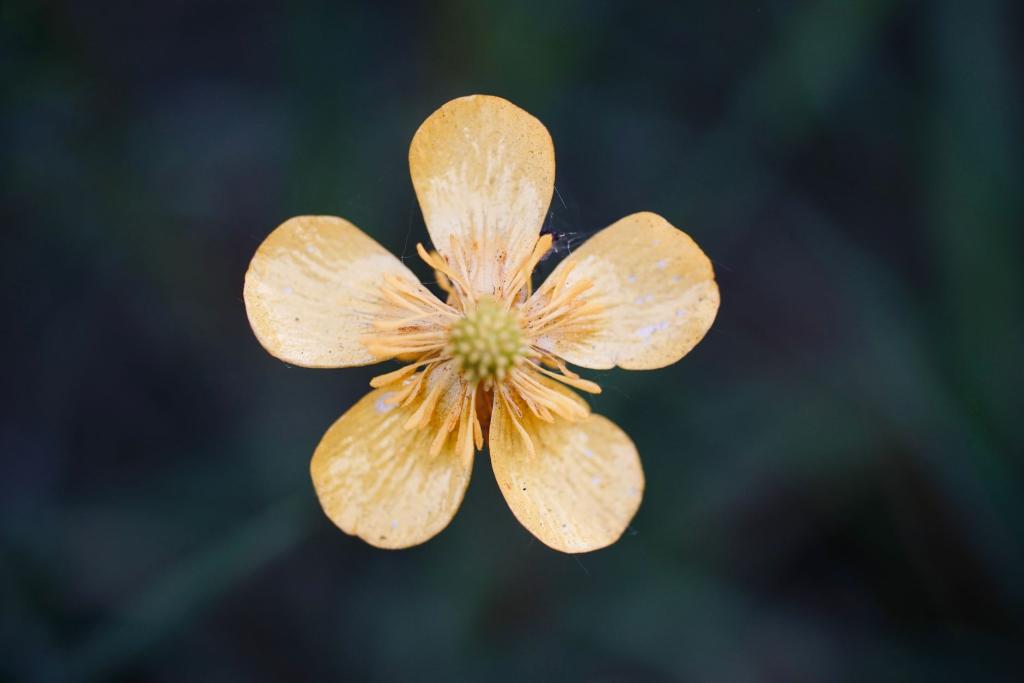
A year-old photo caught a botanist's eye
In March 2023, a German tourist on vacation in Monchique, a town in Portugal's Algarve, photographed a small yellow flower she found while out walking. She later uploaded the picture to iNaturalist, where members of the public record their sightings of plants and wildlife. The plant in that photo is now known as Linaria alfercensis, a species entirely new to science. At the time, it was filed under the wrong species name. That is usually where the story ends. Instead, the photo sat on the platform for about a year before Portuguese botanist João Farminhão came across it and realized something was off. The plant in the image did not match any toadflax he knew.
The Alferce toadflax, as the new species is known in Portuguese, was confirmed after Farminhão traveled to the spot where the photo was taken, Cerro do Castelo de Alferce, and found a small population of the plants growing there. According to reporting in the Portuguese press, DNA analysis confirmed the plant had never previously been described in the scientific literature, and the formal species description was published in August 2026 in the journal Plant Ecology and Evolution.
What makes this toadflax different
Linaria alfercensis belongs to the toadflaxes, a group of snapdragon relatives common across Europe and North Africa. Its flowers carry speckled yellow petals with two dark stripes on the underside, a pattern that sets it apart from its closest relatives. The plants also grow in an upright, erect habit, while related species tend to sprawl or lean.
The species was named after Alferce, the locality where it grows, and Linaria alfercensis appears to be endemic to the Monchique area, meaning it has not been found anywhere else. It was described as part of a larger study of how toadflaxes diversified across the Algarve's unusual soils, a paper that also confirmed another Algarve toadflax, Linaria bimaculata, as a distinct endemic species. The research combined field mapping by André Carapeto with modern phylogenomic methods from Alejandro Alonso and Mario Fernández-Mazuecos, plus scientific illustration and microscopy by Llorenç Sáez, according to the team's own account of the work.
Your photos can do real science
The part of this story that keeps catching people's attention is the vacation snapshot itself, uploaded with no scientific intent, that ended up expanding the known flora of Portugal. New flowering plant species are still described every year, but in Western Europe, where botanists have catalogued plants for centuries, a new endemic species hiding in plain sight is genuinely unusual. Linaria alfercensis is proof that the catalog is not finished. This year alone has brought several of these surprises, from Thailand's demon-faced devil flower to a new baobab species hiding in Madagascar.
Citizen science platforms like iNaturalist have quietly become one of botany's most productive field tools. Millions of dated, geolocated photos let specialists scan far more ground than any single expedition could cover. The pattern is familiar by now: a photo looks slightly wrong to a trained eye, a follow-up visit confirms the hunch, and a "known" record turns into a new species. The tourist who took the picture has not been named publicly, and likely has no idea her holiday photo now sits in the scientific record as the first observation of Linaria alfercensis. PetaPixel reported the story this week, citing coverage in the Portuguese newspaper Público and the original research paper. The Portuguese encyclopedia entry on Linaria alfercensis traces the same chain of events, from the 2023 photograph to the August 2026 species description in Plant Ecology and Evolution.
What comes next for the flower
Being described is only the first step. The new species is known from a single small population in one small area, which makes its future worth watching. Botanists will now need to map how many plants exist, whether the population is stable, and what pressures it faces, from land use change to the grazing and fire cycles that shape Algarve hillsides.
There is a satisfying symmetry in how the discovery played out. A plant that probably grows in only one corner of one region was found because someone with a camera happened to be looking at the right patch of ground at the right moment, and because the record of that moment was public. Farminhão's instinct to double-check a mislabeled photo did the rest, and Linaria alfercensis entered the scientific record because of it.
Comments 0
No comments yet. Be the first to share your thoughts!
Leave a comment
Share your thoughts. Your email will not be published.